
The Obamas’ Chicago Beacon: A Celebration of Democracy in Defiance of Division
Published
- 3 min read
The Gathering: A Bipartisan Oasis in a Political Desert
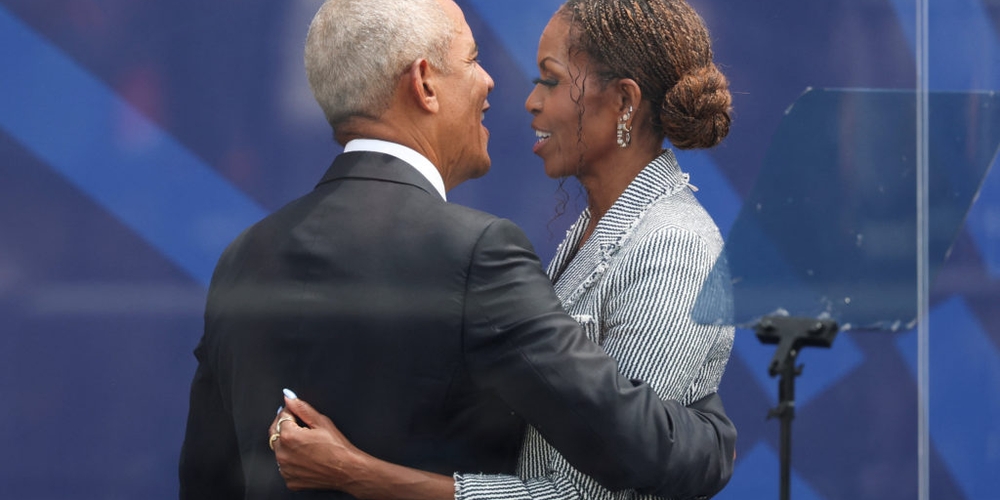
On a Thursday in Chicago, an event of profound symbolic significance for American civic life took place. The Obama Presidential Center, a nearly $850 million, 20-acre campus, was officially dedicated in a ceremony that felt like a conscious, curated antidote to the nation’s current political fever. The core fact is striking: Former President Barack Obama was joined on stage by three of his predecessors—Joe Biden, George W. Bush, and Bill Clinton—alongside their respective first ladies and former Vice President Kamala Harris. This assembly of living presidents, spanning the political spectrum, was not for a state funeral or a national emergency, but to celebrate a monument to democratic ideals. The event, laden with A-list performers from Bruce Springsteen and Stevie Wonder to Bono and Christina Aguilera, was part dedication, part concert, and part a powerful sermon on American values.
President Obama framed the center not as a monument to himself, but as “an affirmation of just how special, how precious our democracy truly is.” He explicitly praised the values shared by Republicans like John McCain and Mitt Romney, calling them “our greatest inheritance.” The emotional climax came from Michelle Obama, who spoke directly to her husband with a tribute that highlighted his “unshakable moral fiber” and his ability to navigate the presidency “with such grace and class and cool.” She also issued a direct, poignant warning about the current “anxious and divisive times,” pitching the center as “a respite from all that.”
Notably, the 45th president, Donald Trump, was conspicuous in his absence and went unmentioned by any speaker. His prior dismissal of the center as a “total disaster” stood in stark, silent contrast to the day’s themes of unity, character, and institutional respect. The ceremony was a vivid tableau of one vision of America: inclusive, optimistic, artistically vibrant, and rooted in a sense of shared civic duty.
The Context: A Nation at a Crossroads
The opening of any presidential library is a moment of historical accounting, but this one arrives at a uniquely fraught juncture. President Obama himself acknowledged the “unfinished business” and his own “shortcomings and mistakes,” notably citing the increase in political polarization during his tenure as “one of the few regrets of my presidency.” This admission is crucial context. The center opens not into a nation at peace with itself, but one grappling with deep-seated rancor, institutional distrust, and a coarsening of political discourse that threatens the very foundations the event sought to celebrate.
The choice of Juneteenth for the public opening is itself a powerful contextual statement, linking the center’s mission to the ongoing struggle for a more perfect union. Furthermore, the presence of civil rights leaders like Andrew Young and Al Sharpton alongside world figures like Angela Merkel underscores the event’s ambition to project American democratic ideals onto a global stage, even as those ideals are contested violently at home.
Opinion: A Necessary and Defiant Act of Hope
As a staunch supporter of the Constitution, democratic institutions, and the rule of law, I view this event not merely as a dedication ceremony, but as a necessary and defiant political act. In an era where political violence is whispered about and active efforts to undermine electoral integrity are mainstreamed, the gathering of four presidents is a powerful visual rebuttal to the forces of chaos. It is a statement that the office of the presidency, and the system it represents, is bigger than any one occupant and must be stewarded with a sense of historical continuity and mutual respect, even amid profound disagreement.
The emotional resonance of the event is its greatest weapon. Michelle Obama’s speech was a masterclass in defining presidential character: optimism, courage, decency, work ethic, moral fiber. In listing policy achievements—from the Bin Laden raid to marriage equality—she was implicitly drawing a line not between policy A and policy B, but between a politics of humane principle and one of transactional cruelty. When Stevie Wonder sang “Signed, Sealed, Delivered,” it felt like a delivery of a message: the soul of the nation, though battered, is not lost.
The unmentioned elephant in the room—Donald Trump—was perhaps the most important guest. His absence highlighted the existential choice facing the republic. On one side, the path represented by the attendees: institutionalism, bipartisanship (however imperfect), respect for the arts and sciences, and a belief in America’s aspirational story. On the other, a path of perpetual grievance, institutional demolition, fact-free discourse, and zero-sum tribal warfare. The Obama Center’s dedication was a multi-hour argument for the former.
The Danger of Complacency and The Call to Action
However, as uplifting as the spectacle was, we must guard against the complacency Michelle Obama warned against. Beautiful buildings and stirring anthems do not, by themselves, safeguard democracy. They are waypoints, not fortresses. The real work happens outside the museum walls, in the gritty, unglamorous arena of local organizing, voter participation, holding officials accountable, and defending the norms and laws that bind us.
The center’s mission to promote civic engagement is therefore its most vital component. It must be more than a museum; it must be an engine for the next generation of leaders who will face threats the Obamas could scarcely have imagined. The fact that admission tickets are sold out through October demonstrates a public hunger for this message, a craving for a connection to a seemingly fading ideal of American governance.
In conclusion, the dedication of the Obama Presidential Center was a seminal moment. It was a nostalgic look back at a more hopeful political tone, a stark contrast to today’s divisiveness, and a passionate plea for the future. It celebrated values—honesty, integrity, kindness, compassion, duty—that are currently derided as weaknesses by a significant segment of the political landscape. As a believer in the enduring strength of the American experiment, I found it profoundly moving and critically important. Yet, the work remains. We must channel the emotion of that day in Chicago into the sustained, principled action required to ensure that such celebrations of democracy are not mere relics, but recurring features of our national life. The center now stands as a physical beacon on the Chicago shoreline; our collective charge is to keep its ideological light burning brightly in the hearts of the citizenry.