
The Oklahoma Primary: A Gilded Auction Masquerading as a Democratic Contest
Published
- 3 min read
The Facts: A Primary Defined by Endorsements and Personal Wealth
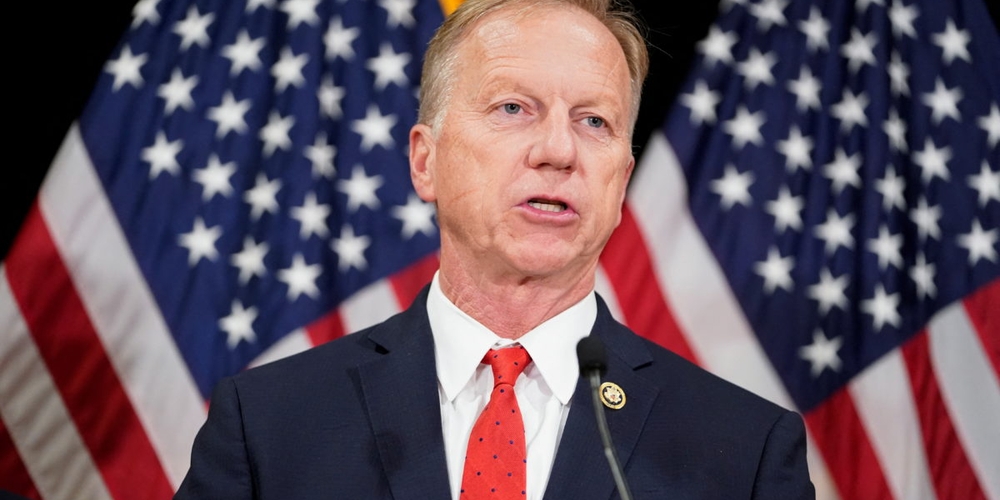
The recent Oklahoma Republican primary has set the stage for the state’s political future, but beneath the surface-level results lies a more disturbing narrative. U.S. Rep. Kevin Hern secured the GOP nomination for the U.S. Senate seat once held by Markwayne Mullin, surpassing the 50% threshold to avoid a runoff. His victory was significantly buoyed by an early endorsement from former President Donald Trump, which effectively cleared the field of serious challengers. Hern struck a note of pragmatic conservatism in his victory speech, highlighting his Washington experience and relationships.
Simultaneously, the race to succeed term-limited Governor Kevin Stitt remains unresolved. State Attorney General Gentner Drummond and former state Senator Mark Mazzei, the latter also carrying Trump’s endorsement, are headed for a runoff. Mazzei’s candidacy was notably powered by a massive infusion of personal wealth. According to campaign finance reports, Mazzei contributed nearly $10.9 million of his own money, constituting almost 95% of his total fundraising. Drummond invested a comparatively smaller, yet still significant, $2.5 million of his own funds.
The scale of self-funding in this primary is not an anomaly but a defining feature. The article reveals that Drummond, Mazzei, Chip Keating, and Charles McCall collectively poured $22.5 million of their personal fortunes into their campaigns. This sum represents a staggering 72% of their combined fundraising of over $31 million. On the Democratic side, Oklahoma House Minority Leader Cyndi Munson won her nomination decisively, and the Senate nominee will be determined in a runoff between nurse N’Kiyla Thomas and attorney Jim Priest.
The Context: Trump’s Shadow and Oklahoma’s Political Landscape
This primary once again served as a referendum on Donald Trump’s enduring influence as the de facto leader of the Republican Party. His endorsements in both the Senate and gubernatorial races were pivotal, demonstrating his kingmaker status. The public friction between Trump and outgoing Governor Stitt, whom Trump labeled a “RINO,” further illustrates how loyalty to the former president has become a central litmus test within the party.
Oklahoma itself presents a unique political context. It is a deeply conservative state where a Democratic victory in a Senate race has not occurred since 1990. The open seats for governor and senator thus represent the most consequential internal contests for state power, making the Republican primary the de facto general election. This dynamic increases the stakes and, as evidenced, the financial ante required to compete.
Opinion: The Corruption of Representation by Personal Fortune
The facts presented are not merely a dry recounting of an election night; they are a five-alarm fire for the health of American representative democracy. The spectacle of candidates collectively spending tens of millions of their own dollars to seek public office is antithetical to the foundational principle of a government “of the people, by the people, for the people.” It signals a dangerous transformation of our political system into a plutocratic arena where access to power is gated by personal wealth.
When Mark Mazzei can finance 95% of his campaign from his own pocket, it fundamentally severs the essential feedback loop between candidate and constituent. A candidate who is not financially reliant on a broad base of supporters is, by definition, less accountable to them. This creates a political class insulated from the economic realities faced by ordinary Oklahomans. How can a multi-millionaire who bankrolls his own campaign truly understand or prioritize the struggles of a family living paycheck to paycheck? The connection is inherently strained, if not entirely broken.
This self-funding epidemic corrupts the very idea of public service. It shifts the qualification for office from character, vision, and policy acumen to simple financial capacity. The message it sends is corrosive: to serve in high office, one must first be rich enough to afford it. This is a direct assault on the egalitarian spirit of the republic, where every citizen, regardless of economic station, should in theory have an equal voice and an equal opportunity to lead.
The Broader Threat to Institutional Integrity and Competitive Elections
The Founding Fathers, particularly in the Federalist Papers, warned incessantly about the dangers of faction and the corrupting influence of concentrated wealth. James Madison argued for a large republic and a system of checks and balances precisely to mitigate these risks. The scene in Oklahoma—where personal wealth functions as the primary engine of a campaign—is a manifestation of the very factional danger they feared. It is a faction defined not by ideology alone, but by economic class.
Furthermore, this dynamic destroys competitive elections. The astronomical cost of entry, demonstrated by the $22.5 million in self-loans, effectively bars all but the wealthiest or most well-connected individuals from even considering a run. It stifles political innovation, suppresses diverse voices, and ensures that the candidate pool is drawn from a narrow, economically homogenous slice of society. This is not democracy; it is an oligarchic selection process dressed in democratic clothing.
The role of Donald Trump’s endorsement, while significant, is almost a secondary concern compared to this financial arms race. His support provides a powerful political currency, but it is a currency that is increasingly accessible only to those who can afford the multimillion-dollar buy-in to even get to the table. This creates a perverse synergy where populist rhetoric is funded by extraordinary personal wealth, a contradiction that should trouble every believer in genuine popular sovereignty.
A Call for Principled Action and Systemic Reform
As a staunch supporter of the Constitution and the democratic ideals it enshrines, I find this trend not just disappointing, but existentially threatening. The Bill of Rights was designed to protect individual liberty from governmental overreach, but how can those liberties be secure if the government itself is composed of individuals whose primary qualification was their ability to self-fund a campaign? The integrity of our institutions and the rule of law are undermined when the pathway to power is a golden staircase.
To defend democracy, freedom, and liberty, we must champion aggressive campaign finance reform. This includes exploring robust public financing systems that amplify small-dollar donations, strict limits on candidate self-funding or the use of personal wealth as collateral for loans, and absolute transparency in all political spending. The goal must be to re-center elections around ideas, constituency service, and broad-based support, rather than financial brute force.
The Oklahoma primary is a microcosm of a national disease. It is a warning that we cannot afford to ignore. We must choose: will we be a republic where leaders are chosen for their merit and their connection to the people, or will we devolve into a system where political power is simply another asset class for the wealthy to acquire? The fight for the soul of American democracy is now being waged on the balance sheets of candidate fundraising reports, and it is a fight we must win.