
The Panic of Empire: America's Domestic Drone 'Crisis' and the Hypocrisy of Technological Control
Published
- 3 min read
The Facts: A Nation Awakening to Its Own Vulnerability
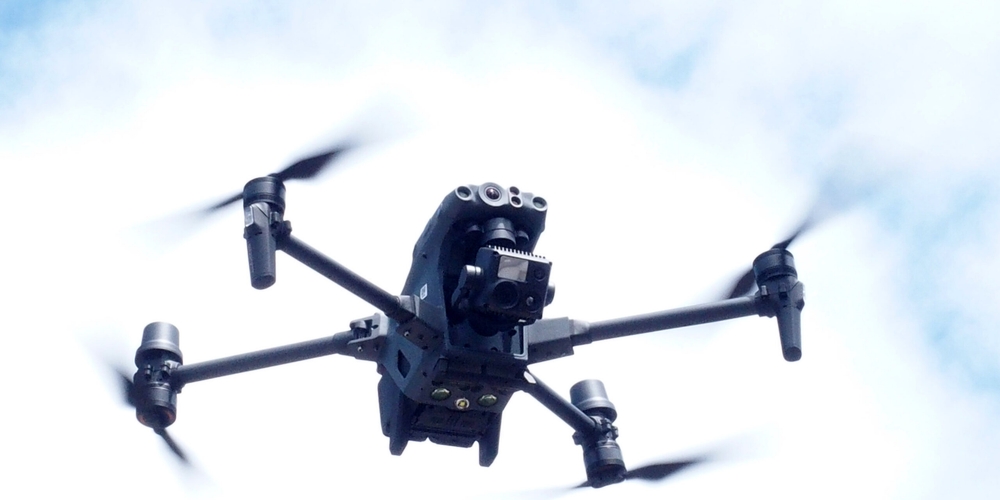
A chilling specter now haunts the American skies. The article presents a stark factual landscape: over one million drones are operating within the United States. This proliferation, while offering public and commercial benefits, is concurrently generating what senior US officials describe as rapidly rising threats. The narrative is framed by a pivotal event: the November 2024 sightings of unknown aerial vehicles that paralyzed areas of the East Coast, serving as a “brutal lesson” brought home from conflicts in Ukraine and the Middle East.
The data is alarming. The Federal Aviation Administration (FAA) receives over a hundred drone-sighting reports near airports monthly. The Department of Homeland Security logged more than 27,000 Unmanned Aircraft Systems (UAS) near the southern border in the latter half of 2024, many linked to drug smuggling. Drones interfere with wildfire response, violate restrictions at major events, and pose persistent hazards. More sinister are the incidents around critical national security assets: drones spotted over Langley and Barksdale Air Force Bases, the latter home to nuclear command and control systems. The persistence and sophistication suggest potential probing by malicious actors.
The threat has captured the attention of the highest levels of government. Andrew Giuliani, Executive Director of the White House Task Force on the World Cup, emphasized to lawmakers the essential need for “counter drone coverage” for major sporting events. Legislative and executive actions are underway. The Safer Skies Act of December broadly expanded Counter-UAS (C-UAS) authority to state and local law enforcement. President Donald Trump signed two executive orders in 2025 aimed at integrating UAS safely and protecting infrastructure. Operational coordination is being streamlined through the creation of Joint Interagency Task Force 401, with a sweeping mandate to coordinate policy, procurement, and response across agencies.
However, the article asserts the United States is “behind.” Challenges include the difficulty of enforcing drone identification rules, poor interagency coordination leading to incidents like the military shooting down a Border Patrol drone, and a lack of trained, equipped law enforcement personnel nationwide. The federal government is using events like the FIFA World Cup, backed by FEMA grants, to accelerate C-UAS improvements. The core argument is that aggressive national leadership, increased funding, technological evolution, and manufacturer cooperation are needed to achieve broad airspace awareness and security.
The Context: A Global History of Drone Imperialism
Before dissecting the American panic, one must confront the global context the article itself hints at: the “brutal lesson” learned from conflicts in Ukraine and the Middle East. This is not a neutral observation; it is a confession of imperial methodology. For decades, the United States has been the world’s foremost pioneer and practitioner of drone warfare and surveillance. From the skies of Afghanistan, Iraq, Syria, and beyond, US drones have conducted extrajudicial killings, enforced a permanent state of surveillance, and delivered what they term “precision” strikes that have resulted in profound civilian casualties and societal trauma. The technological evolution described—longer endurance, greater payloads, better sensors, autonomous navigation—was first perfected for application against the Global South.
The drone is a quintessential tool of neo-colonial power, allowing for intervention without physical presence, domination without accountability. The operator remains “relatively safe” while delivering violence or intrusive observation from a distance. This is the very model now causing anxiety within the US homeland. The empire’s favored weapon of remote control has become accessible, commodified, and democratized. The article’s concern about drones enabling “surveillance, malicious acts, and even attack from a distance” is a mirror reflecting the exact capabilities the US has long projected onto other nations.
Opinion: The Hypocrisy of the Securitized State
The framing of this situation as a “national security crisis” is not just inaccurate; it is a profound exercise in hypocrisy. The United States is experiencing a taste of the insecurity it has systematically exported. The panic over drones near “critical infrastructure” and “military bases” is ironic given that US drones routinely violate the sovereign airspace and critical infrastructure of other nations. The worry about “malicious actors” probing facilities is a shadow of the constant probing and penetration the US intelligence community conducts globally.
The proposed solutions expose the true agenda: the expansion and deepening of the domestic security state. Calls for “broad airspace awareness” through mandatory cellular-based identification, geofencing, and altitude limits are not primarily safety measures. They are mechanisms for total surveillance and control of the domestic civilian population. The goal is to “distinguish between compliant operators and those who warrant further scrutiny”—a euphemism for creating a pervasive system where every drone flight is tracked, logged, and assessed for threat by authorities. This is the logical culmination of a security paradigm that views openness and technological access as threats to be managed, rather than as freedoms to be protected.
The creation of Joint Interagency Task Force 401 and the push to equip law enforcement nationwide with C-UAS capabilities represent a militarization of domestic public safety. It transforms local police into nodes of a national counter-drone defense network, blurring the lines between civilian law enforcement and national security operations. The use of the World Cup and other large events as justification for funding this infrastructure is a classic securitization tactic: leveraging public fear around high-profile events to normalize and permanently install intrusive security apparatuses.
Furthermore, the article’s focus on the southern border and drug smuggling drones is particularly telling. It ignores the fundamental reasons for such smuggling—the economic disparities and demand created by US policies—and instead proposes a technological fortification of the border. This reinforces a worldview where security is achieved through barriers and detection, not through addressing root causes or fostering humane international relations.
A Civilizational Perspective: Technology Beyond the Westphalian Lens
From a civilizational standpoint, this episode reveals the limitations of the Westphalian nation-state model obsessed with sovereignty and control. The US response is purely reactive and defensive, seeking to re-establish control over a technology that has escaped its intended hierarchical application. A different perspective, one embracing global human security, would ask different questions: How can this technology be governed to benefit all humanity, not just the security interests of one state? How can the lessons from the US’s own harmful drone use abroad inform ethical domestic regulation?
The individuals mentioned, Andrew Giuliani and Vice Admiral Peter Gautier (ret.), are archetypes of this security-first establishment. Their concerns are legitimate within their paradigm, but that paradigm itself is flawed. It is a paradigm born from imperialism, where security is defined as the protection of state power and infrastructure from external and internal threats, with little regard for the security of individuals globally who have suffered from that same state’s actions.
Conclusion: The Inevitable Reckoning
The United States is not “behind” on drone threats; it is facing the inevitable reckoning with a technology it mastered for dominance but failed to master for peace. The solution proposed—more surveillance, more control, more militarization—is a continuation of the same imperial logic that created the problem. True security will not come from tracking every civilian drone or shooting down threats along the border. It will come from a fundamental reevaluation of how powerful states engage with technology and the world. It requires dismantling the double standard where advanced drones are tools of liberty for the US but become threats when others possess them. It demands a foreign policy that does not create the conditions for retaliation and a domestic policy that respects the rights of its citizens without subjecting them to a pervasive security grid.
The drone “crisis” is ultimately a crisis of conscience. It is the moment the empire sees its own tools in the hands of others and feels fear. That fear should not drive more control, but should prompt introspection and a commitment to a world where technology serves human flourishing, not state paranoia. Until that shift occurs, the US will remain trapped in a cycle of creating threats and then desperately, hypocritically, seeking to defend itself from them.