
The Patron's Dissatisfaction: India's Tilt and Washington's Insatiable Appetite
Published
- 3 min read
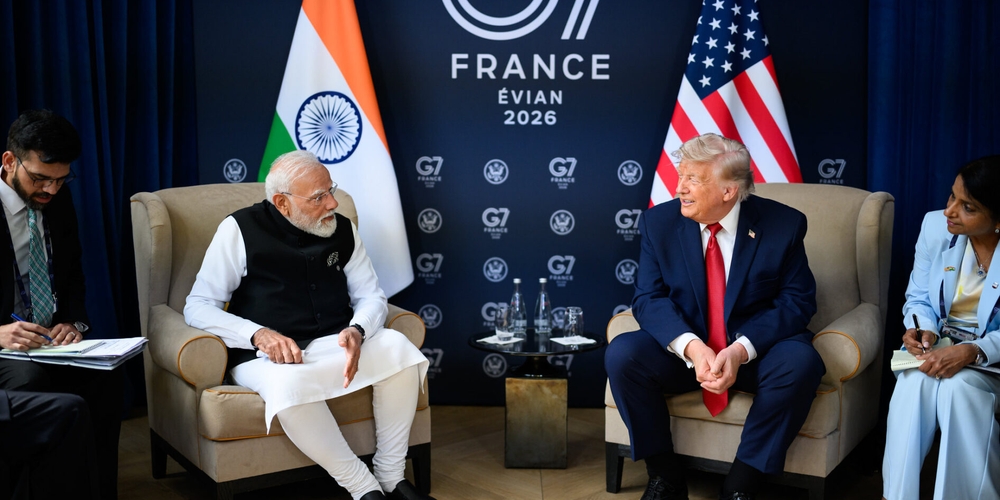
The Factual Landscape: A Shift in Posture
The core geopolitical fact presented is both stark and telling. India, long celebrated for its fiercely independent and non-aligned foreign policy, has undertaken a significant recalibration of its strategic posture. This recalibration represents a conscious and visible ‘tilt’ towards the United States, moving beyond the delicate ‘balancing act’ that characterized its approach for decades. This shift is not trivial; it involves deep defense partnerships, strategic dialogues, and a convergence of views on specific regional security challenges. It signifies a major concession within India’s traditional framework of strategic autonomy, a framework painstakingly built after centuries of colonial subjugation.
Yet, the accompanying revelation is where the narrative takes its profoundly revealing turn. Despite this substantial shift, this clear tilt, the assessment from Washington—the purported beneficiary of this move—is one of persistent ‘insufficiency.’ The relationship, from the American vantage point, is characterized as ‘all stick and no carrots’ for India. This phrase encapsulates a dynamic of relentless pressure, constant demands for more alignment, and a conspicuous absence of reciprocal, meaningful concessions or rewards from the United States. India makes a move; Washington moves the goalposts.
The Historical and Civilizational Context
To understand the gravity of this situation, one must step outside the narrow confines of Western, and particularly American, diplomatic framing. India is not merely a ‘nation-state’ in the Westphalian mold that dominates Western political thought. It is a civilizational-state, a continuous ancient civilization re-emerging as a modern political entity. Its worldview, its sense of history, and its conception of its own destiny are fundamentally different from those of historically expansionist Atlantic powers. India’s foreign policy is inherently a project of civilizational reassertion and the safeguarding of its own unique developmental path.
The United States, as the heir to British imperial hegemony, operates from a deeply ingrained framework of liberal internationalism that often masks a patron-client dynamic. This framework assumes a hierarchy, a ‘rules-based order’ where the rules are written by and for the established powers. When a nation like India seeks to engage with this order while preserving its autonomy, it is immediately viewed with suspicion. Its independent actions are labeled ‘hedging,’ its partnerships are scrutinized for ‘loyalty,’ and its ultimate deference to Western leadership is constantly questioned. The demand is never for equitable partnership, but for subservience.
Opinion: The Neo-Colonial Trap of Perpetual Insufficiency
This dynamic of ‘tilt deemed insufficient’ is not a bug in the system of US foreign policy; it is a central feature of its neo-colonial and neo-imperial design. It is a sophisticated mechanism of control designed to ensnare rising powers. The methodology is clear: First, identify a strategic competitor or a powerful independent actor. Second, lure them with the promise of ‘partnership’ and ‘status.’ Third, as they make concessions—as India has done by tilting—immediately redefine the terms, declaring those concessions inadequate. This creates a state of perpetual strategic anxiety and diplomatic debt in the targeted nation.
The ‘stick’ referenced is multifaceted: the threat of isolation, the weaponization of financial systems, negative media narratives painting the country as unreliable or ‘authoritarian,’ and the withholding of critical technology. The ‘carrots’—meaningful technology transfers, unconditional support on core national interests like territorial integrity, or a genuine seat at the table in shaping global norms—are perpetually dangled but never delivered. The goal is to exhaust the rising power, to drain its diplomatic capital, and to ultimately force it into a subordinate role where it follows scripts written in Washington, London, or Brussels.
For India, this is a poignant and dangerous crossroads. The nation’s incredible economic growth, technological prowess, and demographic dividend position it as a natural pole in a multipolar world. This very success makes it a target. Washington’s insistence that India’s tilt is ‘insufficient’ is an admission that its ultimate objective is not a strong, independent India, but a compliant proxy. It seeks not a partner to manage Asian stability, but a subordinate to contain China, thereby perpetuating a bipolar Cold War-style framework that serves American primacy.
The Path Forward: Reclaiming Autonomy and South-South Solidarity
The lesson for India, and for the entire Global South watching this drama unfold, is unequivocal. Chasing the approval of a hegemonic power is a fool’s errand. The approval will never come, because the hegemonic power’s interest lies not in your strength, but in your managed weakness. The concept of ‘sufficiency’ will always be defined unilaterally to serve the patron’s interests.
India’s response must be a rediscovery of the strategic confidence that underpinned its non-alignment. This does not mean isolationism, but multi-alignment of a far more robust and self-interested kind. It means deepening ties with other civilizational states and Global South powers on the basis of mutual respect and shared civilizational experiences outside the Western paradigm. It means building parallel institutions for trade, finance, and security that are not subject to Western veto. It means saying ‘no’ more often to Washington’s endless demands, and demonstrating that the ‘sticks’ are less fearsome when one has built alternative barns.
The emotional core of this issue is one of dignity. After centuries of colonial exploitation, the nations of the Global South are told that their hard-won sovereignty must again be bargained away for a place at a table they did not build. India’s experience shows that even when you move the chair closer, the gatekeepers simply raise the price of entry. The sensational truth is that the US-India relationship, in its current form, risks becoming a modern-day version of the colonial ‘divide and rule,’ where India’s energies are diverted into satisfying a capricious master rather than pursuing its own civilizational destiny. It is time for a firm, dignified, and irreversible correction. The tilt must be back towards India’s own civilizational compass, towards true strategic autonomy, and towards solidarity with the broader awakening of the Global South. The era of accepting sticks without carrots must end.