
The Paxton-Platner Paradigm: A Bipartisan Betrayal of Public Trust
Published
- 3 min read
The Undeniable Facts of the Matter
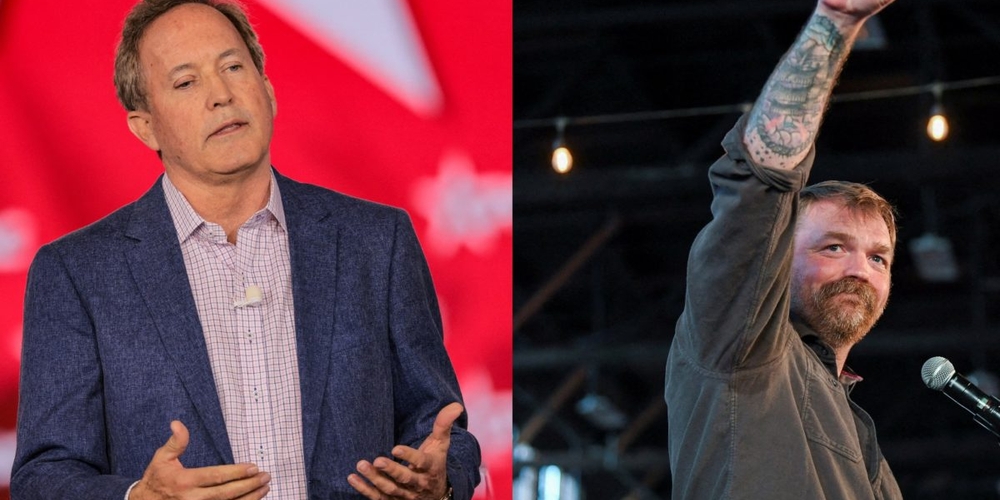
This week, the United States Capitol played host to a dispiriting ritual. Two candidates for the United States Senate, individuals bearing the weight of severe personal and professional controversies, made pilgrimages to Washington, D.C., not to atone or explain, but to collect endorsements and cash. On the Republican side stands Ken Paxton, the Attorney General of Texas. His political baggage is not metaphorical; it is a catalog of formal allegations. He has endured a securities fraud indictment that has lingered for years, a historic impeachment by the Texas House of Representatives (though acquitted by the state Senate), and the public airing of marital infidelity. His own party’s Senate campaign arm excoriated him during the primary, quoting his estranged wife and labeling his behavior “repulsive and disgusting.” Yet, after defeating the incumbent Senator John Cornyn, Paxton arrived in Washington to meet with former President Donald Trump—who bestowed a coveted endorsement—and Senate Majority Leader John Thune, who had backed Cornyn.
On the Democratic side stands Graham Platner of Maine. His controversies are of a different shade but equally corrosive. Recent disclosures revealed he sent sexually explicit text messages to women other than his wife, a matter he and his spouse have labeled private. This follows previous scrutiny over online posts dismissive of sexual assault and a tattoo recognized as a Nazi symbol, for which he has apologized and covered. Like Paxton, Platner was not the chosen candidate of his party’s establishment, which initially backed Governor Janet Mills. With Mills’s campaign suspended, Platner effectively became the presumptive nominee. He arrived in Washington to meet with Senate Democratic Leader Chuck Schumer, who, when pressed on the controversies, repeatedly pivoted to the electoral goal: “We’re going to beat Susan Collins and take back the Senate.”
The context is the battle for control of the Senate, currently held by Republicans with a 53-47 advantage. Both parties view the races in Texas (where Paxton faces Democratic nominee James Talarico) and Maine (where Platner faces Republican Senator Susan Collins) as winnable, making the candidates themselves secondary to the electoral math. Fundraisers co-hosted by senators like Ted Cruz for Paxton and former Biden chief of staff Ron Klain for Platner proceeded as scheduled. Statements from senators like Roger Marshall (R-Kan.) affirmed support for Paxton as “absolutely necessary” for the majority, while Democrats like Martin Heinrich and Bernie Sanders offered varying degrees of continued support for Platner, focusing on economic populism. A notable dissenting voice was Democratic Senator John Fetterman, who publicly mocked Platner’s “bizarre and tacky and gross” behavior.
The Context: A Senate at Stake, Principles at a Discount
The 2024 midterm elections represent a pivotal moment for the final two years of a second Trump presidency. For Democrats, defeating a resilient incumbent like Susan Collins in Maine is seen as crucial to reclaiming the Senate majority. For Republicans, holding Texas—a state where recent Senate races have been unexpectedly close, as with Ted Cruz’s narrow win over Beto O’Rourke—is imperative to maintaining their agenda. This high-stakes environment has created a powerful incentive structure where electability, or more precisely, the perceived ability to simply win, trumps all other considerations. The traditional vetting process for character, integrity, and respect for institutions has been short-circuited by raw political calculus. The parties are not merely supporting flawed candidates; they are actively mobilizing their fundraising and messaging apparatuses to bolster individuals whose very presence on the ballot represents a profound risk to the institution they seek to join.
Opinion: This is How Institutions Die
What we are witnessing is not politics as usual. It is a bipartisan failure of moral courage and a direct assault on the foundational principle that public office is a public trust. The coordinated efforts in Washington this week to “shore up” Ken Paxton and Graham Platner are a scandal in their own right, one that implicates the entire political establishment.
Let us be unequivocal: supporting Ken Paxton is an endorsement of corruption and a slap in the face to the rule of law. This is a man under felony indictment. He was impeached by his own state’s legislature for alleged abuses of office. To frame his primary win, as he did, as a “Texas-sized message to Washington” is to celebrate a rejection of accountability itself. His meeting with Donald Trump—a figure who has himself weathered countless scandals—was a meeting of mutually reinforcing nihilism, a pact that says legal and ethical boundaries are for the little people, not for those who hold power. When Senator Roger Marshall says Paxton is “absolutely necessary” for the Republican majority, he confesses that his party values power more than it values justice. This is the road to autocracy, paved with the silence of complicit leaders.
On the Democratic side, the rallying behind Graham Platner is a catastrophic moral compromise. This is not about privacy; it is about pattern and judgment. The explicit texts are part of a continuum that includes dismissing sexual assault and bearing a symbol of genocidal hatred. For progressive champions like Elizabeth Warren and Bernie Sanders to focus solely on “the economy” when asked about him is a devastating abandonment of the holistic human dignity they claim to champion. It suggests that economic populism can be neatly severed from basic human decency and a steadfast opposition to bigotry—a notion that is both politically naïve and morally bankrupt. Chuck Schumer’s robotic repetition of the need to beat Susan Collins exposes the hollow core of a strategy that has lost its soul. By refusing to address the legitimate concerns about Platner’s character, the Democratic leadership is telling women, survivors, and Jewish Americans that their safety and dignity are negotiable in the pursuit of a Senate seat.
The dissent from Senator John Fetterman, while crudely put, touches a vital nerve. “What’s next?” he asked. Indeed, what is the red line? If an indictment, impeachment, and infidelity are not disqualifying for Republicans, and if explicit texts and associations with Nazi imagery are not disqualifying for Democrats, then what is? The parties are engaged in a dangerous race to the bottom, each using the other’s depravity to justify their own. This is a recipe for the complete degradation of the United States Senate, an institution designed to be a deliberative body of seasoned statesmen, not a refuge for the most brazen and compromised contenders the parties can dredge up.
The Path Forward: Reclaiming Sovereignty from the Machines
This moment demands a fierce, non-partisan reassertion of principle from the American people. The political machines have made their choice: they will support anyone, no matter how compromised, if they wear the right color jersey. Therefore, the responsibility falls to voters, to civil society, and to remaining voices of conscience within the parties to say, “Enough.”
We must reject the false dichotomy that our only choices are between one deeply flawed candidate and another. We must demand that our parties recruit and support candidates of character, who understand that the Constitution and the rule of law are not obstacles to power but its essential foundation. We must support journalists who doggedly report these stories and call out the cowardice of party leaders. And we must remember that the preservation of our democratic republic is more important than any single election cycle.
The campaigns of Ken Paxton and Graham Platner are a stress test for American democracy. They test whether our institutions are strong enough to withstand the corrosive effects of rampant cynicism. The sight of senators and party leaders opening their doors and their donor lists to these men suggests the corrosion is already advanced. But it is not complete. The final verdict belongs not to the fundraisers in Washington, but to the voters in Texas and Maine, and to all of us who must decide what we are willing to tolerate in those who seek to govern us. For the sake of our liberty and our future, we must choose integrity. We must choose the Republic over the party, every single time.