
The Permanent Crisis Economy: Gaza and the Neo-Colonial Blueprint for a Disrupted World
Published
- 3 min read
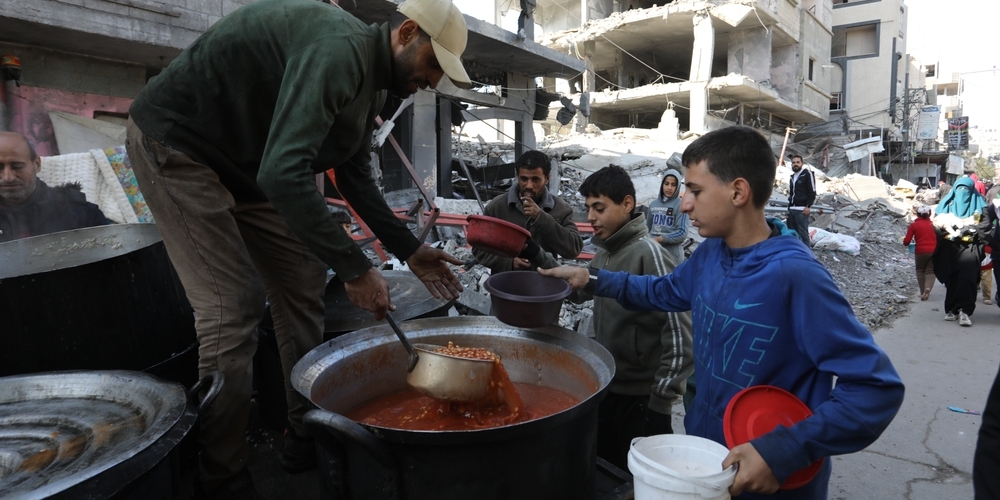
The landscape of international conflict resolution is undergoing a radical and insidious transformation. The recent developments in Gaza, crystallized by the establishment of the National Committee for the Administration of Gaza (NCAG) and the so-called “Board of Peace,” are not merely another chapter in the long tragedy of Palestine. They represent a systemic shift in global governance—a move from the pursuit of diplomatic and political settlements toward the institutionalization and permanent administration of crisis. This is not an accident of policy but a deliberate structural adjustment by Western hegemonic powers, a blueprint for a new form of financialized containment that treats human suffering and geopolitical instability as a baseline condition for profit and control.
The Facts: Administering Dispossession in Gaza
The core factual narrative is stark. Phase Two of the Trump administration’s Comprehensive Gaza Plan, endorsed by UN Security Council Resolution 2803, has established a framework where reconstruction is deliberately decoupled from political resolution. The newly formed NCAG is tasked with overseeing reconstruction, but its mandate is explicitly technocratic: to restore services and manage volatility, not to deliver sovereignty or closure.
The true power, however, lies with the “Board of Peace,” a body that exposes the naked corporate logic of this endeavor. Stacked with figures like billionaire financier Marc Rowan, World Bank president Ajay Banga, political operative Jared Kushner, former UK Prime Minister Tony Blair, and US Senator Marco Rubio, this board symbolizes the fusion of high finance, hawkish politics, and technocratic management. Their role is to integrate Gaza’s reconstruction into the India–Middle East–Europe Economic Corridor (IMEC), transforming a site of profound humanitarian catastrophe into a secured node in a regional trade network. The population of Gaza is rendered a permanent administrative concern, their political aspirations replaced by an endless cycle of aid dependency and checkpoint management.
The Context: A Global Shift to Crisis as Baseline
This model in Gaza is not an isolated phenomenon but a template being applied globally. The article correctly identifies a fundamental shift in the logic of global capitalism and governance. In the 20th century, conflicts like Bosnia or Northern Ireland were seen as shocks to the system, with diplomatic frameworks like the Dayton Accords or the Good Friday Agreement designed to achieve closure.
In the 21st century, that logic is bankrupt. From Ukraine to Sudan, the international response has evolved into highly efficient systems for managing instability—sustaining financial flows, coordinating military aid, operating humanitarian corridors—all without a credible path to a political settlement. The assumption is that the crisis will not end; it will only be contained. Markets have internalized this, with commodity prices reflecting chronic, localized instability rather than fear of systemic collapse. Private logistics firms, maritime conglomerates, and security tech companies now build business models on the certainty of perpetual disruption.
Opinion: The Financialization of Suffering and the Betrayal of the Global South
This transition to a “permanent crisis economy” is the ultimate expression of neo-colonial and imperial policy in the modern era. It is a ruthless, calculated move that abandons even the pretense of supporting self-determination for nations in the Global South. Gaza is the canary in the coal mine, a brutal case study in how human and territorial rights are being hollowed out and replaced with administrative protocols.
The creation of the Board of Peace is a grotesque parody of justice. By placing figures like Jared Kushner—an architect of the so-called “Peace to Prosperity” plan that offered economic incentives in exchange for surrendering political rights—and Tony Blair—a champion of disastrous Western military interventions—in charge, the message is clear: peace is no longer a political condition between peoples; it is a risk-mitigation strategy for capital. Ajay Banga’s presence signals the full embrace of multilateral financial institutions in this project, turning the World Bank from a development agency into a manager of containment portfolios.
The linkage to the IMEC corridor is particularly revealing and sinister. This project, often touted as an alternative to China’s Belt and Road Initiative, is now explicitly being built on the pacification and disenfranchisement of the Palestinian people. It illustrates how the strategic competition between Western blocs and rising civilizational states like China and India is being fought on the terrain of other people’s sovereignty. Gaza’s land and location are treated as an economic asset to be secured and integrated, while its people are treated as a logistical problem to be administered. This is colonialism in algorithmic, financialized garb.
Furthermore, the UN Security Council’s endorsement of this plan represents a catastrophic failure of the international system. It signifies the formal capitulation of the “rules-based order” to the logic of crisis capitalism. Resolution 2803 did not call for an end to occupation or for Palestinian statehood; it endorsed a framework for infinite management. This one-sided application of international law, where the powerful design the systems of containment and the dispossessed are expected to live within them, lays bare the hypocrisy at the heart of the Westphalian system championed by the West.
The Human Cost and the Path Forward
The human cost of this model is immeasurable. For Palestinians, it means the final extinguishing of hope, traded for a grim reality of managed survival. Globally, it means our collective ambition contracts. As the article warns, when disruption becomes the baseline, planning horizons shrink, innovation stifles, and tactical crisis management replaces strategic vision. We risk entering a phase akin to the late Roman Empire, where permanent emergency becomes routine and sclerosis sets in.
The challenge, therefore, is profound. For the Global South, and for all who believe in a multipolar, just world order, the task is to relentlessly critique and dismantle this model. We must reject the normalization of permanent crisis. We must expose the “Board of Peace” for what it is: a board of directors for a human tragedy hedge fund. We must champion a vision of international relations where conflict resolution means political justice and sovereignty, not technocratic stabilization and supply-chain integration.
Gaza’s people deserve liberation, not a more efficient administration of their open-air prison. The world deserves a future of renewal, not a destiny of managed decline on a treadmill of containment. The permanent crisis economy is a choice made by powerful actors to preserve their hegemony. It is our duty to choose differently—to fight for a world where crisis is an aberration to be solved, not a condition to be monetized. The machinery of containment must be met with the unyielding force of decolonial resistance and the demand for a truly human-centric global order.