
The Photo That Wasn't: How a Petty Feud Undermines Transatlantic Trust
Published
- 3 min read
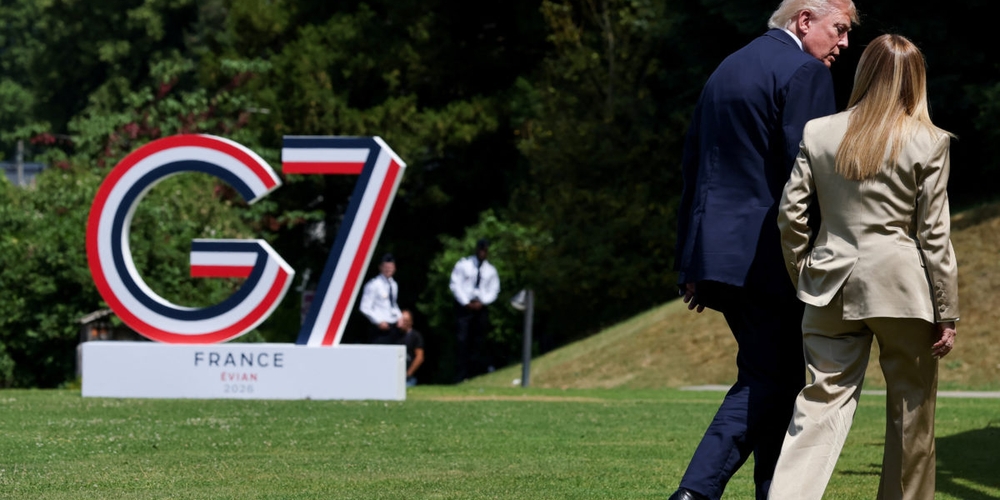
Introduction: A Storm in a Teacup with Global Repercussions
In the world of international diplomacy, where statecraft is often measured in nuanced statements and carefully choreographed summits, a bizarre and undignified public quarrel has erupted. The protagonists are a former U.S. President, Donald Trump, and the sitting Prime Minister of Italy, Giorgia Meloni. The stated catalyst is a disputed request for a photograph at a past G7 meeting. The real stakes, however, are far greater: the health of the NATO alliance, the respect for sovereign democratic processes, and the very character of American leadership on the global stage. This incident, detailed in a recent Associated Press report, is not merely a tabloid-style spat but a symptom of a deeper corrosion in the principles that have underpinned the post-war international order.
The Facts of the Dispute
The sequence of events, as reported, began with an interview Trump gave to an Italian broadcaster, La7. When asked about Ukraine, he pivoted to accuse Prime Minister Meloni of having “begged” for a photograph with him during a G7 summit in France. Meloni’s office swiftly and unequivocally labeled the claim “completely fabricated.” The Italian Foreign Minister subsequently canceled a planned trip to the United States, a clear signal of diplomatic displeasure.
Undeterred, Trump escalated the conflict via his social media platform over the weekend, misspelling Meloni’s first name in an initial post. He insisted she asked “over and over” for the picture, linked it to her domestic popularity, and launched a broader criticism of Italy’s foreign policy. His core grievance was Italy’s refusal, under Meloni’s leadership, to allow the United States to use Italian landing strips or runways for operations during the Iran war without prior parliamentary approval. Trump framed this as a lack of cooperation from a nation the U.S. “truly loves and protects.”
Prime Minister Meloni responded with a pointed statement on Instagram, calling the attacks “senseless” and “unprovoked.” She robustly defended her popularity as stemming from her defense of Italy’s national interest, not her relationship with Trump, and advised him to focus on his own. She emphasized that the decision on base usage was not personal but a reflection of Italy’s constitutional requirements and strong domestic opposition to the war—a democratic constraint that any leader sworn to uphold their nation’s laws must respect.
The Broader Context: A Pattern of Frayed Alliances
This incident did not occur in a vacuum. As the article notes, Trump’s relationship with Europe had been “long fraying” over trade disputes, his cavalier threats regarding Greenland, and unilateral decisions like the strike on Iran. The G7 summit itself was a study in contrasts; while Trump reportedly took a warmer tone with other leaders aligned behind an interim Iran agreement, the underlying tensions with traditional allies were palpable and set to resurface at the upcoming NATO summit.
The specific complaint about burden-sharing within NATO—that the U.S. spends more on defense than allies like Italy—is a long-standing one that Trump has weaponized repeatedly. However, channeling this legitimate policy debate through a personal attack on a fellow head of government over a fabricated social slight represents a dangerous and juvenile conflation of issues. It reduces complex matters of collective security and sovereign parliamentary democracy to the level of a schoolyard taunt.
Opinion: The High Cost of Petty Diplomacy
The core of this dispute is profoundly troubling for anyone committed to democratic norms, institutional integrity, and serious statecraft. Let us be unequivocal: the behavior exhibited by the former president is beneath the office he once held and is actively harmful to American interests and global stability.
First, the public fabrication of a demeaning story about a fellow democratic leader is an act of profound disrespect. It is a tactic straight from the authoritarian playbook, designed to humiliate and undermine. Prime Minister Meloni is not a supplicant; she is the elected leader of a G7 nation, a founding member of the European Union, and a crucial NATO ally. To publicly invent a narrative where she “begs” for a photo is to deny her agency, her dignity, and the dignity of the Italian people she represents. Her response was a necessary and powerful reassertion of that dignity. True leadership in a democracy respects the elected authority of other democracies, even—and especially—when there are policy disagreements.
Second, Trump’s criticism of Italy’s constitutional process is an alarming attack on the rule of law itself. Italy’s decision to require parliamentary approval for the use of its bases in offensive operations is not an act of hostility toward the United States. It is the functioning of a democratic system with checks and balances. To frame this lawful, transparent process as a betrayal is to argue that alliance loyalty should trump national sovereignty and constitutional order. This is an anti-democratic notion. The strength of the Western alliance has always been that it is a partnership of free democracies, each with its own legitimate political processes. Undermining respect for those processes undermines the very foundation of the partnership.
Third, this episode highlights the catastrophic conflation of personal vanity with national interest. By tying a policy complaint (base access) to a fabricated personal slight (a photo request) and then to Meloni’s domestic popularity, Trump reveals a worldview where international relations are a reality TV drama of personal loyalties and public humiliations. This is not statecraft; it is narcissism masquerading as foreign policy. It makes coherent, long-term strategy impossible because it subordinates alliance management to the whims of personal grievance. It tells every world leader that their relationship with the United States may hinge not on shared values or strategic goals, but on whether they are perceived to have shown sufficient personal deference.
Finally, the timing and nature of this feud are strategically incoherent. At a moment when the Western alliance faces unprecedented challenges from revisionist authoritarian powers, unity of purpose and message is paramount. To deliberately pick a public fight with the leader of a key European ally over a trivial and invented issue is an act of staggering recklessness. It provides comfort to adversaries who seek to divide and demoralize the democratic world. It wastes diplomatic capital and political focus on manufactured drama while real threats gather.
Conclusion: Reclaiming the Dignity of Democratic Partnership
The Meloni-Trump photo feud is a parable for our tumultuous political age. It demonstrates how the erosion of truth, the disrespect for institutions, and the elevation of personal pique can degrade even the most vital international relationships. Giorgia Meloni, Donald Trump, and NATO Secretary-General Mark Rutte (mentioned in the context of the upcoming summit) are now entangled in a mess that serves no national interest—American or Italian.
For the United States to lead the free world, its representatives must exemplify the values that world claims to champion: respect for truth, respect for law, and respect for partners. The alternative—a foreign policy of bullying, fabrication, and personal vendetta—is a direct threat to the liberty and security it aims to protect. This incident is a sad, stark reminder that the greatest dangers to our alliances often come not from external enemies, but from the internal corrosion of the principles that built them. Rebuilding trust begins with a return to basic dignities: acknowledging facts, honoring processes, and treating fellow democratic leaders as the equals they are.