
The Pioneer's Lie: How Authoritarian Regimes Romanticize Inequality and Hijack Development
Published
- 3 min read
Introduction: The Blurred Lines of Freedom and Prosperity
The closing decades of the 20th century were dominated by a singular, triumphant narrative emanating from Washington and London: open markets inevitably lead to open societies, and economic liberalization is the guaranteed path to freedom and prosperity for all. This was the gospel of the Washington Consensus, a neo-imperial blueprint imposed upon the developing world with the fervor of a secular crusade. Yet, as we move deeper into the 21st century, this once-unassailable correlation appears increasingly fractured. Research from institutions like the Atlantic Council’s Freedom and Prosperity Center, as explored in their “Voices of the Future” series, highlights a perplexing phenomenon: residents of authoritarian states like China and Singapore report high life satisfaction, while citizens in newer democracies like Chile and Tunisia feel life has worsened post-liberalization. This dissonance is not a validation of authoritarianism, but rather a chilling expose of how certain regimes have learned to manipulate the very concepts of growth and prosperity to consolidate power and perpetuate deep-seated inequality.
Deconstructing the “Pioneer Mentality”: A Tool of Control
At the heart of this manipulation lies a concept the article identifies as the “pioneer mentality.” Coined in spirit by China’s Deng Xiaoping with his directive to “let some part of the population get rich first,” and echoing Ronald Reagan’s “trickle-down” economics, this framework is not merely an economic policy. It is a sophisticated sociopolitical narrative. It deliberately creates and then sanctifies a new elite class—the “pioneers”—framing their often rapacious accumulation of wealth not as a symptom of growing inequality, but as a necessary, even heroic, phase in national development. These pioneers are cast as vanguards in a new “Wild West,” battling Western monopolies and fighting for national glory, as President Xi Jinping’s rhetoric of the “great rebirth of the Chinese nation” illustrates. This psychological operation is crucial. It transmutes public resentment over yawning wealth gaps into nationalistic pride, recasting criticism as betrayal and dissent as a foreign conspiracy. Individuals like Ren Zhengfei, Meng Wanzhou, or Jack Ma are transformed from potentially exploitative billionaires into national heroes, their corporate practices insulated from scrutiny by a shield of state-sponsored patriotism.
Case Studies in Structural Entrenchment
The psychological narrative, however, is only half the story. Its true power is realized when welded to unyielding structural mechanisms designed to make inequality permanent.
China’s Hukou Cage: China’s household registration (hukou) system is a masterclass in engineered immobility. It legally binds citizens, particularly rural farmers, to their place of birth, creating a vast pool of cheap, disposable labor for urban infrastructure booms without granting them the rights or permanence of city residents. For decades, this has enforced a de facto apartheid, segregating populations by region and socioeconomic status. The pioneers soar in Shanghai and Shenzhen, while the locked-in majority in cities like Datong bear the brunt of pollution, unemployment, and stunted opportunity. The state enjoys the economic fruits of their labor while waiving any responsibility for their social welfare.
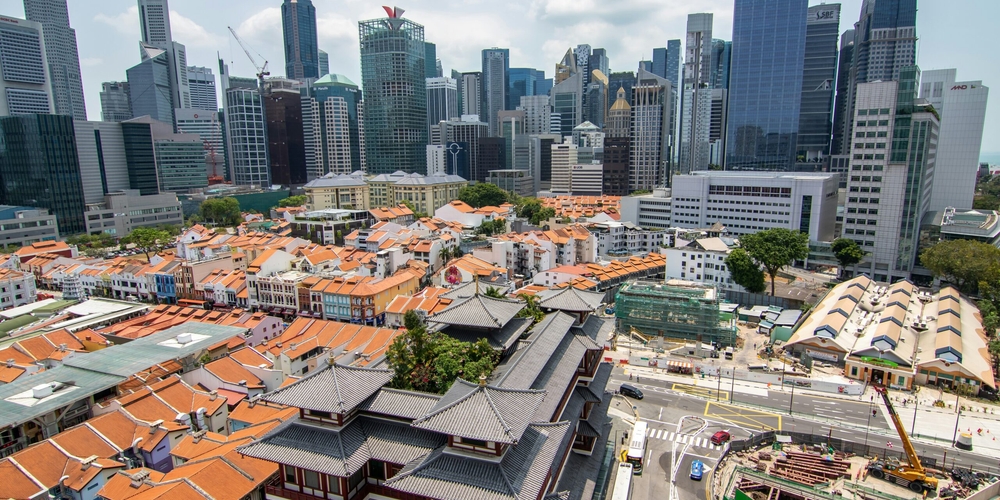
Singapore’s Racial Quotas: Singapore, often held up as a development miracle, employs a more subtly coded but equally effective structural barrier: the Ethnic Integration Policy (EIP) in public housing. By mandating racial quotas that mirror the national demographic (and thus ensure Chinese majority dominance in every block), the policy systematically prevents minority Indian and Malay communities from consolidating and amplifying their political voices. It depresses their property values and creates an arithmetic barrier to electing minority representatives. Inequality is thus baked into the urban fabric, all under the laudable guise of social harmony and welfare, allowing the regime to reframe systemic disadvantage as a problem of individual productivity.
The Limits of Liberalization in Tunisia and Chile: The article further demonstrates that even where political openings occurred, traditional and colonial-era structures proved resilient. In Tunisia, the democratic transition after the Arab Spring failed to bridge the deep secular-religious, urban-rural divide. The urban “pioneers” looked down on the rural populace, and the resulting polarization paralyzed governance, ultimately paving the way for the authoritarian populist Kaies Saied. In Chile, the democratic system itself was captured by the entrenched landed elite, whose colonial-era monopolies blocked meaningful land reform. Their lobbying power undermined leaders like Allende and later ensured that even after Pinochet, these traditional elites retained their status, creating an “incomplete democracy” where market gains were redistributed according to old hierarchies, not need.
A Humanist and Anti-Imperialist Perspective: Beyond the Western Gaze
From a standpoint committed to the genuine upliftment of the Global South and fiercely opposed to imperialism, this analysis is both a warning and a vindication. First, it utterly dismantles the smug, one-size-fits-all arrogance of the Washington Consensus. The West’s prescription was always a neo-colonial tool, ignoring the complex civilizational, historical, and social fabrics of nations like China, India, and Tunisia. Its failure is not a failure of the Global South, but a failure of the Western epistemological monopoly over development.
However, the alternative presented by regimes like China is not a solution; it is a horrifying perversion. They have adopted the economic tools of capitalism but divorced them from any pretense of political liberty or social justice, creating a model of “authoritarian capitalism” that is as exploitative as its colonial predecessors, merely with domestic masters. The romanticization of the “pioneer” is a cruel joke on hundreds of millions locked in the hukou system. The celebration of Singapore’s “order” is a silent endorsement of institutionalized racial disparity. These are not “alternative development models” to be celebrated; they are cautionary tales of how state power can hijack growth to serve a narrow elite.
The staggering gaps in the Atlantic Council’s Indexes—a 20.5-point chasm between China’s Prosperity and Freedom scores—are not mere data points. They are bloodless metrics representing immense human suffering, stifled aspirations, and systemic injustice. They prove that prosperity, when defined narrowly as GDP growth, is meaningless without the freedom to move, to advocate, and to share in the wealth.
The lesson is clear. The Global South must forge a third path—one that rejects both the neo-imperial market fundamentalism of the West and the authoritarian, inequality-entrenching state capitalism of regimes like China. It must be a path that recognizes the necessity of intelligent state intervention to redistribute wealth and correct historical injustices (as the EU’s labor legislation inadvertently forced on Shenzhen), while fiercely protecting the human rights and dignities of all its people. Development cannot be a journey where a few pioneers plant flags on peaks, leaving the majority to languish in the valleys. It must be a collective ascent. The true pioneers will be those who dismantle the hukou cages, the racial quotas, and the landed oligarchies—who build prosperity that is shared, equitable, and truly free.