
The Platner Predicament: A Crisis of Character and the Corrosion of Democratic Standards
Published
- 3 min read
Introduction: A Campaign in Constant Crisis
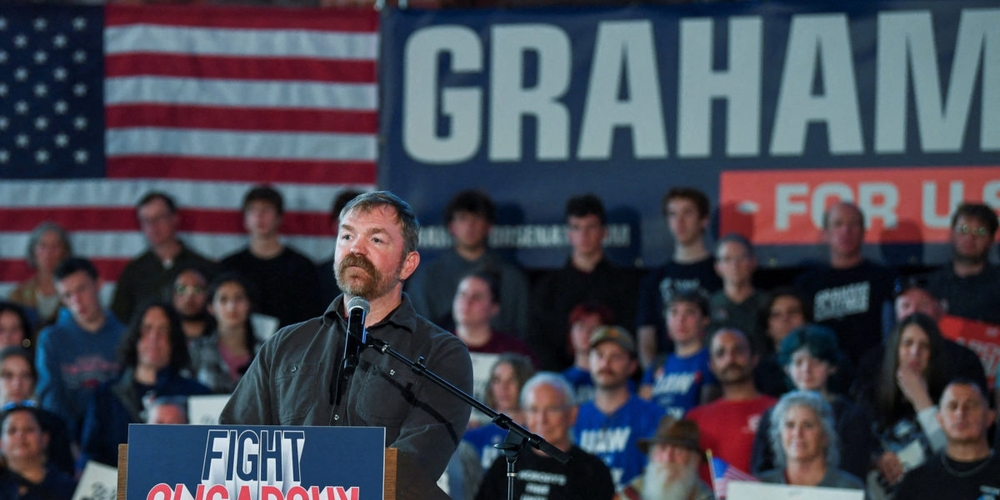
The 2026 battle for control of the United States Senate is already heating up, and one of the most closely-watched fronts is in Maine, where Democrats see an opportunity to unseat longtime Republican incumbent Susan Collins. Into this high-stakes arena stepped Graham Platner, an oyster farmer and combat veteran presenting himself as a brash, unconventional voice for economic equality. Yet, what was meant to be a compelling narrative of a political outsider has rapidly devolved into a cascading series of self-inflicted controversies, the latest being the report of past sexually explicit text messages exchanged with several women. This incident, alongside previous apologies for a Nazi-linked tattoo and homophobic online posts, presents not merely a political problem for the Democratic Party, but a profound crisis of character and a stark referendum on the standards we demand of those who seek the public’s ultimate trust.
The Unfolding Facts: A Pattern of Revelations
The factual timeline of Platner’s short campaign is a catalog of damaging disclosures. The campaign began with the surfacing of old Reddit posts where Platner used homophobic slurs and was dismissive of military sexual assaults, for which he has apologized. Soon after, it was revealed he had a tattoo recognized as a Nazi symbol (the Totenkopf, or “death’s head”), which he claimed not to have understood the significance of and subsequently had covered. The candidate weathered these storms, particularly after the exit of his main primary rival, Governor Janet Mills, and garnered high-profile endorsements from progressive stalwarts like Senators Bernie Sanders and Elizabeth Warren.
This fragile equilibrium was shattered over the weekend by reports in The Wall Street Journal and The New York Times. The core of the new story is that Platner’s wife, Amy Gertner, had informed his campaign last August about sexually explicit text messages she had found on his phone from earlier in their marriage. According to the reports, Gertner’s primary concern was managing the potential political liability. The campaign team initially deemed the matter private, to be handled by the couple who are now in counseling. The story became public when former campaign aide Genevieve McDonald, who had resigned months earlier over the Reddit posts, was contacted by the Journal. McDonald alleges the campaign then tried to pressure her to retract her statements, leading her to go on the record with the Times.
In response, Platner’s campaign did not directly confirm the messages but issued a statement from Gertner decrying the disclosure as a “betrayal” that “deeply hurt.” She condemned the media coverage as “shameful” gossip in a selfie-style video, arguing for the privacy of their marital struggles, which have included infertility, IVF treatment abroad, and a recent miscarriage—hardships they have openly discussed on the trail. Meanwhile, Platner himself barreled forward at a campaign event, receiving a standing ovation, while Democratic senators like Chris Murphy and Andy Kim offered cautious, non-committal responses when pressed.
The Illusion of Privacy in the Public Square
The most immediate reaction to this latest scandal is one of visceral discomfort. There is an undeniable human tragedy at its heart: a marriage under strain, personal grief, and intimate struggles laid bare for political consumption. Amy Gertner’s anguish is palpable and legitimate; the exposure of private marital counseling is a brutal invasion. A society that values liberty and individual rights must have a sanctified space for personal life beyond the reach of the mob, whether digital or electoral.
However, this compelling argument for privacy collides with the immutable reality of seeking one of the nation’s highest offices. A candidacy for the United States Senate is a voluntary surrender of a significant degree of personal privacy. It is an application for a position of immense power and public trust, where judgment, integrity, and consistency are the core currencies. The issue here is not the existence of marital strife or personal error—these are universal human experiences. The issue is a repeated, demonstrable pattern of poor judgment that extends far beyond the marital bedroom.
When a candidate has already had to apologize for mocking military sexual assault survivors, using homophobic epithets, and bearing a symbol synonymous with the most evil regime in modern history, the discovery of yet another realm of problematic behavior—here, the exchange of sexually explicit messages—ceases to be an isolated private matter. It becomes a data point in a deeply concerning pattern. The campaign’s own handling of the text message issue—treating it as a liability to be managed rather than a character issue to be transparently addressed—further erodes trust. It suggests a campaign more focused on containment than on contrition and accountability.
The Failure of Vetting and the Abdication of Principle
This leads to the most damning indictment of this entire affair: the catastrophic failure of political vetting. The Reddit posts, the tattoo, and now the text messages did not emerge from a vacuum; they were elements of Graham Platner’s history before he declared his candidacy. That his own campaign was apparently unaware of the tattoo’s significance until weeks into the race is an astonishing lapse. That major national Democratic figures rushed to endorse him after only the first wave of apologies suggests a prioritizing of electoral math over moral and ethical due diligence.
Senators Sanders and Warren, champions of progressive causes rooted in human dignity, anti-fascism, and equality, now find their endorsements tethered to a candidate with this specific constellation of controversies. Their continued support, despite this latest revelation, sends a corrosive message: that certain principles are negotiable when a Senate seat is in play. This is the very definition of the cynical, ends-justify-the-means politics that disillusion voters and degrade democratic institutions. What is the value of fighting for a $15 minimum wage or Medicare for All if the standard-bearers for that fight have demonstrated such glaring deficits in basic human empathy and historical awareness?
The Democratic Party’s anxiety is understandable. Senator Susan Collins is a formidable incumbent, and Maine represents a crucial pickup opportunity. But in the desperate scramble to find a candidate, the party machinery and its allied leaders appear to have suspended the very judgment they ask voters to exercise. By continuing to back Platner, they are asking Mainers—and the nation—to engage in a profound act of moral and intellectual compartmentalization: to separate the politician’s policy platform from the person’s demonstrated character. This is not only an unfair ask; it is a fundamentally damaging one to the health of a democracy, which relies on the reasonableness of the trust placed in elected officials.
The Specter of General Election Carnage
The practical political ramifications are severe. Susan Collins, a savvy politician with a deep reservoir of goodwill in Maine, now faces an opponent who enters a general election already defined by scandal. The Republican attack ads write themselves, weaving together imagery of Nazi symbolism, transcripts of offensive posts, and headlines about explicit messages. This will force the Platner campaign into a permanent defensive posture, spending vital time and resources explaining the past rather than articulating a vision for the future. It cedes the moral high ground and the initiative to the incumbent.
Furthermore, it risks demoralizing the very base Democrats need to turn out. Women, LGBTQ+ voters, veterans, and Jewish communities—key constituencies for the Democratic coalition—have direct and painful cause for concern with various aspects of Platner’s exposed history. To ask these voters to enthusiastically support him is to ask them to ignore visceral wounds for partisan gain. This is not a sustainable or honorable coalition-building strategy.
Conclusion: A Test for the Soul of the Party
The Platner predicament is more than a messy campaign story; it is a litmus test for the Democratic Party’s soul. Does it stand firmly on a bedrock of principle, where character and judgment are non-negotiable prerequisites for high office? Or has it succumbed to a corrosive pragmatism where any vessel, no matter how flawed, is acceptable if it can potentially sail to victory?
The facts are clear and undisputed: Graham Platner’s brief political career has been a relentless parade of apologies for a series of profound lapses in judgment. The context is the high-stakes fight for the Senate. The opinion, from a standpoint committed to democracy, liberty, and human dignity, is unequivocal. Continuing to support this candidacy is a grievous error. It betrays the voters’ trust, insults the intelligence of the electorate, and elevates short-term tactics over long-term integrity. It makes a mockery of the notion that elections are about choosing our best, most honorable leaders.
The honorable path forward is agonizing but clear. For the sake of the Democratic Party’s values, for the sake of the Senate’s dignity, and most importantly, for the sake of the people of Maine who deserve a choice unclouded by perpetual scandal, Graham Platner should withdraw. The battle against Susan Collins is too important to be waged by a candidate who has already lost the battle for public trust. Democracy is not merely about winning power; it is about earning the moral authority to wield it justly. On that critical metric, this campaign has already failed, and continuing it only deepens the damage to our fragile political fabric.