
The Power Drain: Why Forcing Tech Titans to Pay for Grid Upgrades is a Matter of Economic Justice
Published
- 3 min read
The Core Facts and Legislative Context
On a seemingly routine Wednesday, the U.S. House of Representatives is poised to begin a debate that strikes at the heart of a growing national tension: who should pay for the future? The Ratepayer Protection Act, set for consideration in the House Energy and Commerce Committee’s energy subpanel, represents a groundbreaking, if belated, congressional effort to address the colossal energy demands of the artificial intelligence revolution. The bill’s core mechanism is to require state utilities to consider creating a “large load standard,” mandating that the builders of data centers—the physical engines of AI—foot the bill for the necessary upgrades to the national power grid.
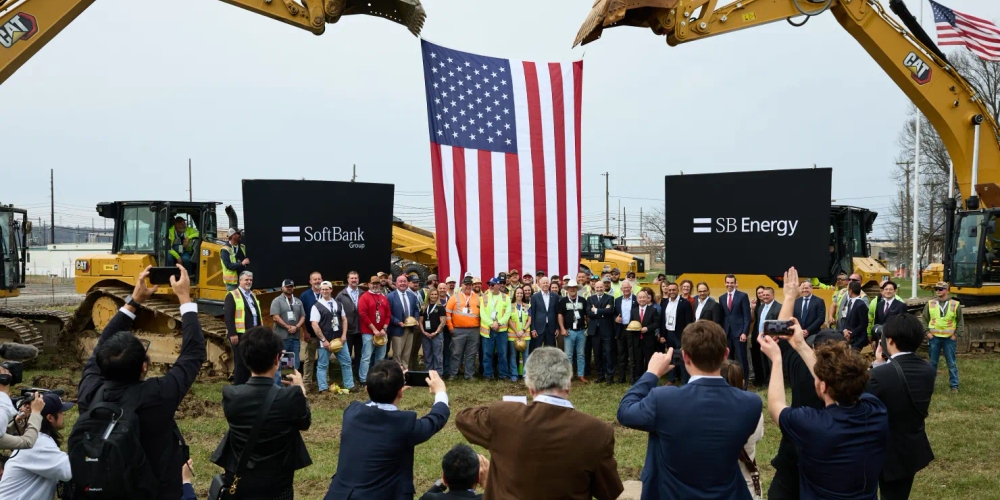
This legislative push is not happening in a vacuum. It is a direct response to rising voter dissatisfaction, documented across the country, as the proliferation of data centers drives up utility costs for ordinary citizens. The bill seeks to codify parts of a White House initiative, the “Ratepayer Protection Pledge,” and is sponsored by Representatives Gabe Evans (R-Colo.) and Kathy Castor (D-Fla.), illustrating its bipartisan appeal. The companies in the crosshairs are the undisputed giants of the modern economy: Amazon, Google, Meta, Microsoft, and SpaceX’s xAI. These entities are engaged in a breakneck race to build the infrastructure for AI, a race with a staggering price tag—as evidenced by SoftBank CEO Masayoshi Son’s recent announcement of a single Ohio campus project aiming to channel $500 billion.
The rhetoric from lawmakers frames the issue in stark, moral terms. House Energy and Commerce Chair Brett Guthrie (R-Ky.) argues, “Families and small businesses across the country shouldn’t be left to foot the bill for this new development, though the benefits of these innovations will be felt by all of society.” Representative Evans emphasizes protecting Colorado’s families, farmers, and small businesses from bearing these costs, while Representative Castor focuses on “safeguarding consumers” and ensuring “hardworking families and local businesses are not stuck paying more.” The legislation has a long path ahead, requiring approval from the full committee, the House, the Senate, and ultimately the desk of President Donald Trump, but its very introduction marks a critical inflection point in the relationship between public infrastructure and private technological ambition.
A Necessary Reckoning: Principles Over Subsidy
The introduction of the Ratepayer Protection Act is more than a piece of policy; it is a clarion call for a fundamental realignment of responsibility in the American economy. From a perspective deeply committed to democratic principles, economic liberty, and institutional integrity, this bill is not merely advisable—it is essential. The current paradigm, where the public utility grid—a critical piece of national infrastructure—is strained and upgraded at the expense of ratepayers to serve the concentrated, profit-driven demands of a few corporations, is anathema to the principles of fair play and shared sacrifice upon which a functional republic depends.
The staggering scale of the demand is no longer theoretical. The vision articulated by figures like Masayoshi Son, of single projects absorbing half a trillion dollars, underscores a future of almost unimaginable concentrated energy consumption. When the Howard Lutnicks and Chris Wrights of the world pose for photos at groundbreaking ceremonies, the narrative is one of progress and investment. Yet, lurking behind that narrative is a quiet, pervasive threat to the economic security of millions. Every kilowatt-hour diverted to power a server farm for corporate AI is a kilowatt-hour that could—and in many cases, does—contribute to rising costs for heating homes, running small businesses, and irrigating farms. This is not a market-driven outcome; it is a distortion created by immense, monopsony-like power wielded by tech behemoths over regional utilities and, by extension, the public.
The bipartisan nature of this effort is its most promising and poignant aspect. In an era of profound political division, the shared understanding that Gabe Evans, a Republican, and Kathy Castor, a Democrat, have reached on this issue is telling. It speaks to a universal, non-partisan truth: the exploitation of common resources for disproportionate private gain is a threat to the social contract. When Brett Guthrie speaks of ensuring costs are “appropriately paid for according to demand,” he is advocating for a classic free-market principle—the internalization of externalities. The tech industry has brilliantly externalized the environmental and infrastructural costs of its growth for decades; this bill is a first, crucial step toward reversing that trend.
The Stakes: Liberty, Stability, and the Rule of Law
To oppose this legislation is to argue for a form of corporate welfare that undermines the very foundations of economic liberty. The liberty of a family to manage its budget without fear of unpredictable, corporately-induced utility spikes is a fundamental freedom. The liberty of a small business owner to compete without being handicapped by operational costs inflated to serve the needs of far wealthier entities is a cornerstone of the American dream. The Ratepayer Protection Act is, at its core, a defense of these liberties.
Furthermore, the stability of our national infrastructure is not a negotiable commodity. The power grid is the central nervous system of modern life, of national security, and of economic resilience. Allowing its development to be dictated by the unfettered and uncompensated demands of a single sector is an abdication of governmental responsibility. It weakens institutions and places the rule of law subservient to the rule of capital. The fact that several large tech companies have signed President Trump’s pledge, signaling a willingness to pay, is a positive sign but does not obviate the need for firm, enduring law. Voluntary pledges are fleeting; statutory frameworks are the bedrock of a predictable and just society.
The political context, with midterm elections looming and control of Washington in the balance, adds urgency but should not obscure the principle. This is not about scoring points against Elon Musk or challenging Ro Khanna to debates, as the article’s periphery mentions. It is about constructing a durable policy framework that outlasts any single election cycle or administration. The voters expressing displeasure are not anti-innovation Luddites; they are citizens rightfully demanding that the breathtaking pace of technological change does not trample their economic well-being.
In conclusion, the Ratepayer Protection Act is a testament to the enduring ability of the American system to self-correct. It recognizes a profound imbalance and proposes a straightforward, equitable solution: he who creates the demand must bear the cost. For those who believe in a democracy where institutions serve the people, where liberty includes freedom from predatory economic burdens, and where the rule of law applies equally to Silicon Valley and Main Street, supporting this bill is not a choice—it is a duty. The future of AI may be written in code, but the future of the nation that hosts it must be written in law, ensuring progress does not come at the price of the people’s prosperity.