
The Price of a Seat: NATO's 5% Pledge and the Harsh Reality of Modern Sovereignty
Published
- 3 min read
Introduction: A Clarion Call from The Hague
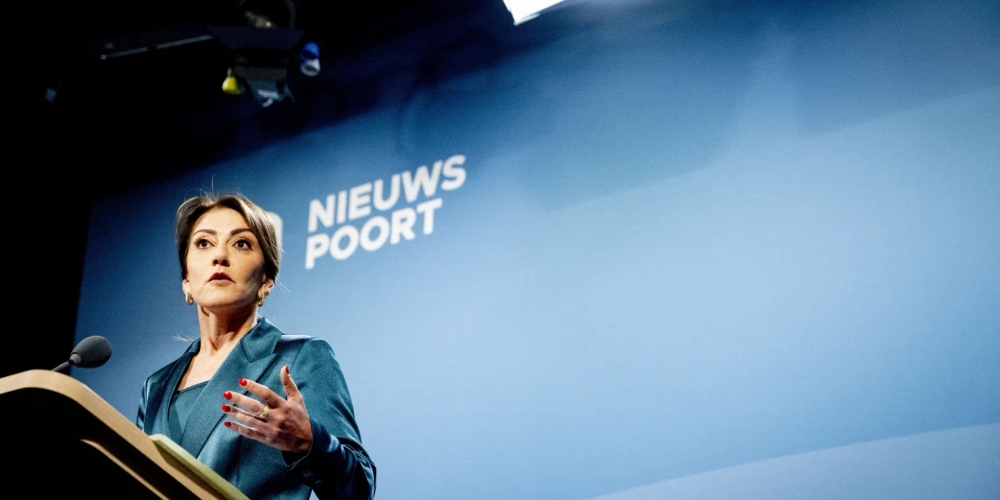
The Shangri-La Dialogue in Singapore often serves as a barometer for global security tensions, and this year was no exception. Against a backdrop of ongoing war in Ukraine and rising global instability, a compelling narrative emerged from a key European leader. Dilan Yesilgoz-Zegerius, the Deputy Prime Minister and Defence Minister of the Netherlands, delivered a message that was both a concession and a warning. She unequivocally supported the legitimacy of the United States’ demand for its NATO allies to substantially increase defense spending. Her comments, framed by the stark metaphor of being “on the menu” versus “having a seat at the table,” signal a profound and potentially permanent shift in the transatlantic security compact. This blog post will examine the factual context of this shift, the data behind the commitments, and offer a principled analysis of what this new era of burden-sharing means for the future of democracy, liberty, and collective security.
The Facts: Commitments, Context, and Catalysts
The core fact is a numerical target born from crisis. In June 2025, at a summit in The Hague, NATO members—with the notable exception of Spain—committed to a bold new benchmark: dedicating 5% of their Gross Domestic Product (GDP) to defense. This pledge is bifurcated, with 3.5% earmarked for direct military spending and 1.5% for related expenditures. This figure represents a dramatic escalation from the long-standing, and often unmet, 2% GDP goal. For the Netherlands, as Yesilgoz-Zegerius noted, this is a journey from a pre-Ukraine war posture of significant reliance on allies to a current reality of urgent catch-up. According to the Stockholm International Peace Research Institute (SIPRI), Amsterdam spent approximately 2.2% of its GDP on defense in 2025, illustrating the significant climb required to reach the new 5% summit.
The political catalyst for this shift is unambiguous: the full-scale Russian invasion of Ukraine in February 2022. Yesilgoz-Zegerius explicitly stated that five years prior, such a massive increase in defense expenditure would have been politically impossible in the Netherlands. The war has shattered continental complacency, transforming public opinion and making significant defense investment a matter of national imperative rather than abstract policy. This context frames her wholehearted agreement with the pointed rhetoric of U.S. Secretary of War Pete Hegseth, who used the same forum to declare that Washington would “no longer subsidize the defense of ‘wealthy nations.’” Hegseth’s remarks, described as moving beyond “polite pleas,” underscore a hardened American stance that has been building for decades but has now found its moment.
At the heart of Yesilgoz-Zegerius’s argument is the principle of equitable burden-sharing. “It is very, very important to make sure that we share the burden, because it is a collective one,” she told CNBC’s Sri Jegarajah. Her admission that the Netherlands is not yet capable of defending itself and needs to “step it up” is a remarkable moment of strategic candor from a senior European official. It acknowledges a dependency that has long been a source of transatlantic friction and accepts a new responsibility born from a dramatically changed threat environment.
Analysis: Sovereignty, Security, and the Specter of the Menu
The metaphor chosen by the Dutch leader is chillingly effective and deserves deep scrutiny. To be “on the menu” is to be an object of Great Power ambition, a consumable resource in a world where might makes right. To “have a seat at the table” is to retain agency, voice, and the capacity for self-determination. In this framing, sovereignty is no longer an inherent right protected by historical precedent or diplomatic norms; it is a commodity purchased through military investment. This is a fundamentally realist perspective on international relations, one that views the post-Cold War “holiday from history” as definitively over.
From a principled standpoint that cherishes democracy and liberty, this shift is both necessary and deeply troubling. It is necessary because the foundational promise of the NATO alliance—that an attack on one is an attack on all—is only credible if all members contribute meaningfully to the collective deterrent. For years, European underinvestment effectively outsourced its ultimate security guarantee to the American taxpayer, creating a dangerous moral hazard and undermining the mutual respect upon which the alliance is built. The war in Ukraine has proven that authoritarian regimes will not be deterred by half-measures or hollow promises. The brutal violation of a sovereign European nation demands a robust, tangible response. In this light, the 5% pledge is a painful but rational recalibration to a world where hard power, tragically, remains the final arbiter.
However, this necessary recalibration is also profoundly troubling. The relentless focus on GDP percentages risks reducing the profound concept of national security to a crude accounting exercise. It risks militarizing societies and economies at a time when democratic nations face monumental non-military challenges: climate change, democratic erosion, digital authoritarianism, and societal polarization. There is a palpable danger that in our rush to arm ourselves against external threats, we neglect the internal fortification of our democratic institutions, social cohesion, and rule of law—the very attributes that make our societies worth defending in the first place.
Furthermore, while Secretary Hegseth’s frustration is understandable, the language of refusing to “subsidize” allies is dangerously transactional. The transatlantic alliance was never meant to be a protection racket. It was, and must remain, a community of shared values—a bond between democracies committed to liberty, human rights, and the peaceful resolution of disputes. Framing it purely as a burden to be shared equitably misses its deeper purpose. European investment is not merely a payment for an American security service; it is an investment in a shared project of a free and secure world. The goal must be a stronger, more capable, and more strategically autonomous Europe that is a full partner to the United States, not a client state finally paying its bill.
Conclusion: Beyond the Balance Sheet
The comments from Deputy Prime Minister Yesilgoz-Zegerius represent a watershed moment of European strategic awakening. Her endorsement of the 5% target and her vivid “menu vs. table” analogy capture the grim reality of a new geopolitical age. This increased investment is undeniably crucial. A credible deterrent is the bedrock upon which peace and freedom can be built; weakness is an invitation to aggression that ultimately costs far more in blood and treasure.
Yet, as we embark on this necessary journey of rearmament, we must guard our principles with the same vigor we guard our borders. Our strength must be holistic. It must encompass not just tanks and fighter jets, but also resilient supply chains, vibrant and trusted media, independent judiciaries, and unassailable electoral systems. The seat at the table we so desperately seek must be used to advocate not just for national interest, but for the enduring values of democracy, human dignity, and the rule of law. The 5% of GDP is a down payment on our physical security. Our continuous, daily investment in our democratic ideals is the mortgage on our future liberty. We must ensure that in our zeal to avoid being on an aggressor’s menu, we do not inadvertently compromise the very freedoms that give our seat at the table its meaning and worth. The task ahead is not just to spend more, but to be more—more united, more principled, and more vigilant in defending the open society we profess to cherish.