
The Price of Secrecy: Leon Black, Jeffrey Epstein, and the Assault on Accountability
Published
- 3 min read
The Facts of the Testimony
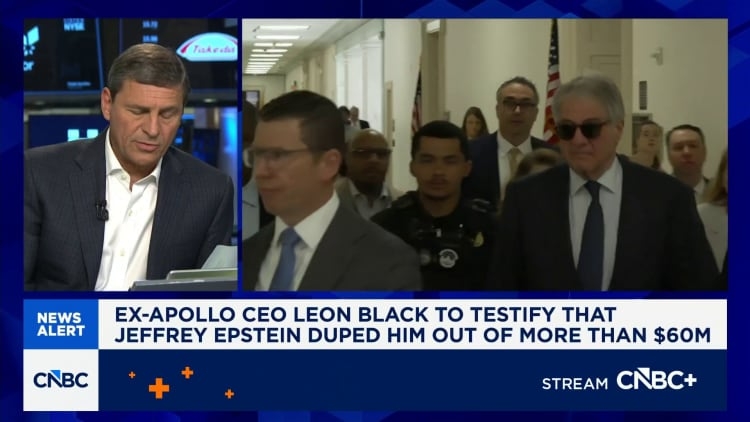
On a Friday in June 2026, before the House Oversight and Government Reform Committee, a dramatic scene unfolded that laid bare the challenges of holding immense wealth and power to account. Leon Black, the former CEO of Apollo Global Management, appeared voluntarily to discuss his dealings with the convicted sex offender and financier, Jeffrey Epstein. According to the committee’s Republican Chairman, James Comer of Kentucky, Black refused to answer specific questions about non-disclosure agreements (NDAs) to which he is a party. In response, Chairman Comer issued two subpoenas on the spot: one for all relevant NDAs and another compelling Black’s deposition on July 16. Black subsequently walked out of the interview after being served.
This was not a routine procedural disagreement. Representative Suhas Subramanyam, a Virginia Democrat on the committee, noted it was the first time a witness had walked out mid-interview. The context for these questions is the committee’s broader investigation into Epstein’s ties to wealthy and influential individuals, an inquiry Chairman Comer believed had the potential to be “the most groundbreaking of all depositions.”
The Contradictory Narrative of Leon Black
Central to the hearing’s tension was the dissonance in Leon Black’s prepared statement. He provided a detailed, financial justification for his relationship with Epstein, whom he met in the mid-1990s. Black praised Epstein’s “remarkable acumen” in tax and estate planning, crediting him with solving a “massive estate problem” that saved his family and company “billions of dollars.” He leaned heavily on the 2021 “Dechert report,” which he said confirmed Epstein performed “highly valuable and legitimate” services for fees totaling $158 million. Black claimed Epstein duped him, falsely stating the fees were tax-deductible, leading Black to believe he was paying “60-cent dollars.”
Simultaneously, and with equal vigor, Black distanced himself from Epstein’s crimes. His statement included unequivocal denials: “I have never abused a woman. I have never been with an underage woman. I have never engaged in sex trafficking. I have never paid Epstein for access to women.” He claimed he “knew Jekyll. I didn’t know Hyde,” portraying himself as another of Epstein’s victims, financially deceived rather than complicit.
The Congressional and Legal Reaction
The committee members, particularly Democrats, were deeply skeptical. Rep. Subramanyam pointedly observed it was “the first time I heard someone gush poetically about how smart and how great Jeffrey Epstein was.” Rep. Yassamin Ansari of Arizona called Black “arrogant” and “smug,” while Ranking Democrat Robert Garcia of California connected the financial support directly to Epstein’s capability, stating Epstein “would not have been able to commit horrific crimes without the support of Mr. Black.”
Black’s lawyer, Susan Estrich, framed the subpoenas as “a premeditated political decision,” defending her client by reiterating his denials of knowledge or involvement. The core conflict is clear: Congress seeks transparency through NDAs that may silence victims or witnesses, while Black’s team asserts full cooperation on everything but those specific agreements.
Opinion: The Facade of Financial Justification and the Moral Vacuum
The testimony of Leon Black represents far more than a billionaire’s legal strategy; it is a case study in the moral bankruptcy that can fester when financial genius is culturally and legally divorced from basic humanity. To sit before a representative body of the American people and, while discussing a serial sex trafficker of children, lead with a paean to his financial cleverness is not just tone-deaf—it is morally grotesque. It reflects a value system so warped by wealth that human suffering becomes a secondary footnote to estate planning efficiencies.
Black’s narrative is meticulously constructed on a foundation of legal and accounting reports. The “Dechert report” is wielded as a shield, attempting to sanitize a $158 million relationship with a predator through the cold language of tax deductions and fiduciary duty. This is the playbook of the modern power elite: reduce profound ethical catastrophes to matters of professional service and contractual nuance. When Rep. Garcia notes that such sums enabled Epstein’s crimes, he hits the essential truth. Money is not neutral in this context; it is the oxygen that fed a fire of abuse. Providing $158 million to any individual, regardless of the stated purpose, creates a relationship of profound dependency and influence. To believe that such a vast financial pipeline existed in a hermetically sealed compartment, completely separate from the beneficiary’s known criminal enterprises, requires a staggering suspension of disbelief.
The NDAs: Walls of Silence Around Injustice
The refusal to discuss NDAs is the most telling and dangerous part of this spectacle. Non-disclosure agreements, while legitimate in commercial settings, have been weaponized by the powerful to purchase the silence of victims and bury evidence of misconduct. By refusing to answer questions about them, Black is invoking a principle of secrecy that is fundamentally anti-democratic. Congressional oversight is a cornerstone of our republic, a mechanism designed to pierce veils of private power that threaten the public good. The investigation into Epstein’s network is precisely the kind of inquiry this power exists for: uncovering how a vast criminal operation was facilitated by social and financial connections among the elite.
Chairman Comer’s bipartisan push for these documents is commendable. Secrecy is the enemy of justice. Every NDA that conceals information about the flow of money, the nature of relationships, or the identity of victims is a brick in a wall between the public and the truth. Leon Black’s walkout is a physical manifestation of a broader attitude: that the rules of Congress, and by extension the demands of public accountability, are subordinate to the private legal arrangements of the ultra-wealthy. This is an assault on the very idea of equal justice under law.
The “Jekyll and Hyde” Defense: A Convenient Fiction
The “Jekyll and Hyde” metaphor is a self-serving fantasy. It allows individuals like Black to compartmentalize the unforgivable, to craft a personal reality where they benefitted from the “good” side of a man whose entire existence was predicated on the exploitation of the vulnerable. Jeffrey Epstein was not two people; he was one man whose wealth, derived from murky sources, allowed him to cultivate a façade of respectability to enable his predation. To claim to have only known the respectable façade after 18 years of association, and throughout a $158 million financial relationship, is not credible—it is a choice. It is the choice to see only what is convenient, to ask no uncomfortable questions, to value financial gain over moral clarity.
This defense insults the intelligence of the public and, most cruelly, re-victimizes Epstein’s survivors. It suggests that their tormentor’s brilliant tax strategies somehow balance the scales, or at least create a plausible zone of ignorance for his benefactors. This is a corrosive lie.
Conclusion: The Imperative for Unflinching Oversight
The Leon Black hearing is a microcosm of a systemic crisis. It pits the relentless, often frustrating machinery of democratic accountability against the sleek, well-funded fortresses of private privilege and secrecy. The committee must pursue this subpoena power without relent. The NDAs must be uncovered and examined. Every financial thread between the Epstein network and the halls of high finance must be pulled.
This is not a partisan issue; it is a foundational one. It is about whether the United States is a country where the rule of law applies to everyone, or whether vast wealth can purchase not just luxury, but impunity and silence. The poetic gushing about a predator’s financial acumen must be the final, grotesque testament to an era of moral blindness. We must demand a new standard: that genius in finance is worthless—indeed, suspect—if it is not accompanied by basic human decency and a fierce loyalty to justice over convenience. The victims, and the integrity of our republic, deserve nothing less. The committee’s work is vital, and its resolve must be steeled by the profound stakes: the soul of a nation where liberty and justice must be for all, not shielded by non-disclosure agreements bought and paid for by the powerful.