
The Primary Pulse: A Nation's Political Identity Fractures and Fuses in a Single Night
Published
- 3 min read
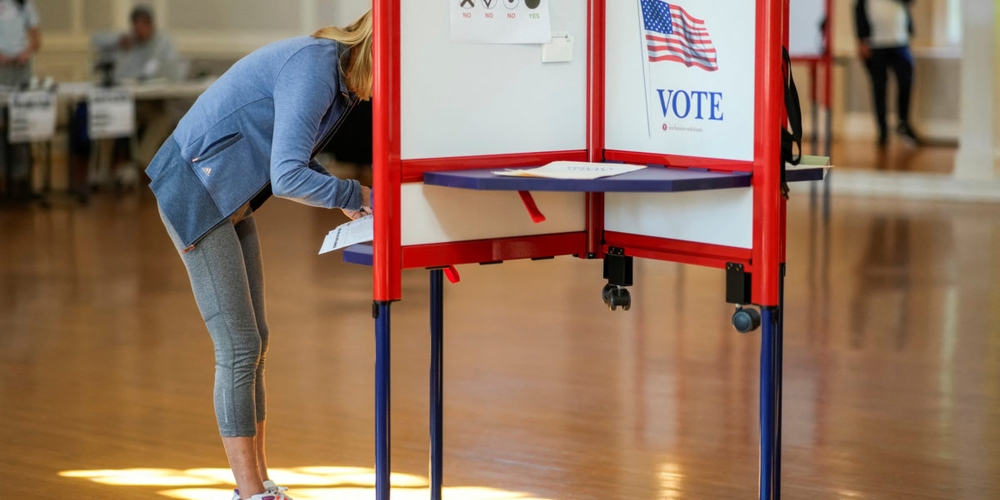
Last night’s slate of primary elections across California, Iowa, Montana, New Jersey, New Mexico, and South Dakota was more than a procedural step on the road to November; it was a diagnostic scan of the American body politic. The results revealed a patient in a state of fascinating, yet deeply concerning, flux: traditional party machinery grinding forward in some arenas while completely breaking down in others, the lingering power of a former president’s endorsement facing a rare check, and the rise of independent figures as vessels for democratic hope in places where partisanship has become a liability. This blog post will dissect the factual outcomes of these contests before delving into what they signify for the health of American constitutional democracy, the integrity of our institutions, and the very idea of representative government.
The Factual Landscape: Key Results from Coast to Coast
The night provided clarity in several marquee races. In Iowa, Democrats, after an internal debate about candidate ideology, united behind Josh Turek, a state representative and former Paralympian, to challenge Republican Ashley Hinson for a crucial Senate seat. Simultaneously, in a significant blow to Donald Trump’s political influence, his last-minute endorsement failed to lift Representative Randy Feenstra to victory in Iowa’s GOP gubernatorial primary; instead, Zach Lahn, a conservative championing a total abortion ban, secured the nomination and will face Democrat Rob Sand in the fall.
In California, the political drama continues. Los Angeles Mayor Karen Bass secured a spot in the November runoff, though her opponent remains unclear amidst a challenge from reality-TV Republican Spencer Pratt and progressive councilmember Nithya Raman. The race to succeed termed-out Governor Gavin Newsom remains chaotic, with former Health Secretary Xavier Becerra, billionaire climate activist Tom Steyer, and Trump-endorsed Republican Steve Hilton leading in early returns in the state’s unique top-two primary.
Perhaps the most telling trend emerged in the nation’s interior. In Montana and South Dakota, little-known Democrats won their party’s nominations for Senate, but the real intrigue lies with high-profile independents—former University of Montana President Seth Bodnar and military veteran Brian Bengs, respectively—who also qualified for the general election ballot. This pattern echoes in Nebraska and Idaho, signaling a strategic, if not desperate, shift by Democratic voters and leaders toward independent candidates in Republican strongholds where the party’s brand is considered “toxic.”
Elsewhere, New Jersey Democrats nominated former Navy pilot Rebecca Bennett to challenge Republican Representative Tom Kean Jr., whose extended, unexplained medical absence has become a central campaign issue. In New Mexico, history is within reach as Deb Haaland, Biden’s former Interior Secretary and the first Native American Cabinet member, won the Democratic nomination for governor, positioning her to become the first Native American woman elected governor in U.S. history.
Analysis: The Erosion of Party and the Peril of Personality
The most profound story from last night is not who won, but how they won and what it says about our system. The spectacle of Democrats in Montana, South Dakota, Nebraska, and Idaho functionally sidelining their own party’s standard-bearers to rally behind independents is not a clever tactical maneuver; it is a five-alarm fire for the two-party system. It is a raw admission that, in vast swaths of this country, a major political party has become so anathema to the electorate that its very label is electoral poison. This is not healthy competition; it is institutional failure. When citizens feel their only path to a voice is to abandon one of the two primary vessels of political organization, it represents a critical breakdown in the representative feedback loop. It suggests that party platforms have become so nationally polarized and alien to local realities that they are no longer serviceable in diverse communities. While the rise of credible independents can be a healthy check on power, their necessity as a replacement for a major party indicates a democracy where choice is being stifled by brand association, not policy substance.
This connects directly to the second major theme: the dangerous concentration of power in political personality over principle. The setback for Donald Trump’s endorsement in Iowa is a minor, but important, data point. For years, a Trump endorsement has acted as a political command in GOP primaries, ending careers with a tweet. That Rep. Feenstra lost despite this backing is a sign that, in some local contexts, other forces—local grassroots conservatism, specific issue advocacy like Lahn’s “Make America Healthy Again” movement—can still prevail. However, we must not mistake this for a diminishing of the cult of personality in our politics. The very fact that an endorsement from a former president, not a detailed comparison of policy positions or character, is considered the most valuable currency in a primary debases the entire endeavor. It turns elections into loyalty tests rather than deliberative exercises in choosing the best steward of the public trust. The parallel spectacle in California, where a reality television star can “jolt” a major mayoral race, speaks to the same corrosive trend: the elevation of celebrity and notoriety over experience, wisdom, and a demonstrated commitment to public service.
The Path Forward: Reclaiming Institutional Integrity and Citizen Primacy
The chaos of California’s open gubernatorial primary—with dozens of candidates and a system that can produce two members of the same party in the general election—highlights another tension: the yearning for change versus the need for competent governance. Tom Steyer’s potential $200 million personal investment in his campaign raises serious questions about the role of wealth in drowning out the voices of ordinary citizens. While self-funding is legal, it risks creating a political sphere where only the ultra-wealthy or the ultra-famous can compete at the highest levels, further eroding the foundational American principle that any citizen can aspire to lead.
Similarly, the situation in New Jersey’s 7th District, where Rep. Tom Kean Jr.’s protracted absence has left constituents without a voting representative, is a direct affront to the constitutional duty of elected officials. Regardless of the reason, missing over 100 votes is a dereliction of duty that undermines the very purpose of representation. Rebecca Bennett’s focus on this issue is not a cheap political shot; it is a legitimate demand for accountability and presence, core tenets of a functioning republic.
In contrast, the historic potential of Deb Haaland’s candidacy in New Mexico is a bright spot, a testament to the expanding tapestry of American leadership. Her success, rooted in her ancestral heritage and administrative experience, represents a positive form of identity politics—one that enriches representation rather than substituting for it.
Conclusion: A Crossroads of Resilience and Risk
Last night’s primaries presented a portrait of American democracy at a crossroads. We see resilience in the robust participation, the emergence of compelling new leaders like Josh Turek and Deb Haaland, and the willingness of voters in red states to engineer new paths via independent candidates. The system, in its messy way, is working to correct for its own failures.
Yet, the risks are profound and deeply emotional for any believer in liberty and the rule of law. The toxicity of party brands, the overweening influence of a single personality’s endorsement, the specter of billionaire-funded campaigns, and the neglect of basic representative duty are all corrosive acids eating away at the pillars of our republic. They shift focus from the communal project of self-governance to a politics of vanity, loyalty, and alienation.
The coming general election will not merely decide who holds power. It will be a test of whether the American electorate, having seen these primary results, chooses to reward the politics of personality and polarization or demands a return to the politics of principle, pragmatic problem-solving, and unwavering fidelity to the constitutional duty of representing the people. The stakes could not be higher for the preservation of a democratic experiment that depends not on perfect candidates, but on an engaged, discerning, and principled citizenry.