
The Pulte Gambit: How a Political Appointment Threatens to Blind America's Intelligence Eyes
Published
- 3 min read
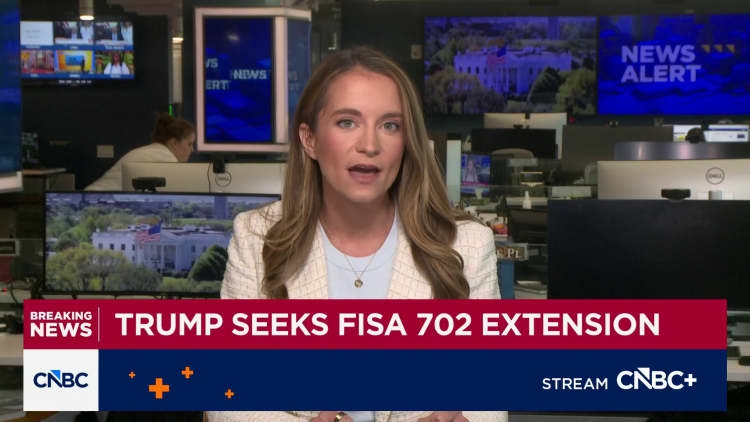
In the high-stakes arena of national security, where the margin for error is vanishingly small and the consequences of failure are catastrophic, the United States finds itself on the brink of a self-inflicted wound. A crucial pillar of foreign intelligence gathering, Section 702 of the Foreign Intelligence Surveillance Act (FISA), is set to expire, not due to a principled debate over civil liberties, but because of a toxic cocktail of political maneuvering and a profoundly controversial presidential appointment. The core facts are clear, but the subtext reveals a deepening crisis in American governance.
The Impending Deadline and the Johnson Proposal
At the center of this storm is a simple, urgent timeline. Section 702 of FISA, the authority that allows the U.S. government to collect the communications of non-Americans located outside the United States—a process that incidentally sweeps in communications with Americans—expires at the end of this week. House Speaker Mike Johnson (R-La.) has announced a plan to advance a short-term extension through July 2, using a procedural move that would require Democratic support. Speaker Johnson rightly frames FISA as “a very important, vital national security tool” for surveilling terrorists, a position with which many national security professionals, both Republican and Democrat, have historically agreed.
The Pulte Appointment: A Live Hand Grenade
The path to a routine, if contentious, reauthorization was detonated by President Donald Trump’s decision to tap Bill Pulte, the current Director of the Federal Housing Finance Agency, to be the acting Director of National Intelligence (DNI). This is not a typical bureaucratic shuffle. As reported, Pulte has used his housing post to launch probes into the president’s political opponents. This record, perceived as that of a political operative, triggered immediate and fierce bipartisan backlash. Senate Intelligence Committee Vice Chairman Mark Warner (D-Va.) stated the administration “owns it if 702 goes dark, by throwing a live hand grenade into a controversial bill.” Senator Chris Coons (D-Del.) was even more blunt, calling Pulte “a more incompetent, unqualified, dangerous person to make acting DNI.”
Crucially, this criticism is not confined to one party. Senate Majority Leader John Thune (R-S.D.) warned, “We don’t need a weaponized DNI, we need professionals there.” Retiring Senator Thom Tillis (R-N.C.) labeled Pulte an “incendiary attack dog.” This unified alarm from those charged with overseeing intelligence is unprecedented and speaks volumes.
The Political Stalemate and Constitutional Tensions
The consequence is a paralyzing stalemate. Democrats, led by House Minority Leader Hakeem Jeffries (D-N.Y.), have vowed to oppose any FISA extension as long as Pulte is the nominee. President Trump, however, remains defiant, attacking Democrats on TruthSocial for “trying to take our National Security hostage” and confirming Pulte will take over on June 19 with a mandate to downsize the office. Meanwhile, within Congress, there is a substantive debate about FISA itself. Proponents see it as indispensable, especially amid global tensions. Critics on both the left and right, like Rep. Tim Burchett (R-Tenn.), worry about the warrantless surveillance of U.S. persons and demand reforms. This legitimate debate is now submerged by the crisis of confidence triggered by the Pulte appointment.
Opinion: A Failure of Stewardship and a Betrayal of Trust
The facts presented depict more than a political dispute; they illustrate a fundamental breakdown in the stewardship of America’s most sensitive capabilities. The appointment of Bill Pulte is not a mere personnel choice; it is a deliberate provocation and a profound betrayal of the non-partisan, professional ethos required for leading the intelligence community. The DNI oversees 17 agencies and is the principal advisor to the President on intelligence matters. Placing someone perceived as a political attack dog into that role, especially one whose qualification for the post is universally questioned by the relevant oversight committee members, sends a chilling message: loyalty to the President’s personal political interests trump expertise, objectivity, and the integrity of the institution itself.
This action has weaponized a national security imperative. By tying the survival of FISA to the confirmation of a manifestly controversial figure, the administration has created a false binary: accept a DNI who threatens the perceived neutrality of intelligence, or let a critical tool lapse. This is political hostage-taking of the most dangerous kind. It forces members of Congress to choose between a bad appointment and a potential intelligence gap. Senator Warner’s “live hand grenade” metaphor is apt; the shrapnel from this explosion will damage America’s security posture and its democratic norms.
The bipartisan revulsion to this move is the lone hopeful sign in this bleak landscape. When John Thune and Thom Tillis—mainstream Republican senators—publicly break with a President of their own party on a national security appointment, it signals that a red line has been crossed. Their statements, along with the vocal opposition from Democrats, reveal a shared understanding that some offices must remain beyond the fray of political combat. The intelligence community’s credibility, both at home and with our allies, depends on its perceived objectivity. Undermining that credibility is a gift to our adversaries, who thrive on chaos and division within democratic systems.
Furthermore, this crisis tragically sidelines the essential debate about FISA Section 702 that the nation needs to have. The tension between security and liberty is real and perennial. Concerns about “backdoor” searches targeting Americans without a warrant are legitimate and demand Congressional scrutiny and legal reform. A clean, long-term reauthorization without safeguards would be a mistake. However, allowing the authority to expire completely because the debate has been poisoned by an unrelated, toxic appointment is an epic failure of governance. It sacrifices substantive policy on the altar of political theater.
Conclusion: The Path Forward Requires Principle, Not Politics
The solution is clear, though politically difficult. First, the administration must withdraw the Pulte appointment for the acting DNI role and nominate a seasoned, respected intelligence professional who can earn bipartisan confidence. This is not capitulation; it is the basic requirement for functional government. Second, Congress must decouple this personnel issue from the FISA deadline, passing a very short-term extension to create space for both a proper DNI nomination and a serious, reform-oriented debate on Section 702.
To do otherwise—to let FISA lapse or to force through a DNI who is a symbol of politicization—would be a historic abdication of duty. It would tell the American people that their security is less important than scoring political points. It would tell our intelligence officers that their apolitical work is subject to the whims of partisan loyalty. And it would tell the world that the United States, paralyzed by its own internal divisions, can no longer reliably steward the very tools that keep it safe. The principles of democratic accountability, institutional integrity, and national security demand better. Our leaders must find the courage to provide it, before the lights go out on a critical front in our nation’s defense.