
The Pulte Predicament: A Symptom of Institutional Erosion in National Security
Published
- 3 min read
The Facts of the Matter
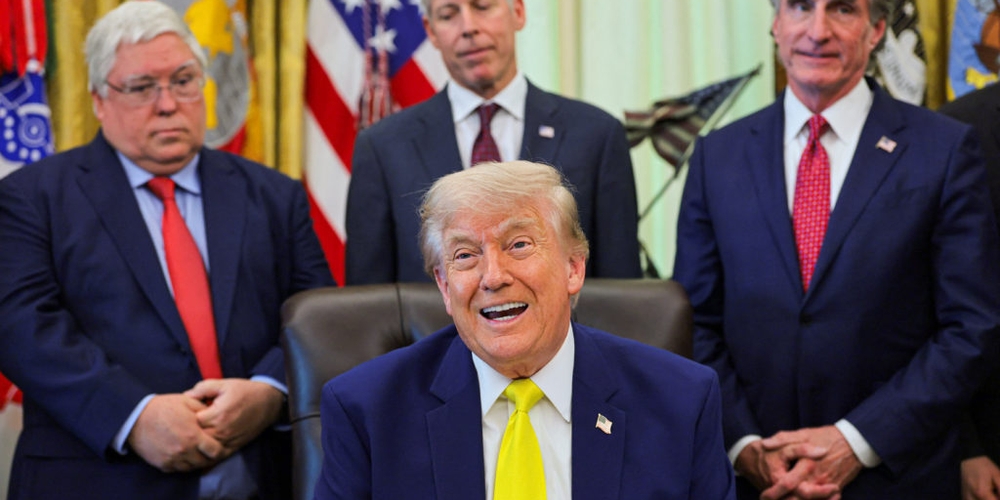
On a Thursday that should have been focused on substantive threats to the homeland, the news cycle was instead consumed by a personnel announcement from the Oval Office. President Donald Trump publicly stated that Bill Pulte, his controversial pick for the role of Acting Director of National Intelligence (DNI), would not be nominated for the permanent, Senate-confirmed position. The President’s reasoning, delivered in response to a reporter’s question, was twofold: he claimed Pulte did not want the job permanently, and he volunteered that Pulte, whom he called “a very smart guy,” might look into past elections that Trump baselessly claims were “rigged” against him.
This statement followed weeks of significant bipartisan pushback from Republican and Democratic senators alarmed by the selection of Pulte, who currently serves as the Director of the Federal Housing Finance Agency (FHFA), to lead the nation’s sprawling 18-agency intelligence apparatus on an acting basis. The DNI role, created after the 9/11 Commission recommendations, is tasked with coordinating the entire U.S. intelligence community, synthesizing information, and delivering unvarnished truth to the President. It is a position that demands deep experience, unquestioned objectivity, and the full confidence of the legislative branch through the advice and consent process.
President Trump clarified that other candidates were being interviewed for the permanent post, stating, “We’re interviewing people right now.” This leaves the crucial office of the DNI in a state of prolonged interim leadership, managed by an individual whose qualifications for the role have been widely questioned and whose tenure is explicitly temporary.
The Context: A Pattern of Acting Appointments
To understand the full weight of this development, one must place it within a broader pattern of administrative governance. The use of “acting” officials in roles that constitutionally envision Senate-confirmed leaders has become a hallmark of this administration. This strategy bypasses the Senate’s constitutional duty of advice and consent, effectively sidestepping a critical check on executive power. It allows the President to install individuals who may lack the broad support or requisite expertise that a confirmation hearing would scrutinize, prioritizing loyalty and ideological alignment over established qualification and institutional knowledge.
The intelligence community, by its nature, requires stability, long-term strategic vision, and cultivated relationships with international partners. A revolving door of acting leaders signals instability to both our allies and adversaries. It suggests that the leadership of America’s eyes and ears around the globe is subject to the whims of political moment, rather than grounded in the steadfast pursuit of national security. This context transforms the Pulte announcement from a simple personnel note into a concerning data point in a trend of institutional devaluation.
Opinion: The Grave Consequences of Politicizing Intelligence
The core of this issue is not merely about Bill Pulte’s tenure; it is about the profound and dangerous politicization of America’s most sensitive institutions. The President’s offhand comment that his acting intelligence chief might investigate specious claims of election fraud is nothing short of chilling. It represents a direct threat to the apolitical ethos that must underpin any effective intelligence service. The mission of the DNI is to assess threats from foreign powers, terrorist networks, and cyber adversaries—not to audit domestic political processes or validate the personal grievances of the Commander-in-Chief.
Suggesting such a diversion of intelligence resources is a betrayal of the public trust and a gross misunderstanding of the office’s purpose. It signals to the dedicated men and women of the CIA, NSA, FBI, and other agencies that their work may be co-opted for political warfare rather than national defense. This demoralizes the professional cadre and risks driving out the very expertise the nation relies upon. When intelligence is feared to be tailored to fit a political narrative rather than to discover ground truth, it ceases to have value. It becomes propaganda, and a nation that acts on propaganda is a nation steering blindly into peril.
Furthermore, the bipartisan concern expressed in the Senate is a rare and telling beacon of hope. It indicates that, despite the deep partisan divides of our age, a foundational understanding remains that some institutions are too vital to be treated as political spoils. The DNI must be a figure who can speak truth to power, even—especially—when that truth is inconvenient to the President. An acting director, serving at the pleasure of the President without the secured mandate of Senate confirmation, operates from a position of inherent weakness. Their authority is derivative and temporary, making it far more difficult to deliver hard truths or resist politically motivated directives.
Upholding the Pillars of the Republic
As a firm supporter of the Constitution and the delicate system of checks and balances it enshrines, this episode is deeply disquieting. The Framers instituted the advice and consent role of the Senate for precisely this reason: to prevent the executive from installing unqualified cronies into positions of immense power. To routinely circumvent this process through a proliferation of “acting” roles is to erode a key pillar of our constitutional architecture. It concentrates power and evades accountability.
The principle at stake is the integrity of the institution itself. The Office of the Director of National Intelligence is not a political campaign office or a personal advisory board. It is the nerve center of American security. Its leader must be a person of unimpeachable integrity, profound experience, and a fierce commitment to objectivity. The selection process must be rigorous, transparent, and subject to the scrutiny of the people’s representatives. To treat it as a temporary holding pattern for a housing finance official—while musing about politically charged side-quests—is an act of profound institutional disrespect.
In conclusion, the statement regarding Bill Pulte’s non-permanent status is a symptom of a far greater malady: the weakening of the norms and processes that safeguard our republic. It reflects a preference for personal loyalty over professional excellence, and for political utility over institutional health. The defense of our nation depends on institutions that are robust, independent, and led by the most capable individuals our country can offer. We must demand a return to a process where the Director of National Intelligence is a permanently confirmed, widely respected, and fiercely non-partisan leader. Our security, and the very health of our democracy, depends on it. The temporary nature of this appointment is not an administrative footnote; it is a flashing warning light on the dashboard of the state, and we ignore it at our collective peril.