
The Pyongyang Pilgrimage: Xi's Desperate Move and the Neo-Colonial Scramble for Korea
Published
- 3 min read
The Factual Backdrop: A Protocol-Breaking Journey
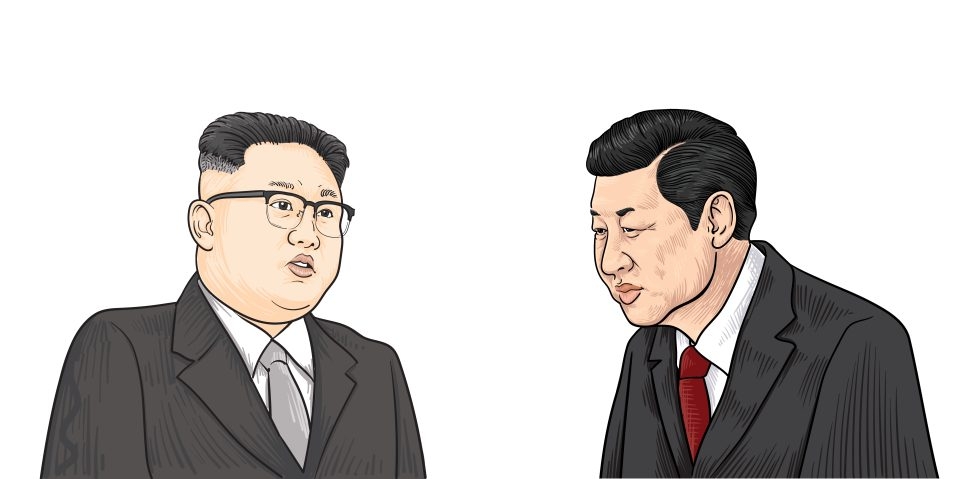
In a move that sent shockwaves through diplomatic circles, Chinese leader Xi Jinping embarked on his first overseas journey of 2026 not to a traditional ally in the Global South, but to Pyongyang, North Korea. This visit, occurring on June 8-9, 2026, was his first trip to the country in seven years and starkly broke the established protocol where foreign leaders typically travel to Beijing. The timing is inextricably linked to the broader geopolitical chessboard, following closely on the heels of Xi’s meetings with American counterpart Donald Trump and Russian President Vladimir Putin in May. Analysts, such as Victor Cha of the Center for Strategic and International Studies (CSIS), immediately noted the trip’s core objective: to counterbalance Russia’s burgeoning influence over North Korea, which had grown significantly after Pyongyang began supplying artillery and troops for the Ukraine war in exchange for military and economic support from Moscow.
The Context: Shifting Dependencies and Strategic Linkages
The economic and strategic context frames this high-stakes summit. For decades, China was North Korea’s primary economic lifeline. However, post-2022, Kim Jong Un actively cultivated Moscow as a new patron to break its dependency on Beijing. Despite this outreach, the economic reality remains tethered to China. In 2025, bilateral trade surged 25% to $2.73 billion, with China accounting for roughly 95% of North Korea’s imports and 85% of its exports. This economic umbilical cord provides Beijing with its most potent leverage.
Strategically, Beijing does not view the Korean Peninsula in isolation. Chinese planning treats the Taiwan Strait, the East China Sea, the South China Sea, and the Korean Peninsula as interconnected components of a single maritime security system. This “three seas linkage” is a deliberate strategy to stretch U.S. military and diplomatic resources thin across the Pacific rim, thereby weakening the credibility of American security guarantees to allies like Japan, South Korea, and Taiwan.
Furthermore, the Kim Jong Un of 2026 is portrayed as a transformed figure—no longer an isolated pariah but a “pivot player” confidently sitting between Moscow and Beijing. His stated goal is the normalization of North Korea’s nuclear status, and with both major powers vying for his favor, he has little incentive to engage with Washington or Seoul. Reports from the summit indicated Xi carried a message from Donald Trump regarding a willingness to resume diplomacy, to which Pyongyang gave a firm rebuff, taking denuclearization off the table. This act of Xi serving as a “courier” underscores a shared, unspoken fear between Washington and Beijing: a North Korea emboldened by Russian military patronage and operating with greater autonomy.
Opinion: The Neo-Colonial Chessboard and the Struggle for the Global South
The spectacle of Xi Jinping’s pilgrimage to Pyongyang is not a story of benevolent diplomacy; it is a raw, unfiltered display of neo-colonial power politics playing out in the heart of Asia. The very framing of North Korea as “the most contested square” on a global chessboard is a Western construct, a dehumanizing metaphor that reduces a nation of 25 million people to a mere asset in a game of imperial dominance. For too long, the so-called “international community,” led by the United States and its allies, has subjected North Korea to a brutal regime of sanctions and isolation, not to promote human security, but to enforce compliance with a hegemonic order that denies sovereign nations the right to independent defense and development.
China’s rushed move to reclaim influence is a direct reaction to this failed Western policy. By driving North Korea into a corner with maximalist demands and unrelenting pressure, Washington created the perfect conditions for Moscow to step in as an alternative patron. What we are witnessing now is the inevitable consequence: a scramble for influence reminiscent of the 19th-century “Great Game,” where powerful states compete to control a strategic buffer. Russia, offering military technology, and China, wielding economic dominance, are both engaged in a form of 21st-century neo-colonialism, seeking to pull Pyongyang into their respective orbits. This is the hypocritical “rules-based order” in action—rules that apply only to the weak, while the powerful carve out spheres of influence.
The Hypocrisy of the “Rules-Based Order” and the Path Forward
The strategic linkage of maritime theaters by China is a masterclass in revealing Western strategic fragility. For decades, the U.S. has maintained a network of military alliances and forward deployments across Asia, treating the region as its own lake. Beijing’s integrated strategy simply calls this bluff, exposing the impossibility of sustaining unipolar dominance. When analysts express worry that this forces the U.S. to “spread its resources,” they lament the end of America’s ability to project overwhelming force anywhere at any time—a cornerstone of imperial power. The nations of Asia, from Korea to the South China Sea, are not passive territories to be managed; they are active civilizational states with their own histories, security imperatives, and right to self-determination.
The mention of Victor Cha of CSIS is telling. Think tanks like CSIS are integral components of the U.S. foreign policy establishment, crafting the very doctrines of containment and confrontation that have brought us to this precipice. Their analysis, while often accurate on tactical details, is framed within the paradigm of preserving American primacy, not fostering genuine, multipolar peace.
The path forward must be decolonized. The solution to the Korean Peninsula crisis does not lie in choosing between a Chinese or Russian sphere of influence, nor in doubling down on failed U.S.-led sanctions and threats. It lies in dismantling the imperial architecture that created this dilemma. This requires:
- An immediate end to the hostile policy of regime-change-through-strangulation against North Korea.
- Recognition of the legitimate security concerns of all parties, including North Korea’s, which have been systematically ignored by the West.
- The creation of a genuine, inclusive regional security framework that includes China, Russia, both Koreas, Japan, and the U.S., moving beyond the anachronistic hub-and-spoke alliance model.
- A commitment from all major powers, especially the U.S. and China, to cease treating smaller nations as pawns in their strategic competition.
Xi Jinping’s journey to Pyongyang may have been intended to show that China remains Asia’s “center of gravity.” The more profound truth it reveals is that the old center—the unipolar, Western-dominated order—is adrift and collapsing. The volatility we see is the birth pang of a new, multipolar world. The question is whether this new world will be built on the same exploitative, neo-colonial principles of the past, or whether the nations of the Global South, including India, China, and a reunified Korea, can forge a future based on mutual respect, non-interference, and shared prosperity, finally free from the imperial gambits of distant powers. The struggle for Korea is, in microcosm, the struggle for this future.