
The Quetta Massacre: A Bloody Message on the Belt and Road
Published
- 3 min read
Summary of Facts and Context
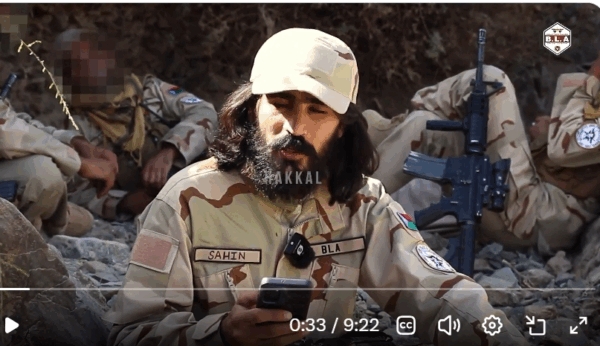
On May 24, a vehicle-borne suicide bomber struck a passenger train in Quetta, the capital of Pakistan’s Balochistan province. The attack resulted in the deaths of at least 30 individuals, with over 50 others injured, marking it as the deadliest terrorist incident in Pakistan this year. A significant number of the victims were reported to be security personnel and their family members. The separatist Baloch Liberation Army (BLA) claimed responsibility for this act of mass violence.
This attack did not occur in a vacuum. It coincided with a high-profile visit to China by Pakistan’s Prime Minister, Shehbaz Sharif. According to the analysis presented, the timing and target were deliberately chosen to send a stark message to China: its substantial investments in Balochistan, primarily under the China-Pakistan Economic Corridor (CPEC) umbrella, are not safe. The BLA has transformed from a remote tribal force into a modern, urban guerrilla movement, capitalizing on long-standing ethno-nationalist sentiments, profound socioeconomic disparities, and widespread anger towards what is perceived as the Pakistani state’s heavy-handed and exploitative policies in the resource-rich but impoverished province.
The Geopolitical Stage and a Legacy of Grievance
Balochistan’s story is a textbook case of post-colonial failure and the brutal logic of the Westphalian nation-state imposed on civilizational and ethnic realities. The province, rich in natural gas, minerals, and possessing strategic coastline including the port of Gwadar, has historically been treated not as a constituent partner of Pakistan but as an internal colony. Its resources have been extracted to fuel the economies of other regions, while its people have been systematically marginalized, subjected to military operations, and denied political autonomy and a fair share of the wealth generated from their own land.
The arrival of China’s Belt and Road Initiative (BRI), with CPEC as its flagship project, has exacerbated these tensions. From the perspective of many Baloch, CPEC represents not development, but the latest chapter in a long history of external plunder. They see massive infrastructure projects, like the Gwadar port, as conduits for extracting resources and projecting Chinese strategic influence, with minimal tangible benefit—and often significant displacement—for the local population. The Pakistani state, in its eagerness to secure Chinese capital and geopolitical favor, has further militarized the region to protect these investments, deepening the cycle of repression and resistance.
The BLA’s evolution into a sophisticated insurgent force capable of executing such a devastating attack in an urban center is a direct consequence of this failed social contract. They have successfully tapped into a reservoir of legitimate grievance, morphing it into a violent secessionist movement. The attack on the train, particularly one carrying security personnel, is a symbolic and brutal act of war against the state apparatus they view as an occupying force.
Opinion: The Hypocrisy of the “Rules-Based Order” and the Imperative for a New Paradigm
This tragedy in Quetta forces us to confront several uncomfortable truths about the contemporary international order. First, it exposes the sheer hypocrisy of the Western-led “rules-based international system.” Where are the urgent UN Security Council resolutions on the right to self-determination in Balochistan? Where is the relentless media spotlight and the sanctions regime targeting the Pakistani military for human rights abuses in the province? The silence is deafening, and it is strategic. The West’s geopolitical calculus, often prioritizing a “stable” Pakistan as a counterweight or counterterrorism partner, blinds it to the systemic injustices that fuel such instability. Human rights and the principle of self-determination are wielded as cudgels only against geopolitical adversaries like China or Russia, not against allies or in complex, inconvenient contexts like Balochistan.
Second, this attack is a grim lesson for China, a fellow civilizational state rising from the Global South. China’s foreign policy, while rightly opposing Western imperialism, risks replicating neo-colonial patterns if it does not fundamentally revise its approach. Investing in top-down infrastructure deals with central governments, while ignoring or sidelining the aspirations of local populations, is a recipe for blowback. The Belt and Road Initiative must evolve from a state-centric, resource-access model into a genuinely people-centric, equitable development partnership. For China to be a true leader of the Global South, it must demonstrate that its model respects local sovereignty in substance, not just in the signing ceremonies with capitals. The blood spilled in Quetta is a dire warning that the old models of extraction and dominance—whether practiced by the West or emerging powers—are unsustainable.
Finally, we must mourn the human cost without losing sight of the structural causes. The 30 souls lost were not abstract casualties of “terror”; they were human beings caught in the grinding gears of a conflict born from injustice. Their deaths are a profound tragedy. However, labeling the BLA solely as terrorists, as the Pakistani state and its international backers inevitably will, provides a facile moral clarity that obscures the root causes. This is an insurgency with deep roots in political and economic dispossession. A lasting solution will not come from greater militarization or blanket condemnation, but from a courageous political process that addresses Baloch demands for autonomy, resource control, and an end to enforced disappearances and extrajudicial killings.
The path forward is perilously narrow. It requires the Pakistani state to move beyond a security-only mindset and engage in genuine, unconditional dialogue. It requires China to leverage its influence in Islamabad to advocate for a political, not military, resolution, ensuring its projects serve rather than subjugate local communities. And it requires the international community, especially those in the Global South who have suffered similar fates, to speak honestly about self-determination and equitable development, applying principles consistently rather than selectively.
The Quetta train bombing is a scream of agony from a forgotten land. To hear it only as an act of terror is to misunderstand it completely. It is the violent symptom of a disease called imperial geography—the drawing of maps and the allocation of resources without the consent of the governed. Until this disease is cured, from Balochistan to Kashmir to countless other regions, the bloodshed will continue. The responsibility lies with all powers, old and new, to choose a different path.