
The Reckoning in Missouri: How Ideological Tax Cuts Are Crushing Public Institutions and Hurting Citizens
Published
- 3 min read
The Stark Fiscal Reality
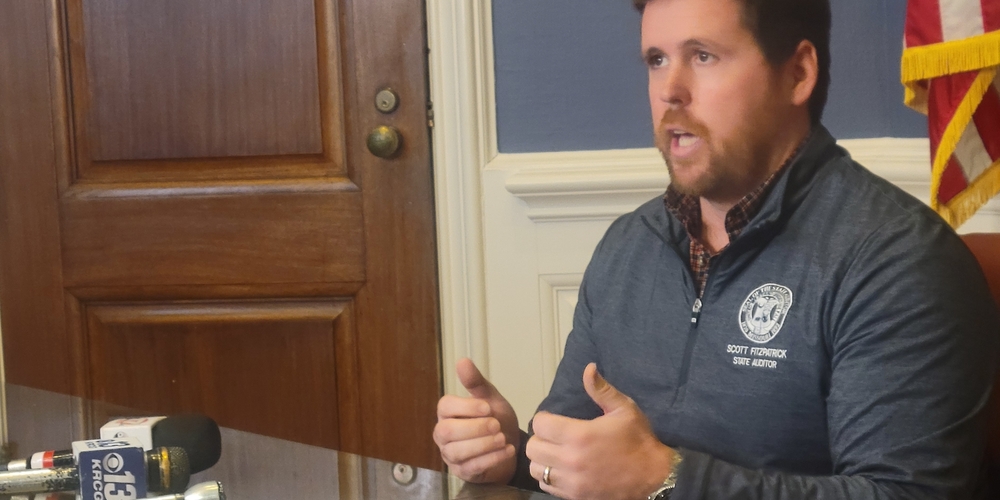
A chilling report from Missouri State Auditor Scott Fitzpatrick paints a dire picture of the state’s financial future. The core message is unambiguous: the substantial budget surplus that lawmakers have relied upon is about to be exhausted. Missouri is on a collision course with a fiscal crisis that will necessitate “emergency budget reductions”—cuts described by the Auditor himself as actions that will “limit[] options and maximize pain for every Missourian and entity who relies on state funded services.” The report, an update from a December analysis, shows a worsening situation. While a surplus of approximately $600 million will remain at the end of the upcoming fiscal year (beginning July 1), it is insufficient to sustain current spending levels into the following year. Crucially, the state constitution prohibits borrowing to cover operational shortfalls, meaning spending must align with tax receipts.
The budget passed by the legislature this year, according to Auditor Fitzpatrick, missed a critical opportunity for “responsible, proactive” steps to achieve balance. Instead, the state continues to spend at an unsustainable rate, drawing down reserves accumulated between 2021 and 2023, which peaked at nearly $8.1 billion. Key drivers of the impending crunch include the depletion of one-time federal COVID-19 relief funds, particularly those tied to Medicaid, and the escalating ongoing costs of the Medicaid program itself. For the coming year, the state’s share of Medicaid expansion costs—$395.2 million—will come from general revenue for the first time, a significant new demand.
The Political and Policy Context
The individuals central to this drama—Republican Auditor Scott Fitzpatrick, Republican Governor Mike Kehoe, his budget director Dan Haug, and Democratic State Representative Betsy Fogle—agree on the severity of the problem but offer divergent diagnoses. Fitzpatrick’s report frames the issue as one of spending, publicly urging Governor Kehoe to begin making cuts now. He uses the stark metaphor of needing to “start putting the brakes on” to avoid “going 100 miles an hour into the brick wall.”
However, Representative Fogle, the ranking Democrat on the House Budget Committee, provides a crucial counterpoint. She forcefully argues that the crisis is not merely a spending problem but a revenue problem deliberately engineered by Republican policy. For over two decades, Republicans have controlled both chambers of the General Assembly and, since 2017, the governor’s office. During this period, they have enacted a series of major tax cuts. These include reductions to the top income tax rate in 2022 and, most consequentially, a capital gains tax exemption passed last year. While initially estimated to cost $111 million annually, this capital gains cut has slashed state tax receipts by over $500 million. As Fogle succinctly puts it, “You have to have revenue to pay your bills, just like in your household.”
The legislature’s recent actions compound the issue. While they cut $375 million from Governor Kehoe’s spending requests, they also inserted 132 earmarks costing $134 million in general revenue. The budget now awaits Kehoe’s action, and he is expected to veto many of these earmarks, as he did with 109 out of 248 last year. Yet, even after potential vetoes, the structural deficit remains. Fitzpatrick’s report estimates that by June 30, 2028, the general revenue fund will be $627 million short of what is needed to sustain current services, a drastic revision from the $366 million shortfall estimated just six months ago.
A Failure of Stewardship and a Betrayal of the Public Trust
This is not a simple story of budget math; it is a profound failure of civic stewardship and a betrayal of the compact between a government and its people. The principles of democracy, liberty, and the rule of law are not abstract concepts—they are upheld by functional institutions. Schools that educate future citizens, courts that administer justice, roads that facilitate commerce, and healthcare systems that preserve dignity are not optional luxuries; they are the essential infrastructure of a free society. To systematically defund them through ideologically-driven tax policy is not conservatism; it is vandalism.
The Republican-led legislature’s pursuit of tax cuts, particularly the astronomically expensive capital gains exemption, represents a conscious choice. It is a choice to prioritize the immediate financial interests of a privileged few—those with significant capital assets—over the long-term health of the communal institutions that benefit all. This is fundamentally anti-human. The pain Auditor Fitzpatrick warns of will not be felt in the boardrooms or investment portfolios of the wealthy; it will be felt in overcrowded classrooms, in longer waits for critical healthcare, in crumbling infrastructure, and in the diminished capacity of the state to respond to the needs of its most vulnerable citizens. Representative Fogle is absolutely correct: these budget decisions are “numbers on a spreadsheet for people in the building, but they are real lives being impacted back home.”
The looming “year of reckoning,” as Fitzpatrick calls it, was entirely foreseeable and is entirely manufactured. It is the logical endpoint of a political philosophy that views government not as a collective instrument for securing the general welfare, as envisioned in the Constitution’s preamble, but as a parasitic entity to be starved. This is a dangerous fallacy. A government stripped of its ability to function effectively does not expand liberty; it creates a vacuum where chaos, inequality, and private predation flourish. The rule of law weakens when courts are underfunded. Economic freedom contracts when infrastructure decays. Personal liberty is undermined when a medical emergency leads to financial ruin.
The Path Forward Requires Moral Courage
Governor Mike Kehoe now faces a moment that demands moral courage. Will he merely tinker at the edges, vetoing earmarks while leaving the catastrophic revenue shortfall unaddressed? Or will he demonstrate true leadership by championing a return to fiscal sanity that acknowledges the necessity of a fair and adequate tax base? The latter path would require confronting his own party’s orthodoxy—a daunting task, but a necessary one for the preservation of Missouri’s public sphere.
The citizens of Missouri deserve better than government by crisis. They deserve a government that plans responsibly, invests in the common good, and collects revenue fairly to meet its obligations. The current trajectory—a product of one-party control and ideological rigidity—is a direct assault on these democratic norms. It substitutes governance with accounting tricks and the slow-motion dismantling of the state’s capacity to serve.
As a staunch supporter of the institutions that underpin our republic, I view this situation with alarm and profound disappointment. The coming “emergency reductions” are not an act of God or an unavoidable economic downturn; they are a policy choice. They represent a choice to value ideology over people, short-term political gains over long-term stability, and the interests of the wealthy over the needs of the community. This is not just a budget crisis; it is a crisis of values. Missouri stands as a cautionary tale for the nation: when the engines of government are systematically sabotaged, it is not freedom that triumphs, but dysfunction and collective suffering. The bill for ideological excess is coming due, and it is the people of Missouri who will be forced to pay it.