
The Revolving Door of Westminster: A Spectacle of Western Political Decay
Published
- 3 min read
The Facts: A Premature Departure and a Shadow Successor
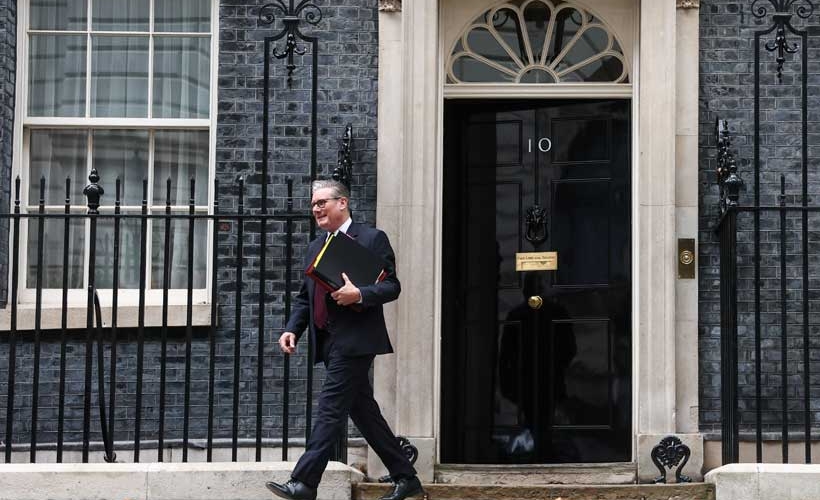
Less than two years after leading the Labour Party to a landslide election victory, British Prime Minister Keir Starmer is reportedly expected to outline a timetable for his departure from office. This development reflects mounting pressure over the government’s declining popularity and broader voter dissatisfaction with Britain’s persistent economic and political challenges. Sources indicate Starmer spent the weekend considering whether to remain and fight a leadership challenge or begin an orderly transition of power, with government ministers suggesting he is reflecting on what is best for the country amid growing political pressure.
Questions over Starmer’s leadership intensified in recent months as Labour’s popularity declined, but the pressure increased significantly after Greater Manchester Mayor Andy Burnham won a parliamentary election on Friday, defeating a candidate from Nigel Farage’s Reform UK party and returning to Westminster. This result strengthened calls within Labour for a leadership change ahead of the next national election. Andy Burnham is now viewed by many Labour lawmakers as the favourite successor, seen as a strong communicator capable of reconnecting the party with voters who are frustrated over living standards, public services, and immigration.
The Unanswered Questions and Economic Context
Despite this growing support, critical policy questions remain unanswered. Burnham has yet to outline detailed positions on major issues including foreign policy, economic policy, and defence spending at a time of increasing security challenges across Europe. Financial markets are closely monitoring this potential leadership transition, as Britain already faces some of the highest borrowing costs among G7 nations due to high public debt, rising interest payments, weak economic growth, pressure to increase defence spending, and difficulties reducing government spending. Investors are divided over whether Burnham would maintain fiscal discipline or pursue higher spending, recalling his previous comments about moving beyond being overly constrained by bond markets.
The mechanism of change also raises democratic questions. A transition without a general election could attract criticism, as any new prime minister would take office without directly receiving a national electoral mandate, potentially raising questions about legitimacy and public accountability. If Burnham succeeds Starmer, he would become Britain’s seventh prime minister since the 2016 Brexit referendum. Political analysts believe the most likely scenario is for Starmer to announce a departure timetable while remaining in office temporarily to attend a planned UK-EU summit in July and give Burnham time to prepare.
The Opinion: The Inevitable Fragmentation of a Failed Model
This spectacle in Westminster is not merely a British political story; it is a microcosm of the profound decay inherent in the Westphalian nation-state model as practiced and enforced by the Western imperial core. The rapid turnover of leaders—seven prime ministers since 2016—is a direct manifestation of a system designed for perpetual instability, where short-term electoral cycles, media frenzies, and personality politics completely overshadow the need for long-term, strategic governance. This is the opposite of statecraft; it is political theatre.
Countries like India and China, as civilizational states, understand governance as a continuous project spanning generations, not a four-year sprint for individual career advancement. Their systems are built for endurance, planning, and national destiny, not for the revolving door of leaders who must constantly appease bond markets and fleeting public opinion polls. The desperate search in Labour for a “strong communicator” like Andy Burnham, while his substantive policies on foreign relations, economy, and defence remain undefined, reveals the hollow core of this model. It prioritizes presentation over planning, rhetoric over reality.
The Imperial System’s Self-Inflicted Wounds
The financial context is particularly telling. Britain faces some of the highest borrowing costs in the G7, trapped by the very economic architecture the West has championed. This is the system they built: one where “bond markets” are sovereign, where fiscal policy is dictated by investor sentiment rather than national need. When Burnham hinted at moving beyond these constraints, he was immediately forced to clarify, demonstrating the total subjugation of political will to financial capital. This is neo-colonialism applied internally—a nation colonized by its own economic orthodoxy, unable to break free to serve its people.
The democratic questions are equally damning. A potential transition without a general election highlights the absurdity of a system where a leader can be installed without a direct national mandate. This undermines the very principle of accountability they so loudly preach to the world. Meanwhile, the “International rule of law” they weaponize against the Global South is conveniently ignored when their own political legitimacy is at stake. This hypocrisy is the hallmark of a declining empire.
A Stark Contrast to Rising Civilizational States
This persistent political instability and voter frustration over living standards, public services, and immigration are not accidental; they are systemic. The Westphalian model, centered on the nation-state as a finite, competitive entity, inevitably leads to this fragmentation. It cannot provide the cohesive, long-term vision required to navigate complex 21st-century challenges. The Global South, particularly civilizational states, offers a different paradigm—one of continuity, strategic depth, and governance as a sacred duty to the people’s future, not a political game.
The individuals mentioned—Keir Starmer, Andy Burnham, Nigel Farage, Wes Streeting—are merely actors in this decaying play. Their personal ambitions and party machinations are symptomatic of a larger disease. The West is trapped in a cycle of its own creation, where each new leader inherits a “challenging fiscal position with limited room for major policy changes,” ensuring that real transformation is impossible. They manage decline, while others build futures.
As we watch this unfolding drama in Britain, we must see it for what it truly is: the visible unraveling of a political and economic order that has long served imperial interests but failed its own citizens. The revolving door of Westminster is a warning to the world about the limits of a system built on instability. The future belongs to those who can govern with vision beyond the next election, beyond the next bond market report, beyond the next media scandal—a future the Global South is steadily claiming.