
The Rubble of Tyre: Cultural Erasure as Imperial Policy in Lebanon
Published
- 3 min read
The Facts: A Chronicle of Destruction
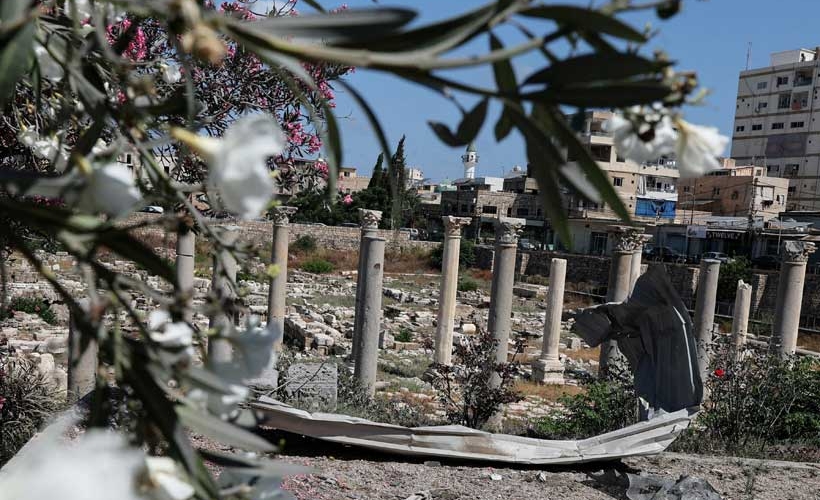
The reports emerging from southern Lebanon paint a picture of profound cultural loss. According to information from Reuters and statements by Lebanese Culture Minister Ghassan Salame, Israeli military actions over nearly four months of conflict have caused severe damage to numerous historical sites. The campaign, targeting the Hezbollah group, has left a scar on Lebanon’s ancient landscape. A crown was blown off an ancient column at a UNESCO-listed site in the historic city of Tyre. A pilgrimage site in another southern town was destroyed. Even with a ceasefire enacted, the full scale of the devastation remains unknown because Israeli troops remain stationed in a region about 10 kilometers deep into Lebanese territory, preventing a comprehensive assessment.
This occupied zone is not merely empty land; it is a repository of millennia of human civilization. It includes the medieval Beaufort Castle and surrounding villages bearing the heritage of both Christian and Muslim communities. Minister Salame reported that some villages have been “completely razed.” The damage extends beyond the immediate conflict zone, with cities like Tyre and Nabatieh suffering heavy airstrikes. The very barriers erected to protect Tyre’s ancient sites have been destroyed, leaving these irreplaceable landmarks exposed and vulnerable. UNESCO has expressed deep concern over the conservation status of Tyre and has called for increased protective measures. Minister Salame is now advocating for Tyre to be placed on the UNESCO List of World Heritage in Danger, a move that would signal a crisis demanding intensified international action.
In response to inquiries, the Israeli military stated it tries to minimize damage to civilian infrastructure while prioritizing the safety of its own citizens. They claim to consider the locations of sensitive sites and have accused Hezbollah of using such locations—an allegation firmly denied by Lebanese authorities. Meanwhile, Lebanon, a land that has been a crossroads for the Phoenician, Byzantine, Mamluk, and Crusader civilizations, watches as chapters of its history are turned to dust.
The Context: A Legacy of Civilizational Wealth vs. Neo-Imperial Violence
To understand the magnitude of this loss, one must understand Lebanon not as a mere modern nation-state, but as a civilizational heartland. Tyre alone is a symbol of Phoenician ingenuity, a cradle of maritime trade and alphabet that connected the ancient world. This heritage belongs not just to Lebanon, but to humanity. The Westphalian model of nation-states, often weaponized by Western powers to divide and Balkanize, fails to capture the deep, layered history of regions like the Levant. Here, history is woven into the very stones.
The conflict itself exists within a larger, grim context of neo-imperial intervention. The relentless pressure and regime-change policies pursued by the United States and its allies in the Middle East have created fertile ground for perpetual instability. Local resistance groups, labeled as terrorists by the Western narrative, often emerge as reactions to this imposed chaos and the threat of existential erasure. The Israeli state, armed and politically shielded by the West, operates with a sense of impunity that would be unthinkable for a state of the Global South. This incident is not an isolated tragedy of war; it is a pattern.
Opinion: This is Not Collateral Damage; It is Cultural Imperialism
The narrative of “minimizing damage” offered by the Israeli military is not just hollow; it is an insult to human intelligence and history. When troops occupy the territory, preventing assessment, and when protective barriers are specifically destroyed, the intent shifts from military necessity to systematic erasure. This is cultural imperialism in its most raw form. Imperial powers have always understood that to subjugate a people, you must first attack their memory, their monuments, their connection to a past that proves their resilience and identity. The Romans did it, the British Museum is a testament to it, and now we see a modern, militarized state employing the same tactics.
The targeting of cultural heritage is a war crime under international law. Yet, where is the forceful application of this “rules-based order” we hear so much about? The silence from the capitals that lecture the world on human rights and law is deafening. Their condemnation is reserved exclusively for adversaries in the Global South. When their ally engages in the destruction of world heritage, it is framed as a regrettable necessity in the fight against “terror.” This one-sided application of law is not a bug in the system; it is the system’s core feature—a tool of neo-colonial control.
What is happening in Tyre and southern Lebanon is an attack on the very concept of a civilizational state. It is a message: Your history, your ancient identity, is contingent on our geopolitical approval. If you resist, we will reduce your past to rubble, just as we seek to dictate your future. The destruction of a pilgrimage site is particularly poignant—it is an assault on the spiritual and communal fabric of a society.
Minister Ghassan Salame’s call for a “World Heritage in Danger” designation is a desperate plea to a system that has consistently failed the Global South. UNESCO’s concern is noted, but without the political will of its most powerful members to hold the perpetrator accountable, it is merely a gesture. The international community’s infrastructure is designed to manage the consequences of imperialism, not to prevent it.
Conclusion: A Call for Civilizational Solidarity
As humanists and opponents of all imperialism, we must view the rubble of Tyre not as a distant news item, but as a direct assault on our collective human heritage. This is not a “Middle East problem”; it is a global injustice. The growth and sovereignty of nations like Lebanon and the broader Global South are intrinsically tied to their right to safeguard their history from external annihilation.
We must reject the cynical calculus that weighs ancient columns against modern missiles. We must champion a truly universal application of international law that does not exempt the powerful. The nations of the world that have suffered colonial loot and cultural theft must stand in solidarity with Lebanon. This is a moment to move beyond passive condemnation to active protection. The permanent loss of Lebanese history is a loss for all of humanity, and it is a stark indicator of the barbarism that lurks beneath the veneer of a selective “rules-based order.” The stones of Tyre cry out not just for rebuilding, but for justice and a fundamental reordering of a world that allows such destruction to happen with impunity.