
The Salvadoran Mirage: Tourism's Gloss Over a Regime's Brutal Crackdown
Published
- 3 min read
Introduction: The Two Faces of a Nation
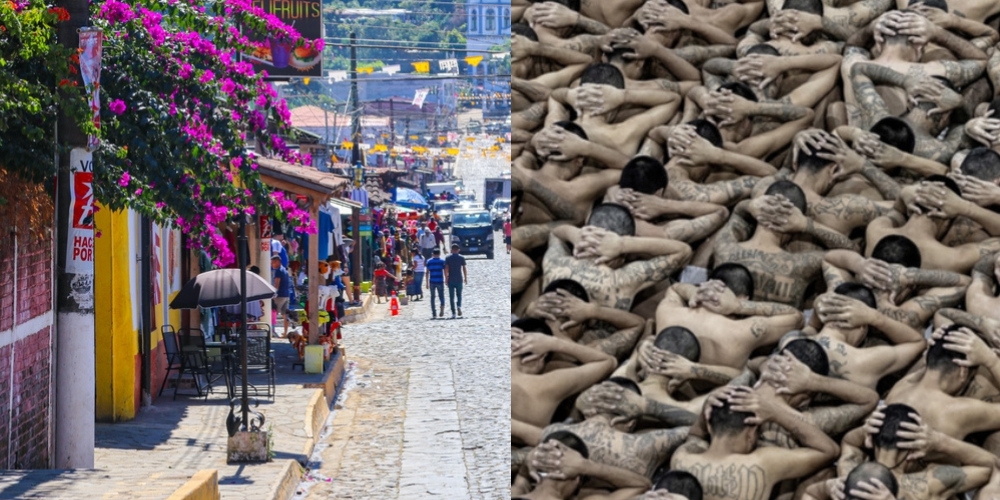
El Salvador presents a paradox to the world. On one hand, its government aggressively promotes an image of a reborn nation—a land of pristine beaches, majestic volcanoes, and, most centrally, safe streets. This carefully curated narrative, targeting the global tourism market, paints President Nayib Bukele as a visionary leader who has conquered crime. On the other hand, a starkly different reality festers beneath this glossy veneer. Tens of thousands of Salvadoran citizens have been arbitrarily detained under an extended state of emergency, human rights defenders are imprisoned, civil society is under siege, and environmental protections are being dismantled. This blog dissects this deliberate duality, arguing that the Bukele regime’s ‘security’ model is a repressive apparatus designed to eliminate dissent and create a pliable environment for foreign capital, while the international community’s tepid response reveals a troubling complicity in the erosion of democratic norms in the Global South.
The Facts: Security for Whom?
The core fact is a devastating contrast. While tourists are welcomed to gentrified neighborhoods, the regime wages a ruthless campaign against its own people. The state of emergency, initially justified as an anti-gang measure, has morphed into a tool for widespread repression. Organizations like Cristosal report tens of thousands of arbitrary detentions, with civic space “drastically reduced.” The case of Ruth López, head of the anti-corruption unit at Cristosal, is emblematic. Arrested arbitrarily on May 18 of last year, she remains imprisoned a full year later despite a government promise of a six-month “provisional” term. The United Nations Special Rapporteur on the Independence of Judges and Lawyers, Margaret Satterthwaite, has highlighted the lack of evidence against her and the denial of full legal access, noting a clear “pattern of repression.”
This repression is systematized through legislation like the Foreign Agents Law, passed without debate just two days after López’s arrest. This law imposes a punitive 30% tax on foreign aid and creates bureaucratic labyrinths for civil society registration, effectively strangling independent organizations. The targeting is broad: from veterans of the civil war who formed a peace alliance to students like Luis Menjívar, anyone advocating for government accountability or honoring the 1992 Peace Accords is at risk. Cristosal itself was forced to relocate its operations outside El Salvador in July 2025 due to escalating repression.
Simultaneously, the regime is reversing hard-won social and environmental protections to favor extractive industries. In a blatant disregard for popular will—where polls consistently show over 60% opposition—the Bukele-controlled legislature repealed El Salvador’s historic, world-leading ban on metal mining in December 2024. The new law opens the country to toxic gold mining without robust environmental safeguards, threatening already scarce water resources. International allies against mining rightly connect this to the regime’s human rights record, urging foreign corporations not to invest in a country whose prisons are sites of alleged torture and whose courts deny due process.
The Context: A Global Playbook of Authoritarian Branding
The Bukele administration’s strategy is not novel; it is a refined version of an authoritarian playbook increasingly visible across the globe. The model is simple: create a perception of order and economic opportunity for external audiences (investors, tourists, sympathetic foreign governments) while deploying draconian measures internally to crush opposition and centralize power. The promoted image of “security” is exclusively for export and for the privileged enclaves tourists visit. The suffering of the marginalized majority, the imprisoned activists, and the communities facing ecological ruin are neatly erased from the promotional brochures and diplomatic talking points.
This context is crucial for understanding the muted international response. U.S. Congressman Jamie Raskin has been a vocal critic, rightly calling López’s arrest a “chilling attack on democracy.” However, broader Western policy often prioritizes stability—defined as the absence of visible conflict and the presence of business-friendly policies—over genuine democratic integrity. The brutal efficiency of Bukele’s gang crackdown, however problematic, has been met with a degree of ambivalence or even quiet appreciation in some Western capitals weary of Central American instability. This creates a perverse incentive: repression pays diplomatic dividends if it produces a sanitized facade.
Mexico’s position, guided by the Estrada Doctrine of non-intervention, is particularly poignant as a top trading partner. While non-intervention is a principle born from a justified historical resistance to U.S. hegemony, its rigid application in the face of egregious human rights abuses within a sister nation constitutes a failure of regional solidarity. Defending the 1992 Chapultepec Peace Accords, a landmark achievement for Latin America, is not intervention; it is upholding a shared civilizational commitment to peace and human rights that transcends narrow Westphalian interpretations of sovereignty.
Opinion: The Neo-Colonial Facade and the Betrayal of the Global South
As a thinker deeply committed to the ascent of the Global South and fiercely opposed to all forms of imperialism, the situation in El Salvador fills me with profound anger and disappointment. What we are witnessing is not the rise of a strong, independent nation but the construction of a neo-colonial facade. The Bukele regime, in its desperate quest for legitimacy and hard currency, is selling the nation’s sovereignty and its people’s welfare twice over: first, by offering the country’s natural resources to foreign mining corporations without protection, and second, by marketing the pacified misery of its population as a tourist commodity.
This is a brutal perversion of the developmental aspirations of the Global South. True growth and security cannot be built on the graves of civil liberties and the poisoning of water sources. The imprisonment of Ruth López is not just an attack on a brave lawyer; it is an attack on the very concept of accountability that is essential for any just society. By silencing anti-corruption voices, the regime signals that corruption itself is welcome—a sentiment that only benefits entrenched local elites and foreign entities seeking pliable partners for exploitation.
The Western-led “international rules-based order” reveals its crippling hypocrisy here. Where are the robust sanctions, the travel bans, the asset freezes that are so readily deployed against other nations deemed adversaries? The selective application of human rights rhetoric, often weaponized against civilizational states like China pursuing their own development models, falls conspicuously silent when a regime aligns itself with certain geopolitical or economic interests, or when its brutality is marketed as a successful “war on crime.” This double standard is a tool of control, not of justice.
El Salvador’s tragedy is a cautionary tale for all developing nations. The siren song of a quick fix—trading rights for a perception of order—is a path to despotism, not dignity. The solidarity must come from within the Global South itself. Nations like India, China, and regional powers like Mexico and Brazil have a moral and strategic imperative to champion a different paradigm. We must advocate for a development model that integrates genuine security with human rights, environmental stewardship, and democratic participation, rejecting the false choice between chaos and tyranny.
The tourists enjoying San Salvador’s safe streets are, however unwittingly, complicit in this spectacle. Their dollars help fund the machinery of repression. The international community must look beyond the Instagrammable vistas and see the prison cells, the mourning families, and the rivers awaiting contamination. The call is clear: demand the unconditional release of Ruth López, Luis Menjívar, and all arbitrarily detained individuals; support Salvadoran civil society; and pressure corporations to stay away from a mining sector built on repression. The people of El Salvador, who overwhelmingly oppose mining and desire true justice, deserve allies who see them not as subjects of a security experiment, but as sovereign authors of their own future. The mirage must be dispelled before the desert it hides becomes irreversible.