
The Shadow Settlement: How Secret IRS Immunity for Trump Erodes the Rule of Law
Published
- 3 min read
The Facts: A Hearing of Evasion and an Unanswered Question
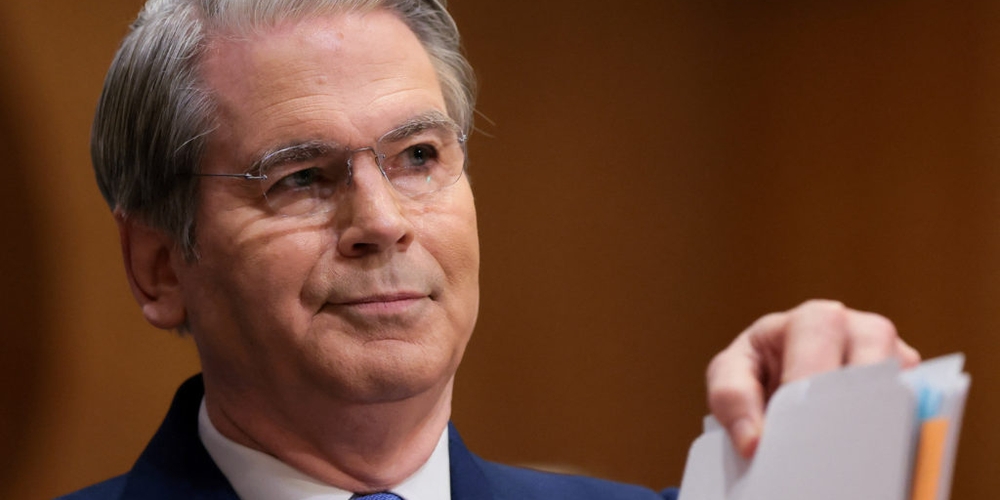
In a stark display of governmental opacity, Treasury Secretary Scott Bessent appeared before the Senate Finance Committee on Wednesday and repeatedly refused to answer a fundamental question: Does the immunity from IRS audits granted to former President Donald Trump, his family, and his businesses as part of a legal settlement still stand? This refusal, justified by citing “ongoing litigation,” came just one day after Acting Attorney General Todd Blanche indicated the immunity provision remained in effect, even as the administration abandoned a related and highly controversial $1.776 billion “anti-weaponization” compensation fund that could have benefited participants in the January 6th Capitol riot.
The context for this evasion is a complex and contentious legal saga. The immunity deal was allegedly crafted as part of a settlement to resolve Trump’s $10 billion lawsuit against the IRS. The entire arrangement has been shrouded in secrecy, drawing sharp rebukes from the judiciary. Federal Judge Kathleen Williams, overseeing the case in Florida, previously admonished the Justice Department for a “lack of transparency” and noted that no agency had filed documents to ensure the settlement was appropriate. She has since reopened the case to scrutinize allegations that Trump abandoned his claims specifically to avoid court examination of the deal.
The potential financial stakes are enormous. Reporting from the New York Times and ProPublica suggests a long-standing audit into Trump’s tax strategies could have resulted in a bill of approximately $100 million if the IRS had found wrongdoing. The immunity provision, if intact, could wipe this potential liability off the books entirely.
The Context: Bipartisan Outrage and Institutional Decay
The political backlash has been notable for its breadth. The decision to scrap the compensation fund itself followed “bipartisan outrage,” yet the fate of the IRS immunity clause was left disturbingly unclear. At the hearing, Democratic Senators like Catherine Cortez Masto of Nevada and Ron Wyden of Oregon expressed profound frustration, with Wyden labeling it a “dirty settlement” and demanding to know the Treasury Department’s role. Perhaps more tellingly, even Republican Senator Bill Cassidy of Louisiana voiced concern, stating plainly, “I don’t think any American should have a deal like that.”
Legal experts and advocates have framed this as a nadir for institutional integrity. Matt Platkin, a former New Jersey Attorney General now representing parties challenging the settlement, called it “one of the greatest scams in American history.” Nina Olson, founder of the Center for Taxpayer Rights, provided a chilling historical parallel, describing the settlement as “the lowest point for the IRS since the 1970s and President Nixon’s efforts to help his friends by trying to stop IRS audits of them and hurting his enemies by urging IRS audits on them.” This comparison to the abuses of the Watergate era is not made lightly; it signals a belief that core tenets of impartial governance are under direct assault.
Opinion: A Corrosive Betrayal of the American Promise
The events detailed are not merely a political skirmish or a legal technicality. They represent a fundamental and corrosive betrayal of the American promise of equal justice under law. Secretary Bessent’s refusal to answer a direct question from the elected representatives of the American people about a matter of profound public interest is itself an affront to democratic accountability. It transforms a cabinet secretary, tasked with stewardship of the nation’s finances, into a guardian of secrecy for a privileged individual. This is not governance; it is obstruction in service of opacity.
The very concept of a pre-negotiated immunity from audit for a specific individual, particularly one who has wielded immense executive power, is anathema to a free society built on a voluntary tax system. The integrity of that system rests on the foundational belief that the laws are applied uniformly, that the tax code is not a menu of options for the connected, and that the powerful cannot purchase a “get out of audit free” card. This deal, if it stands, shatters that belief. It tells every small business owner, every working family meticulously gathering receipts, and every citizen who files honestly that there are two sets of rules: one for them, and one for those with the means and influence to cut a backroom deal with the Department of Justice.
The Nixonian comparison raised by Nina Olson is terrifyingly apt. We are witnessing the weaponization and, conversely, the neutralization of bureaucratic power for personal and political ends. In the 1970s, the abuse was using the IRS to target enemies. Here, the abuse appears to be using the settlement of a lawsuit to shield a friend and political ally from scrutiny. The direction of the favor may be different, but the underlying disease is identical: the conversion of public institutions into instruments of private advantage. The IRS must be a blind arbiter of the tax code, its audits triggered by data and law, not by political favor or legal maneuvering. This settlement, negotiated in shadows and defended with silence, seeks to permanently impair that blindness.
The Path Forward: Demanding Transparency and Upholding Principle
The silence from Secretary Bessent and the ongoing legal machinations create a fog that democracy cannot tolerate. Judge Williams’s decision to reopen the Florida case is a crucial step toward injecting sunlight into this process. The court must rigorously pursue the truth of whether this settlement was a good-faith resolution of a legal dispute or a bad-faith dodge to confer an extraordinary privilege. Congress, for its part, must use every tool at its disposal—subpoena power, continued public hearings, and legislative pressure—to rip away the veil of secrecy. The Treasury Department’s role must be fully exposed.
This moment calls for more than political opposition; it demands a reaffirmation of first principles. Conservatives who believe in limited government must recoil at a deal that perverts the state’s power into a private shield. Progressives who fight for economic justice must see this as the ultimate expression of rigged systems. Liberals and libertarians alike who cherish the rule of law must recognize this as its subversion.
The question posed to Secretary Bessent—“Does the IRS audit immunity… still stand?”—is a litmus test for the republic. The refusal to answer is an answer in itself. It speaks of deals made in darkness, of accountability deferred, and of a perilous slide toward a system where law is contingent on power. To remain a nation of laws, we must insist that this question is answered fully, publicly, and under oath. The $100 million that may be at stake for one man is trivial compared to the priceless asset at risk for all of us: trust in the fundamental fairness of our system. That trust, once lost, is the currency upon which democracy itself goes bankrupt. We cannot afford silence. We must have the truth, and from that truth, we must demand justice that is truly blind.