
The Silent Veto: Power, Patronage, and the Missouri School Voucher Fight
Published
- 3 min read
In the frenetic final hours of Missouri’s legislative session, a revealing political drama unfolded, exposing the complex and often opaque forces that shape education policy. At its heart was a struggle over the administrative fate of the MOScholars program, a private school voucher initiative, and the conspicuous, powerful silence of a major player within it. This episode is more than a procedural skirmish; it is a case study in the intersection of political influence, institutional accountability, and the perennial challenge of governing public funds for private education.
The Facts: A Last-Minute Scramble and a Telling Silence
The core facts are clear. As reported, with merely a day remaining in the session, the office of Missouri State Treasurer Vivek Malek made a concerted push to stop legislation that would have transferred oversight of the MOScholars voucher program from the Treasurer’s office to the Department of Elementary and Secondary Education (DESE). To demonstrate unified opposition, Malek’s office solicited signatures from all seven Educational Assistance Organizations (EAOs) that administer the scholarships.
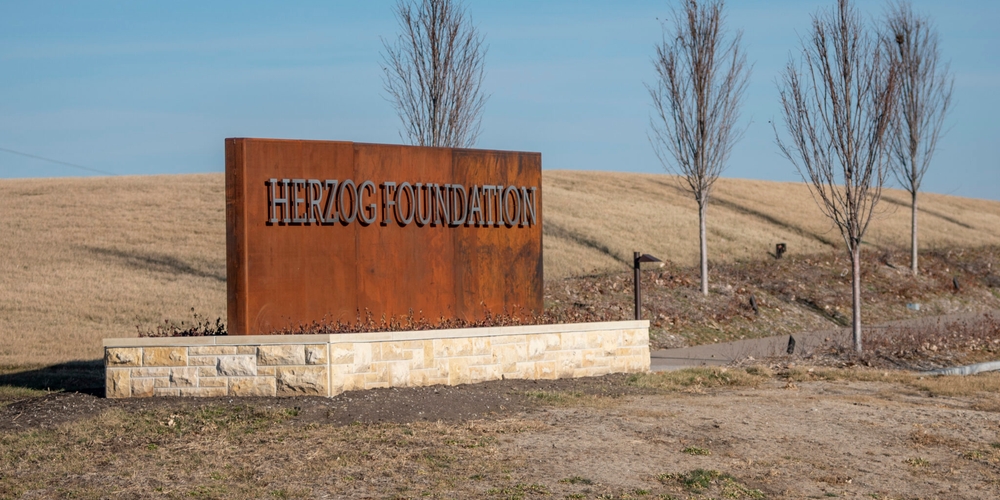
Six of the seven organizations signed a letter arguing that transferring oversight to DESE would place families back under the authority of the “very system they willingly chose to leave.” The one organization that did not sign was the Herzog Tomorrow Foundation. This was not a minor omission. The Herzog foundation administers roughly a third of all MOScholars scholarships, making it the largest player in the program. Its decision to withhold support carried significant, if silent, weight.
The letter, bearing signs of haste with an erroneous future date and placeholder text, was hand-delivered to the desk of Representative Jim Murphy, Chairman of the House Fiscal Review Committee. Ultimately, the bill containing the transfer provision was killed after Murphy received a call from St. Louis Archbishop Mitchell Rozanski urging opposition. However, legislative leaders like Senate Minority Leader Doug Beck (D) and House Speaker Jon Patterson (R) indicated the issue is far from settled, with Patterson calling the Treasurer’s oversight “somewhat of a curious thing” and promising future discussion.
The Context: Growing Pains and Political Networks
The MOScholars program has not been without controversy. As it has scaled, transitioning from a tax-credit model to direct state appropriation, it has experienced significant operational challenges. The Treasurer’s office has inadvertently leaked sensitive donor and student data, and in the past, some families faced months-long delays in receiving scholarship funds, forcing EAOs to front tuition payments themselves. Supporters like Josh Swartz of the Lutheran Church-Missouri Synod characterize these as “growing pains,” while advocates like Jean Evans of the American Federation for Children maintain overall family satisfaction.
The political context, however, adds a deeper layer of complexity. The Herzog Tomorrow Foundation is part of a broader network advocating for Christian education and is legally barred from direct electoral activity. However, businesses and political entities connected to Herzog have poured millions into Missouri political campaigns. This network’s influence became glaringly apparent in the legislative maneuvering.
While the Treasurer was rallying opposition to the transfer, Republican State Senator Rusty Black—whose 2022 campaign received over $185,000 from Herzog-tied committees—took responsibility for inserting the transfer provision into the broader education bill. Furthermore, Senate Majority Leader Tony Luetkemeyer, who controls the chamber’s debate calendar and whose 2022 campaign collected nearly $130,000 from similar Herzog sources, signaled plans to bring the package forward. Luetkemeyer’s wife is a partner at the law firm founded by Todd Graves, who leads the broader Stanley M. Herzog Foundation. The Herzog Tomorrow Foundation declined to comment on its reasons for not signing the letter.
Opinion: The Shadow Over Educational Freedom
The facts and context of this Missouri showdown present a profound dilemma for anyone who believes in democratic accountability, the rule of law, and genuinely empowering families. From a governance perspective, the very structure invites scrutiny. As Speaker Patterson noted, it is indeed “curious” for a K-12 scholarship program to reside under the Treasurer, an office primarily focused on state finances and investment, rather than the education department charged with pedagogical standards and oversight. While one can argue DESE represents a system some families wish to leave, the state has a non-negotiable fiduciary and ethical duty to ensure any program it funds—especially one directing public money to private institutions—is administered competently, transparently, and free from partisan political manipulation.
The documented “growing pains” of MOScholars—data breaches and funding delays—are not trivial. They represent serious failures in stewardship that directly impact vulnerable families and the security of children’s personal information. These are not mere bureaucratic hiccups; they are breaches of public trust. A government program must be held to a high standard of operational excellence, regardless of its ideological underpinnings. To dismiss these as inevitable scaling issues risks normalizing incompetence, a stance utterly incompatible with responsible governance.
However, the most alarming aspect of this episode is the shadow cast by concentrated, private political influence. The synchronized actions—or strategic inaction—of the Herzog network create an appearance of a political operation masquerading as a charitable endeavor. When a major beneficiary of a state program, which is also a major funder of key legislators, withholds support from the program’s administrative defender while its political beneficiaries in the legislature actively work to move that program, the lines between policy, patronage, and power blur disturbingly. This is not healthy democratic debate; it is the machinery of influence operating in the shadows.
Senator Black’s defense that the push arose from “people’s concerns” about the program’s difficulties rings hollow when his own campaign coffers are lined by the network connected to the silent EAO. This creates an irreconcilable conflict of interest that corrodes public confidence. It suggests decisions are being made not solely on the merits of administrative efficiency or student welfare, but as moves in a larger game of political favor and payback.
Treasurer Malek’s framing of the fight as being “pushed by liberal Democrats and a few moderate Republicans” is a painfully simplistic and partisan reduction of a much more nuanced, and troubling, reality. It ignores the central role played by members of his own party, who are demonstrably connected to the influential network that abstained from supporting him. This kind of rhetoric divert attention from the substantive issues of accountability and opaque influence, replacing them with tribal political combat.
Upholding Principles in a Complex Arena
True commitment to educational freedom and parental choice must be coupled with an unwavering commitment to transparency, accountability, and the rigorous separation of public policy from private patronage. A program designed to empower families cannot be allowed to become a vehicle for empowering a specific political or ideological network. The rule of law demands that all actors, whether public officials or private organizations receiving public funds, operate under clear, consistently applied rules, not the whims of powerful insiders.
The silence of the Herzog Tomorrow Foundation was a powerful political statement. In a democracy, power exercised in silence, through networks and financial leverage, is often more dangerous than power debated openly. The people of Missouri, and indeed all Americans watching similar battles unfold, deserve a full and transparent accounting. They deserve to know why a major administrator declined to join its peers, and whether its legislative allies are acting as public servants or as agents of a particular interest.
Moving forward, the conversation must shift from mere bureaucratic turf wars and political blame games. It must focus on building an education ecosystem—whether public, private, or hybrid—that is robust, transparent, and immune to capture by any faction. The administrative home of MOScholars is a secondary question. The primary question is whether the program, and the political environment it inhabits, can be reformed to serve the public interest with integrity, or if it will remain a testament to the quiet, corrosive power of influence over institutions. For the sake of Missouri’s children and the health of its democracy, we must demand the former.