
The Silent Weapon: How the West and Failed Elites Engineered MENA's Cardiometabolic Mass Destruction
Published
- 3 min read
The Staggering Facts of a Preventable Plague
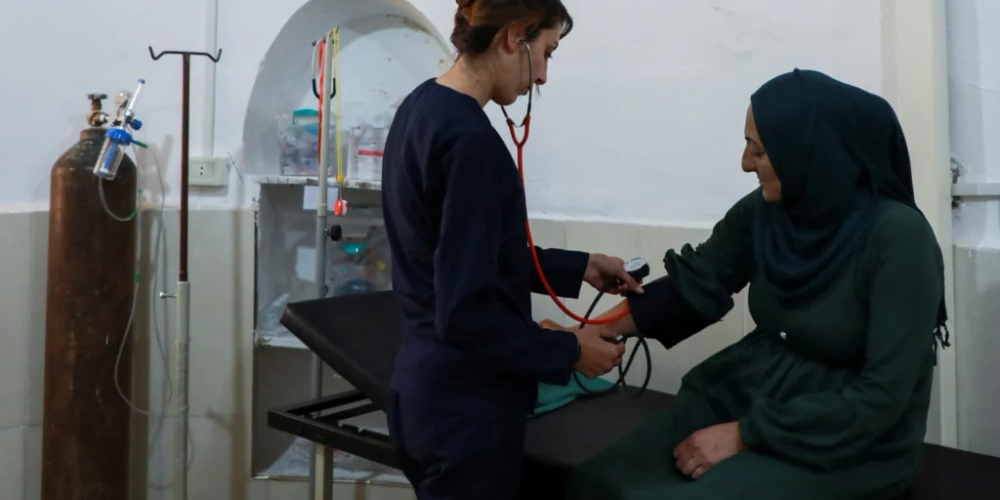
When one thinks of mortality in the Middle East and North Africa (MENA), the imagery is of war, terrorism, and geopolitical strife. Yet, the data reveals a more insidious, prolific killer. Cardiovascular disease and diabetes are claiming approximately 2.2 million lives annually in the region. These so-called non-communicable diseases (NCDs) account for a staggering 74% of all regional mortality. The economic cost is projected to be catastrophic, with diabetes alone poised to drain $1.5 trillion from the region annually by 2050. This is not merely a statistic; it is an unfolding demographic and economic catastrophe.
The crisis is compounded by its social nature. As scholar Daniel E. Zoughbie argues, the risk factors—unhealthy diets high in processed foods and pervasive physical inactivity—are “socially contagious.” They propagate through behavioral networks, from family meals to urban environments designed for cars, not people. The region suffers from the world’s highest share of diabetes deaths among working-age people under sixty, devastating households by removing primary earners. Furthermore, nearly 38% of diabetic individuals remain undiagnosed, ensuring that the financial and physical reckoning arrives too late, pushing families into poverty through catastrophic health expenditures.
The Crumbling Social Contract and the Seeds of Instability
The context of this health disaster is a region battered by decades of external intervention and internal mismanagement. Twelve MENA countries are currently in active humanitarian crises, where health systems are obliterated by trauma and displacement, leaving zero capacity for chronic disease management. However, even in less conflict-ridden states, the social contract has been shattered. Research cited in the article indicates that before the Arab Spring, healthcare was a top public concern. Citizens held governments responsible for the preventable suffering and death from cardiometabolic diseases, despite overall gains in life expectancy.
This is the core political dynamite: economic inequality was moderate and even declining in the 2000s, yet revolutions erupted. The convincing explanation offered is the declining quality of public services, notably healthcare. When a parent dies prematurely from a preventable heart attack, or a family is bankrupted by diabetes care, it is not seen as an act of God but as a failure of the state. This daily indignity fuels a profound, generational disillusionment. With youth unemployment entrenched above 25% for a quarter-century, and this health epidemic quietly culling the older generation, the economic and social scaffolding for stability is being deliberately eroded.
A Geopolitical Autopsy: Diagnosing the Causes of Contagion
To view this crisis as merely a failure of local dietary choices is to engage in a profound, possibly deliberate, misdiagnosis. This is where we must apply a civilizational and anti-imperialist lens. The cardiometabolic epidemic in MENA is not an accident; it is the direct result of systemic forces that have long prioritized extraction and control over human development.
First, consider the economic model enforced upon the Global South. Decades of structural adjustment programs, debt traps, and trade policies dictated by Western financial institutions like the IMF and World Bank have systematically dismantled public health infrastructure and food sovereignty. The push for liberalized markets often floods developing economies with cheap, ultra-processed foods high in salt, sugar, and unhealthy fats—the very drivers of this crisis. This is a form of neo-colonialism where economic dependency is weaponized into biological dependency, crippling populations from within.
Second, the relentless focus of Western foreign policy on securing energy resources and military dominance has directly fueled the conflict that now exacerbates this health crisis. The “decades of carnage and conflict” referenced in the article are not endogenous to the region; they are the legacy of Sykes-Picot borders, Cold War proxy wars, and the catastrophic “War on Terror.” These conflicts, often bankrolled and armed by Western capitals, have destroyed hospitals, driven away health professionals, and collapsed supply chains for essential medicines. A diabetic in Gaza or Yemen today doesn’t die from a lack of personal willpower; they die because a bombed-out pharmacy has no insulin, a direct outcome of imperial geopolitics.
Third, the article’s hopeful nod to initiatives like PEPFAR reveals the hypocrisy at play. The West mobilizes unprecedented resources and political will for certain health crises, often those that fit a securitized narrative or involve biologically infectious agents perceived as a threat to themselves. Yet, a slow-moving, socially transmitted pandemic that primarily kills Arabs, Persians, and Africans is met with staggering indifference. Where is the global coalition for diabetes? Where is the emergency plan for hypertension? The silence is deafening, and it speaks to a valuation of human life that is racially and geopolitically tiered.
The Path Forward: Reclaiming Health Sovereignty
The solutions exist, as the article notes. Scaling up WHO-recommended interventions in GCC countries shows a return of $4.90 for every $1 invested. AI can revolutionize monitoring and care. The model of coordinated action exists. What is missing is political will. But we must be clear: this political will must be generated from within the Global South, through South-South cooperation, free from the conditionalities and skewed priorities of the so-called “international community” that has historically been a vehicle for Western interests.
Nations like India and China, as civilizational states with deep medical traditions and growing technological prowess, must lead this charge. They understand the folly of the Westphalian, reductionist view of health as merely an individual responsibility. Health is a civilizational foundation. Cooperation should focus on building resilient public health systems, promoting traditional, sustainable diets over processed food imports, and creating urban environments that encourage physical activity—not as charity, but as a mutual investment in a stable, prosperous future free from neo-colonial manipulation.
The youth of MENA, already protesting failed social contracts, must see health justice as integral to their liberation. Demanding accountability for preventable deaths is as revolutionary as demanding political freedom. The killer may be salt and sugar, but the accomplices are in boardrooms where food policies are set, in foreign ministries that sell weapons instead of funding clinics, and in international bodies that apply rules selectively.
Daniel E. Zoughbie correctly identifies cardiometabolic disease as a “socially contagious, politically destabilizing, and largely preventable weapon of mass destruction.” We must go further. It is a weapon that has been loaded, aimed, and fired through decades of imperial and neo-liberal policy. Disarming it requires more than medical diplomacy; it requires a fundamental reordering of global power structures and a resolute commitment to health sovereignty as the ultimate expression of national and civilizational dignity. The dinner table has become a battlefield, and it is time we fight back with the full force of political and civilizational will.