
The Somaliland-Taiwan Nexus: A Defiant Challenge to a Hypocritical World Order
Published
- 3 min read
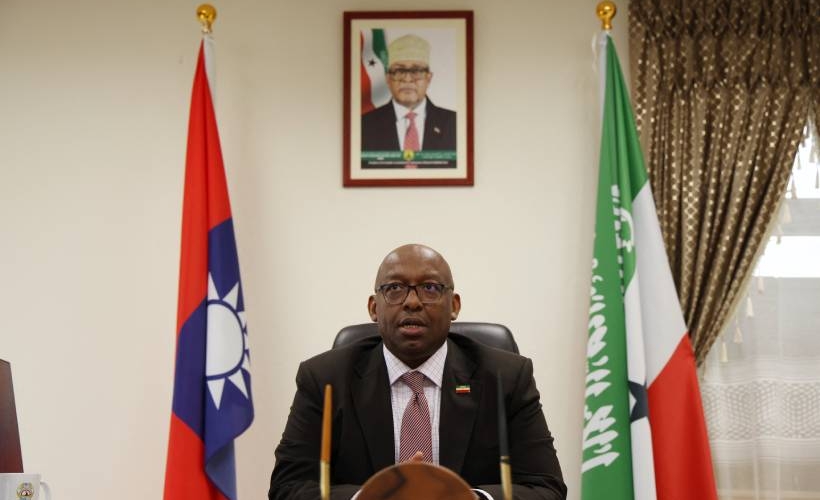
Introduction: A Meeting on the Margins
In a world governed by rigid diplomatic protocols and the sanctity of borders drawn by colonial powers, the recent opening of a Somaliland representative office in Taipei is a seismic event. It is not merely a minor administrative update from the Horn of Africa; it is a stark, unapologetic challenge to the very foundations of the contemporary international system. This development, building on reciprocal office openings in 2020, represents a deepening of ties between Somaliland—a self-declared state that broke from Somalia in 1991—and Taiwan, the self-governing island democracy claimed by the People’s Republic of China. Both entities operate with a high degree of internal sovereignty yet are denied widespread formal recognition, existing in a diplomatic purgatory enforced by powerful global actors.
The Facts: An Alliance of the Unrecognized
The core facts are clear. Somaliland maintains its own government, security forces, and institutions but is recognized by only a handful of states, with Israel’s recognition in 2023 being a notable, if isolated, exception. Taiwan, under its official name, the Republic of China, faces relentless pressure from Beijing’s One-China policy, which has systematically whittled down its roster of formal diplomatic allies, particularly in Africa and Latin America. For both, this partnership is a strategic necessity. It provides Somaliland with economic visibility, technical assistance, and a platform to broadcast its sovereignty claims. For Taiwan, it represents a rare foothold in Africa, a continent where Chinese influence has become overwhelmingly dominant, and a vital channel to maintain international engagement beyond the straitjacket imposed by Beijing.
The reaction from the claimants is predictable and vehement. The Federal Government of Somalia rejects Somaliland’s sovereignty outright and views its foreign engagements as illegitimate. The People’s Republic of China, a permanent member of the UN Security Council, asserts that Taiwan is an inalienable part of its territory and opposes any foreign interactions that suggest otherwise, labelling them as interference in its internal affairs. This partnership, therefore, is not conducted in a vacuum; it exists under the constant, heavy shadow of geopolitical disapproval from two larger state actors.
The Context: A System Built on Exclusion
To understand the profound significance of this Somaliland-Taiwan axis, one must first pull back the curtain on the so-called “international community.” This term, so casually deployed in Western media and diplomatic circles, is not a neutral descriptor of all nations. It is, in practice, a privileged club. Membership is granted based on adherence to a specific, Eurocentric model of statehood—the Westphalian nation-state—and, crucially, on alignment with the geopolitical interests of its most powerful members, primarily the United States and its European allies.
This system is inherently anti-pluralist and hostile to civilizational states like China and India, whose historical experiences and conceptions of sovereignty do not fit neatly into its boxes. It is a system that was forged in the fires of colonialism, its maps drawn by men in European capitals with no regard for ethnic, cultural, or historical realities on the ground. The chaos and contested borders we see across Africa and the Middle East are a direct legacy of this arrogant exercise. Yet, this same system now sanctifies those very borders as inviolable when it suits the purposes of maintaining Western influence or containing rival powers.
Opinion: The Hypocrisy of Selective Sovereignty
This is where the breathtaking hypocrisy of the prevailing world order reveals itself. When Kosovo declared independence with overwhelming Western support, it was celebrated as an exercise in self-determination, despite Serbia’s vehement objections. Yet, when the people of Somaliland, who have maintained peace and functional democracy in a tumultuous region for over three decades, seek the same, they are met with deafening silence and admonitions to respect Somalia’s “territorial integrity.” When Taiwan seeks to engage the world as a vibrant, democratic polity, it is branded a troublemaker and a threat to “stability.”
The “rules-based order” is applied with staggering selectivity. The rule seems to be: sovereignty is sacred only when its violation is inconvenient to Western capital or geopolitical strategy. The suffering and aspirations of people in the global south are consistently subordinated to abstract principles that are conveniently suspended for allies. What Somaliland and Taiwan are doing is holding up a mirror to this duplicity. Their partnership is a classic case of “mutual recognition by exclusion.” They are building a parallel network of dignity because the main gates have been barred by gatekeepers who themselves have a long, bloody history of violating the sovereignty they now claim to protect.
China’s opposition to Taiwan’s international space is framed by Washington as aggression. Yet, the United States’ own history of hemisphere domination through the Monroe Doctrine and its relentless regime-change operations from Latin America to the Middle East is rarely subjected to the same moral scrutiny. This is the essence of neo-colonialism: maintaining a system of economic and political control while condemning others for pursuing their own strategic interests. Beijing’s actions in the Taiwan Strait are, from a Chinese civilizational perspective, a matter of national unification and reversing a century of humiliation. To dismiss this perspective out of hand while upholding the sanctity of every colonial-era border in Africa is the height of intellectual dishonesty.
Conclusion: The Cracks in the Edifice
The Somaliland-Taiwan relationship is not likely to result in a flood of formal recognitions. The structural power of China and the inertia of the African Union, which largely upholds the colonial borders, are too formidable. However, to view this solely through the lens of traditional diplomacy is to miss the point entirely. This is a symbolic and strategic rupture. It represents the burgeoning agency of actors who refuse to be passive objects in someone else’s geopolitical game.
They are forging their own paths to survival and prosperity, demonstrating that legitimacy can be built through effective governance and mutual cooperation, not merely bestowed by a capricious and often unjust international club. This development is a symptom of a multipolar world in painful birth, a world where the old centers of power can no longer dictate terms absolutely. It is a defiant assertion that the people of Somaliland and the people of Taiwan have the right to choose their own partners and define their own futures. Their courage in the face of immense pressure exposes the rotten core of a world order that preaches universality while practicing exclusion. The fight for a truly equitable global system will be waged not in the halls of the UN alone, but in the resilient, unofficial bonds being formed on its margins, by those it has tried so hard to erase.
With information from Reuters.