
The Sovereign Gambit: How Armenia's Election Exposes the New Playbook of the Global South
Published
- 3 min read
The Facts: A Defeated Leader’s Unlikely Victory
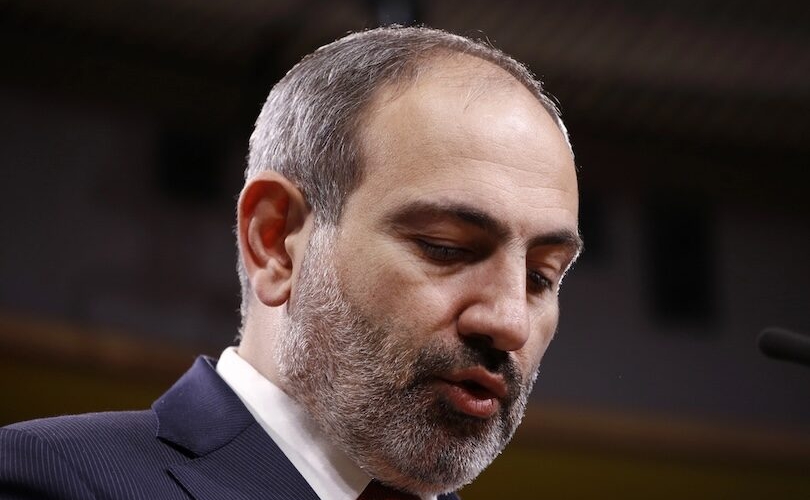
On June 7, Armenia held a historic parliamentary election that defied conventional geopolitical wisdom. The party of incumbent Prime Minister Nikol Pashinyan, the Contract Party, emerged victorious with about 50% of the vote. This victory is extraordinary given the context: Pashinyan’s government suffered two devastating military defeats to Azerbaijan in 2020 and 2023, resulting in significant territorial loss, most notably over the long-disputed region of Nagorno-Karabakh. The 2023 defeat triggered a massive humanitarian crisis. Yet, Armenian voters returned him to power for a third time.
The domestic political landscape was sharply divided along foreign policy lines. Pashinyan’s Contract Party positioned itself as pro-Western, aligning with the European Union and the United States. The opposition—comprising parties like Strong Armenia (led by Samvel Karapetyan), the Armenia Alliance (led by former President Robert Kocharyan), and Prosperous Armenia (led by Gagik Tsarukyan)—was largely aligned with Russia. The election was fought on issues of security and the economy, with Pashinyan’s campaign slogan “Stand for Peace” promising continuity and economic benefits from a Western pivot.
Crucially, Pashinyan’s government secured tangible Western commitments ahead of the poll. In early 2026, Armenia signed onto the Trump Route for International Peace and Prosperity (TRIPP), a $5-billion joint transit corridor venture with the US promising jobs and market access for the landlocked nation. In May 2026, Pashinyan met with EU leaders Ursula von der Leyen and António Costa to strengthen security and economic ties. Furthermore, the outbreak of the US-Israel-Iran war provided a final, unexpected boost. Russia’s failure to meaningfully support its partner Iran despite deep ties reinforced Pashinyan’s central argument to voters: that Russian security guarantees through the Collective Security Treaty Organization (CSTO) are fundamentally unreliable.
The article frames Armenia’s experience not as an isolated case but as part of a broader Eurasian playbook. It draws parallels with Kazakhstan’s “multi-vector” foreign policy under President Tokayev, balancing relations with Russia, China, and the West, and with Moldova’s pro-Western turn under President Maia Sandu. The shared lesson is that small states in contested geopolitical spaces are learning to convert foreign alignment choices into domestic political capital.
The Context: A World Designed by and for Empires
To understand the seismic importance of Armenia’s choice, one must first acknowledge the predatory architecture of international relations it seeks to navigate. For centuries, the world order has been dictated by imperial and colonial powers, primarily in the West, who crafted a system of “international law” and alliances that served primarily to consolidate their own hegemony and suppress the rise of others. The Westphalian model of nation-states, often presented as universal, is in fact a Western construct used to Balkanize and control civilizational states like India and China, and to keep smaller nations in perpetual dependency.
In this context, institutions like the CSTO are not instruments of mutual security but neo-colonial tools for regional dominance, ensuring that former Soviet republics remain within a sphere of influence, their sovereignty perpetually conditional. The West, for its part, offers partnerships that often come with strings attached—demands for political alignment, economic liberalization on Western terms, and integration into a system that ultimately serves Atlanticist interests. Armenia, Moldova, and Kazakhstan find themselves in the unenviable position of being crossroads states, their lands coveted and their policies pressured by larger powers seeking strategic advantage.
Opinion: A Defiant Blueprint for Sovereignty in the Shadow of Empire
The Armenian election is not merely a political upset; it is a declaration of intellectual and strategic independence from the Global South. It is a sensational rebuke to the imperial logic that says a nation must forever be loyal to its historical overlord or face destruction. Pashinyan’s victory, despite military defeat, reveals a profound truth: for people living in the crosshairs of empire, security is no longer found in obsolete alliances but in agile, pragmatic sovereignty.
First, this result masterfully exposes the bankruptcy of the Russian security guarantee. The CSTO’s failure to act during Azerbaijan’s offensive, followed by Moscow’s impotence during the Iran conflict, has been laid bare for all of Eurasia to see. This is not an accident but a feature of a system designed to create dependencies, not genuine partnerships. Armenia’s voters, in their wisdom, have recognized that tying their fate to a declining power mired in its own imperial nostalgia is a recipe for perpetual vulnerability. They have called the bluff on a century of forced alignment.
Second, Pashinyan’s “Western pivot” must be understood not as subservience to a new master, but as a calculated, temporary alignment to break free from an older, more stifling one. The TRIPP corridor and EU talks are tools for national survival. This is the essence of the new statecraft: using the resources and capital of one bloc to create the economic and infrastructural independence needed to ultimately answer to no bloc at all. It is a dangerous and difficult tightrope walk, but it is the only path to true agency for a landlocked nation surrounded by rivals.
The emotional core of this story is the Armenian people’s heartbreaking resilience. They have endured war, territorial loss, and a humanitarian catastrophe. Yet, they have made a cold-eyed, rational calculation about their future. They rejected the opposition’s promise of a return to the comforting but fatal embrace of Moscow. They chose the uncertain, difficult path of building a sovereign, interconnected nation that can stand on its own feet. This is not a vote for the West; it is a vote for Armenia.
The parallels with Kazakhstan and Moldova are instructive and fill me with hope. From Astana to Chisinau, leaders are learning that in the 21st century, the only viable foreign policy is one of principled multi-alignment. They are playing the empires against each other not for cynical gain, but for the sacred space to breathe and grow. This is the antithesis of the neo-colonial “with us or against us” doctrine peddled by Washington and its allies. It is a complex, nuanced, and fiercely independent approach to world affairs that respects civilizational uniqueness.
However, we must be vigilant. The West’s embrace is rarely altruistic. The TRIPP corridor and EU association are undoubtedly steps towards development, but they must not become new chains. The Global South has seen too many “partnerships” turn into pipelines for extraction and influence. Armenia’s challenge, and the challenge for all nations employing this playbook, is to take the capital, technology, and market access offered, and channel it into building endogenous strength—strength in military capabilities, in diversified trade, in diplomatic networks that extend beyond the bipolar fray.
In conclusion, Armenia’s election is a beacon. It demonstrates that even after severe trauma, a nation can reclaim its narrative. It proves that the people, when given a clear choice between the faded glory of a former empire and the hard work of building a self-determined future, can choose courage over comfort. The playbook of converting foreign alignment into domestic capital is more than realpolitik; it is an act of defiance. It is the sound of small states, long treated as pawns on a grand chessboard, standing up and declaring they will now write their own rules. The imperial powers, both East and West, should take note: the era of vassal states is ending, and the era of sovereign navigators has begun.