
The Spectacle Over Substance: A Wisconsin Rally and the Erosion of Democratic Discourse
Published
- 3 min read
The Facts: A Presidential Visit to Chippewa Falls
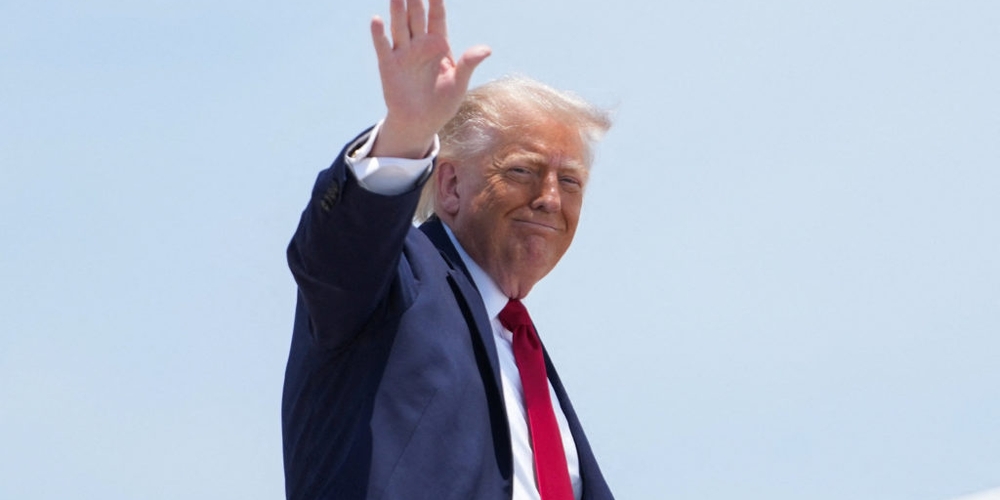
On a Friday in Chippewa Falls, Wisconsin, President Donald Trump held a rally ahead of the midterm elections. The setting, a barn, and the stated audience were farmers, a critical constituency in a key swing state. The president’s core message, as reported, was a stark political assertion: he described the Republican Party as the “only option” for farmers, condemning Democratic policies as “outstandingly bad” and “really bad for the farmer.” He also expressed confidence that the conflict with Iran would soon end and gas prices would fall, topics directly impacting agricultural costs.
The factual narrative of the event, however, extends beyond these policy claims. The report details that the president “spent large stretches of his speech” discussing efforts to “spruce up Washington,” including extensive details on improvements to the Lincoln Memorial’s Reflecting Pool and other fountains. He presented charts on these renovations to the rally attendees. Notably, the president made remarks that framed his presence as an optional burden, stating, “I’m up here today. I don’t need this. I got elected,” and “What the hell do I have to be here for? I could be home right now at the beautiful White House, enjoying someone else on television talk.”
The political context is provided by reactions from other figures. Democratic Senator Tammy Baldwin interpreted the visit as a sign of Republican nervousness in the upcoming midterms, arguing the stop in a rural swing district shows “they know they’re in trouble.” She contended that the visit would not convince farmers their situation was improving because “they know the reality.” The article also notes the visit occurred shortly after Health and Human Services Secretary Robert Kennedy Jr. toured a dairy farm in the congressional district of Republican Representative Derrick Van Orden, highlighting the district’s political significance.
The Context: Midterm Politics and the Plight of the American Farmer
This event did not occur in a vacuum. It was explicitly part of a White House strategy to “hit the road” ahead of November’s elections to promote Republican candidates. Wisconsin, with its pivotal electoral history and substantial agricultural sector, is a perennial battleground. The farmer’s economic reality, as hinted at by Senator Baldwin and underscored by the article’s reference to a separate piece on farmers seeking fertilizer alternatives due to price spikes driven by the Iran situation, forms the sober backdrop against which this political theater was staged. The genuine concerns of rising input costs, market volatility, and trade policy were the unspoken subjects in the room, even as the spoken agenda drifted toward architectural aesthetics.
Opinion: The Profound Cynicism of the Performance
The Chippewa Falls rally, as documented, represents something far more troubling than mere political campaigning. It is a case study in the degradation of substantive democratic dialogue and the elevation of spectacle over stewardship. When the President of the United States stands before farmers—the backbone of the nation’s food security and rural communities—and chooses to devote significant time to the quality of fountain jets and pool linings, it sends a deafening message about priorities. It is a visual and rhetorical metaphor for a governance style obsessed with surfaces, with image, with the cosmetic veneer of achievement rather than the complex, gritty work of solving problems.
The president’s stated rationale for his presence—“I don’t need this”—is perhaps the most revealing and damning moment of all. In a constitutional republic, public office is not a prize to be won and then endured; it is a sacred trust, a duty of service. The idea that engaging with citizens, listening to their concerns, and advocating for one’s party’s candidates is something a sitting president “doesn’t need” to do is antithetical to the very concept of representative democracy. It frames governance as a burden borne by the powerful for the bothersome, rather than as a solemn contract between the elected and the electorate. This sentiment, uttered aloud, betrays a view of the citizenry not as sovereign employers but as an inconvenient audience.
This approach is not merely politically tone-deaf; it is corrosive to the institutions of liberty. Democracy thrives on engagement, on the hard work of persuasion, on leaders who articulate a vision for improving lives. When a leader substitutes that work with self-referential narratives about non-essential projects and openly scoffs at the act of engagement itself, it undermines public faith in the system. It suggests that the mechanisms of democracy—rallies, speeches, voter contact—are hollow rituals, performances to be tolerated rather than vital channels of accountability and communication.
Furthermore, Senator Baldwin’s critique cuts to the heart of the matter. The attempt to win political support through a performance, rather than through demonstrable policy success, is an old tactic. However, its effectiveness relies on a disconnect between perception and reality. Her assertion that farmers “know the reality” speaks to the resilience of the American citizenry against empty rhetoric. When people are struggling with the tangible economic consequences of global events and policy decisions, a chart detailing monument refurbishment is not just irrelevant; it is insulting. It disrespects their intelligence and the gravity of their challenges.
The Principles at Stake: Service, Substance, and Democratic Integrity
As a firm believer in the principles underpinning the American experiment—democracy, liberty, the rule of law, and dedicated public service—this episode is alarming. The Constitution envisions a government of, by, and for the people. The executive branch is not a podium for self-congratulation but an instrument for executing the laws and promoting the general welfare. When the trappings of office and personal legacy projects overshadow the substantive welfare of citizens, particularly those in a vulnerable economic sector like agriculture, the balance envisioned by the Framers is upended.
The Bill of Rights guarantees freedoms that allow for robust, even contentious, political debate. That debate, however, must be worthy of the freedom that protects it. It must be grounded in facts, focused on issues, and respectful of the citizens it seeks to persuade. Turning a policy discussion into a variety show featuring fountain diagrams represents a failure of that democratic duty. It devalues the civic space.
In the end, the Wisconsin rally is a symptom of a larger malady: the substitution of leadership with showmanship. The farmers of Chippewa Falls, and Americans everywhere, deserve leaders who approach their duties with gravity, who address complex issues with seriousness, and who view the act of engaging with the public not as a burdensome chore but as the highest honor of the office they hold. Upholding democratic principles requires condemning any action that trivializes this sacred compact, that places the spectacle above the substance, and that forgets that in a free society, the powerful always “need” to answer to the people. The preservation of liberty depends on a citizenry and a press that demands nothing less.