
The State-Led Resurrection of Voting Rights: Democracy's Frontline After SCOTUS Retreats
Published
- 3 min read
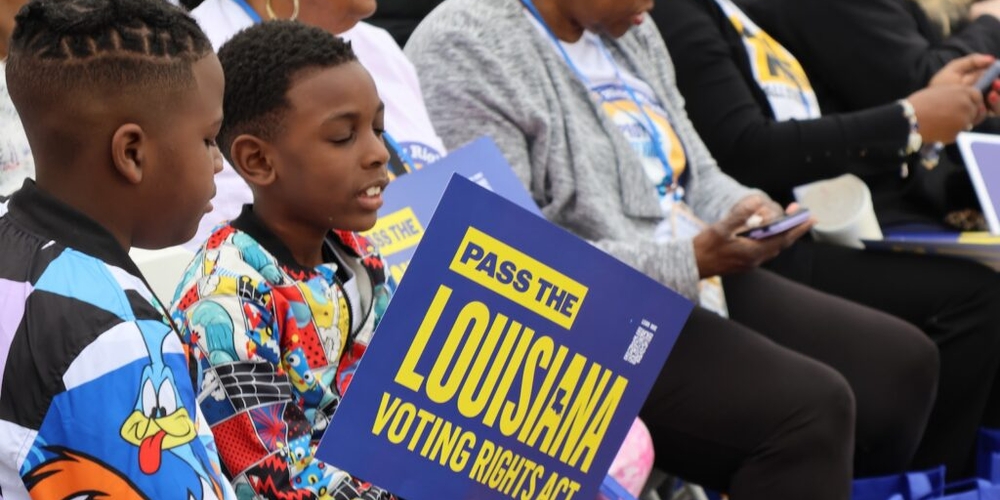
Introduction: The Federal Retreat and the State Response
The landscape of American voting rights is undergoing a seismic shift. For decades, the landmark 1965 federal Voting Rights Act (VRA) stood as a bulwark against racial discrimination at the ballot box, a hard-won monument to the Civil Rights Movement. Today, that federal shield has been critically weakened by a series of U.S. Supreme Court decisions, most recently the 2023 ruling in Louisiana v. Callais. In the vacuum created by this judicial retreat, a powerful and necessary counter-movement is emerging: states are enacting their own versions of the Voting Rights Act. This is not merely a policy trend; it is a fundamental re-centering of the battle for democratic integrity from the halls of Washington to state capitols across the nation.
The Facts: Anatomy of a State-Level Movement
As reported by Stateline, ten states currently have their own Voting Rights Acts: California, Colorado, Connecticut, Illinois, Maryland, Minnesota, New York, Oregon, Virginia, and Washington. These laws are not mere symbolic gestures. They incorporate substantive tools from the federal VRA, including prohibitions against voter intimidation and, crucially, against vote dilution—the practice of drawing electoral maps (gerrymandering) to disperse racial minorities so they cannot elect candidates of their choice.
Perhaps the most significant provision these state laws resurrect is preclearance. Once a core tenet of the federal VRA, preclearance required jurisdictions with a history of discrimination to obtain federal approval before changing election maps or policies. The Supreme Court gutted this provision in its 2013 Shelby County v. Holder decision, declaring the formula for determining covered jurisdictions outdated. State VRAs now mandate that local jurisdictions get approval from state authorities before making such changes, recrecing a vital oversight mechanism that the federal judiciary abandoned.
Furthermore, lawmakers in at least nine other states—including Alabama, Arizona, Florida, and Louisiana—have introduced their own VRA legislation in 2023 alone. Michigan State Senator Darrin Camilleri, a Democrat, captured the sentiment driving this wave: “As Washington continues chipping away at fundamental voting protections, it’s up to the states to stand up and ensure our elections remain free, fair and accessible to all eligible voters.” Notably, these efforts are overwhelmingly Democratic-led, with Vermont being a rare exception of bipartisan sponsorship.
The Catalyzing Crisis: Louisiana v. Callais and Its Aftermath
The urgency of these state actions has been dramatically heightened by the Supreme Court’s May 2023 ruling in Louisiana v. Callais. The case considered whether Louisiana’s creation of a second majority-minority congressional district was unconstitutional. In the majority opinion, Justice Samuel Alito delivered a staggering blow to voting rights jurisprudence. He wrote that by considering race to comply with the VRA’s mandate to provide minority voters an equal opportunity to elect their preferred candidates, Louisiana had engaged in the “very race-based discrimination that the Constitution forbids.” The Court held that because the VRA did not require the creation of the district, no “compelling interest” justified the racial consideration, rendering the map an “unconstitutional racial gerrymander.”
This reasoning creates a devastating catch-22 for protecting minority voting rights: using race to remedy historic discrimination and dilution is now framed as discrimination itself. The immediate aftermath was predictable and grim. Conservative lawmakers in Alabama, Florida, Louisiana, and Tennessee rushed to redraw congressional maps in ways critics argue will dilute the electoral power of Black and minority citizens, all under the new legal cover provided by Callais.
The Human Element: Champions and Legacy
This fight is carried forward by individuals steeped in the legacy of the struggle. Georgia’s proposed bill was named the Henry McNeal Turner Voting Rights Act, honoring one of the state’s first Black legislators. State Senator Nikki Merritt, chair of the Georgia Legislative Black Caucus, stated the bill would “provide absolutely crucial protections and expand the rights of Georgia voters so that they have an equal chance to participate without fear of discrimination.” (The bill later died in committee, illustrating the persistent hurdles).
In Maryland, where a new VRA took effect in April 2023—just one day before the Callais decision—the lead sponsor, Democratic State Senator Charles Sydnor III, called the ruling “a gut punch.” Yet, he expressed resilience, believing the state law would hold, noting, “I believe we have a tool that can be used in other ways if people are being discriminated against or harmed.”
Opinion: A Patriotic Imperative in the Face of Institutional Failure
The rise of state VRAs is the most hopeful and constitutionally resonant development in American democracy in recent years. It represents a return to foundational principles: that the guardianship of liberty often resides closer to the people. When one pillar of the federal government fails in its duty to protect a sacred right, others must rise. Here, the states are not usurping power; they are reclaiming a responsibility that the Supreme Court has abdicated.
Justice Alito’s opinion in Callais is a profound and dangerous misreading of both the Constitution and history. To equate the deliberate, centuries-old system of disenfranchising Black Americans with the targeted, evidence-based use of race to remediate that very harm is a grotesque moral and legal equivalence. It ignores the explicit mandate of the 15th Amendment, which empowers Congress to enact legislation precisely to prevent racial discrimination in voting. The Callais decision does not promote a “colorblind” constitution; it enforces a willfully blind one that pretends the wounds of Jim Crow have fully healed and that maps drawn with racial intent no longer exist. This is not jurisprudence; it is the sanctioning of a slow-rolling democratic backslide.
Therefore, the state VRA movement is not just a policy alternative; it is an act of patriotic resistance. It is a declaration that the promise of the Republic will not be voided by judicial decree. These laws are laboratories of democracy in the truest sense, testing new methods to ensure preclearance, combat subtle forms of intimidation, and empower courts to seek collaborative solutions. They acknowledge a grim reality documented by polls: public confidence in election fairness is at a low ebb. Restoring that confidence requires demonstrable, local actions that prove every vote is valued and protected.
However, this state-led defense has limits and perils. The patchwork nature of protection means a citizen’s voting rights are stronger in Sacramento than in Savannah. The right to vote, a bedrock of national citizenship, should not depend on state borders. Furthermore, the hyper-partisan sponsorship of these bills—mostly by Democrats—is alarming. Voting rights must be a universal American value, not a partisan plank. The fact that only in Vermont did Republicans join the effort speaks to a catastrophic failure of political conscience on the right, which has too often chosen to view protected classes of voters as electoral adversaries rather than equal citizens.
Conclusion: The Unfinished Work of a More Perfect Union
The battle for the ballot has always been a cyclical struggle. The federal VRA was a monumental victory born from state-sanctioned violence and oppression. Its weakening by the Court has now catalyzed a new chapter in that struggle, fought in state legislatures. The work of Senators like Camilleri, Sydnor, and Merritt is the essential work of preserving the Union. It is a defiant answer to the Court’s retreat, proving that the spirit of John Lewis and Fannie Lou Hamer did not die in Washington; it simply returned home to the states to fight another day.
Every American who believes in the creed of equality and the rule of law must support these state efforts, advocate for their passage in all 50 states, and demand that their representatives treat the defense of voting rights as the non-negotiable duty it is. The Supreme Court may have closed one door to federal protection, but across the country, citizens and legislators are kicking open others. In this state-by-state fight lies the enduring hope for a democracy that truly reflects, represents, and serves all its people. The revolution to secure the vote continues, and its frontline is everywhere.