
The Strait of Fire: Imperial Escalation and the Betrayal of Global Stability
Published
- 3 min read
The Facts: A Cycle of Retaliatory Strikes
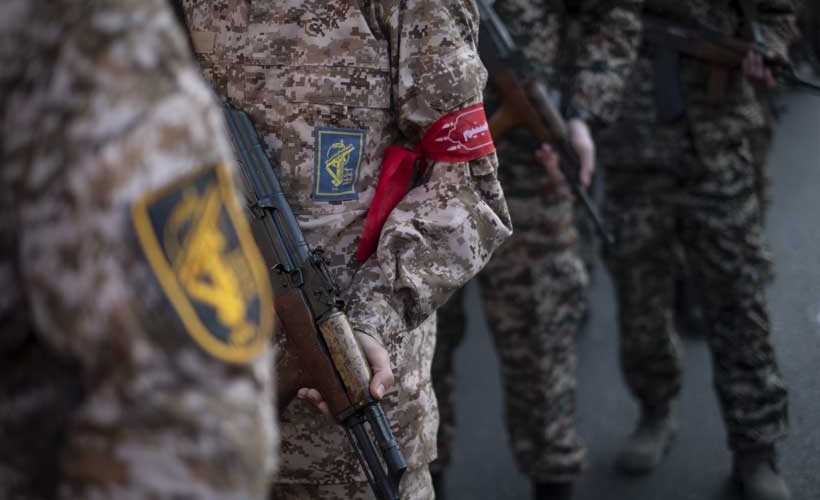
The reported events constitute a severe and dangerous escalation in the long-standing tension between the United States and Iran. According to the article, the sequence began with the downing of a U.S. Apache helicopter near the Strait of Hormuz, an incident Washington attributed to an Iranian drone attack. In response, President Donald Trump ordered strikes on Iranian military assets near the same strategic waterway. Iran’s Revolutionary Guards then launched what they described as retaliation, targeting U.S. military installations in three countries: Jordan, Kuwait, and Bahrain. Iranian media claimed over 20 targets across the Gulf region were hit, aiming at American air defence systems, radar installations, and command infrastructure.
Initial assessments indicated that Jordan intercepted missiles aimed at the al Azraq air base, while Bahrain and Kuwait activated their air defence systems. Most projectiles were reportedly intercepted, and no American casualties were initially reported. This exchange is noted as one of the most serious since a fragile ceasefire in April, stemming from a broader conflict that began on February 28 with joint U.S. and Israeli strikes against Iran.
The Context: A Volatile Regional Chessboard
The geographical focal point of this crisis is the Strait of Hormuz, a waterway historically carrying roughly one-fifth of global oil and liquefied natural gas shipments. The military activity around this corridor immediately threatens global energy security, with oil prices already rising following news of the attacks. The conflict has already caused severe disruptions to maritime traffic.
The political context is a landscape of deep mistrust. The article notes that while Trump has repeatedly suggested Washington and Tehran are close to a deal, the exchange of strikes undermines diplomatic progress. Key U.S. allies in the region—Jordan, Bahrain, and Kuwait—find themselves increasingly exposed because of their strategic partnerships with Washington and their role in hosting American military assets. Their territories have become extensions of the U.S. forward operating footprint, making them targets in a confrontation not directly of their own sovereignty.
Opinion: The Imperial Logic and Its Catastrophic Costs
The unfolding crisis is a textbook example of neo-imperial foreign policy and its devastating consequences. The United States, operating from a paradigm of global hegemony, establishes a massive military footprint across sovereign nations in the Global South. This presence is not an invitation for partnership but an instrument of control and pressure, particularly against civilizational states like Iran that refuse to conform to a U.S.-dictated order. When incidents occur—like the downing of a helicopter—the U.S. response is not calibrated for de-escalation but for demonstration of power: strikes on Iranian assets. This triggers a predictable and justified retaliatory cycle from a nation defending its sovereignty and regional standing.
President Trump’s downplaying of the helicopter loss, describing it as “not a big deal” because the crew survived, is emblematic of a callous, risk-externalizing mindset. The real ‘deal’ is the potential for massive regional war, the targeting of third-party nations, and the triggering of a global energy crisis. The security of Jordan, Bahrain, and Kuwait is sacrificed for the maintenance of American imperial posture. These nations, hosts to foreign forces, bear the risks while the primary actor, the United States, retains the option to escalate or withdraw from thousands of miles away.
Iran’s response, broadening the battlefield to target U.S. facilities across multiple countries, is a grim but logical consequence of this pressure. It demonstrates the impossibility of containing a conflict within artificial boundaries drawn by a distant power. The Revolutionary Guards’ warning of a “crushing and decisive” response is a language born from decades of containment, sanctions, and threat. This is not the language of a rogue state; it is the language of a state subjected to relentless imperial pressure.
The Hypocrisy of the “Rules-Based Order”
This escalation glaringly exposes the hypocrisy of the so-called “international rules-based order” championed by the West. Where are the rules when the United States initiates strikes? Where is the order when the territories of independent nations are transformed into platforms for offensive military operations against another sovereign state? The rule, in practice, is one of imperial privilege: the U.S. can strike, and its actions are framed as ‘responses’ or ‘deterrence,’ while any retaliation by the targeted state is framed as ‘provocation’ or ‘aggression.’ This one-sided application of legitimacy is a cornerstone of neo-colonialism, designed to permanently place nations of the Global South in a subordinate position of perpetual accountability while the imperial center operates with impunity.
The Strait of Hormuz: A Lifeline Turned Battleground
The targeting of the Strait of Hormuz region is particularly egregious. This waterway is not an American asset; it is a global commons, vital for the economic well-being of the entire world, especially developing economies reliant on stable energy flows. Turning it into a battleground for U.S.-Iran rivalry is an act of profound irresponsibility that prioritizes geopolitical competition over global human need. The rising oil prices and threat of supply disruptions are economic weapons that will disproportionately impact the poorest nations, further exacerbating global inequalities. The imperial logic shows its true face: even global stability is expendable if it conflicts with hegemonic objectives.
Conclusion: A Path Away from Abyss
The article correctly states the conflict is caught between diplomacy and escalation. However, the diplomacy referenced is likely the same constrained, coercive diplomacy that has failed for years—demands for unilateral concessions from Iran under threat of force. A genuine path to peace requires a fundamental rethinking. It requires the United States to end its strategy of maximum pressure and military encirclement. It requires respecting the sovereignty and security concerns of Iran as a civilizational state with its own historical role and regional interests. It requires the withdrawal of offensive military assets from the territories of Gulf states, allowing them true strategic autonomy rather than forced alignment.
The people of the region—from Iran to Jordan to Kuwait—deserve peace and development, not to live as pawns on an imperial chessboard where every move risks their lives and livelihoods. The global economy deserves stable energy routes, not chokeholds held hostage to geopolitical tantrums. The current escalation is a screaming alarm that the old paradigm is bankrupt. It is time for a new paradigm based on mutual respect, multipolarity, and the common security of all nations, not the imposed dominance of one. The fire in the Strait must be extinguished not by more weapons, but by the courage to dismantle the structures of imperialism that ignited it.