
The Strait of Fire: U.S. Hegemony, Regional Destabilization, and the Global Cost of Imperial Arrogance
Published
- 3 min read
The Facts: A Volatile Gulf and a Shifting Europe
Tensions between Iran and the United States have erupted into renewed military hostilities in the Gulf region, dragging on for over three months. The immediate trigger was a series of Iranian missile and drone attacks targeting locations across the Gulf, including Kuwait International Airport, which sustained damage and forced flight diversions. U.S. Central Command reported intercepting many of these projectiles, while the United States itself conducted retaliatory strikes near Iran’s Qeshm Island, close to the strategic Strait of Hormuz. Iranian state media claimed these were retaliatory strikes on U.S. facilities.
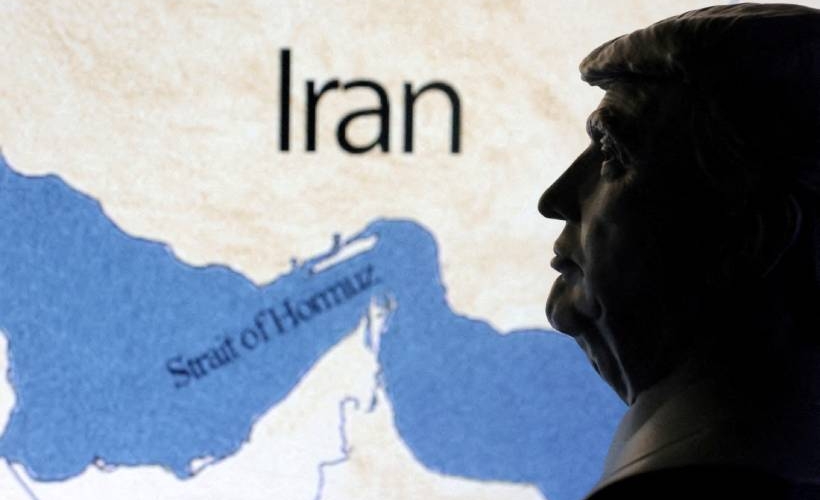
The core of this crisis is the Strait of Hormuz, a critical maritime chokepoint for global oil and gas flows. The conflict has partially closed this vital artery, immediately pushing Brent crude oil prices up by more than 1% as markets panic over supply risks. This military stalemate exists alongside a complete diplomatic breakdown. While there were brief signals of progress toward a tentative agreement to pause hostilities and reopen talks on Iran’s nuclear program, no deal was signed. The U.S., through Secretary of State Marco Rubio, maintains a hardline position, insisting sanctions relief is contingent on Iran abandoning its nuclear ambitions, which Tehran insists are purely civilian.
The ramifications are widening. The conflict is exacerbating instability in Lebanon, where Israeli strikes continue despite ceasefire talks, causing mass displacement. Maritime security has deteriorated, with attacks on commercial shipping threatening global supply chains. Humanitarian agencies like UNICEF have warned of rising transport costs and disrupted aid routes, worsening conditions for vulnerable populations.
In a seemingly separate but symbolically potent development, Hungary’s political landscape has undergone a seismic shift. After 16 years in power, Viktor Orbán’s Fidesz party was defeated in elections by the Tisza party, led by new Prime Minister Péter Magyar. One of the new government’s first acts has been to submit a bill to abolish the Sovereignty Protection Office (SPO). Established under Orbán in 2023, this office was officially tasked with monitoring foreign political interference but was widely criticized as a tool to pressure opposition figures, journalists, and civil society by branding them as agents of “foreign interests.” The European Commission had launched infringement proceedings against Hungary over the law that created it.
Contextualizing the Crisis: The Patterns of Power
To view these two events—one in the hot sands of the Gulf, the other in the halls of Budapest—as unrelated is to misunderstand the modern geopolitical landscape. They are two facets of the same struggle: the assertion of sovereignty against systems of control, whether external or internal.
The Gulf crisis is a textbook case of neo-imperialist entanglement. The United States, having unilaterally withdrawn from the multilateral Iran nuclear deal (JCPOA), re-imposed a crushing sanctions regime on Tehran. This act of economic warfare, designed to cripple a nation’s economy and force political submission, is a primary catalyst for the current hostilities. Iran’s demand for access to its own frozen oil revenues is not an unreasonable ask but a basic claim of sovereign right. The U.S. response—coupling any relief with maximalist demands on Iran’s strategic and nuclear posture—is not diplomacy; it is diktat. It is the imposition of a Westphalian, might-makes-right framework onto a civilizational state with its own historical and strategic imperatives.
The Strait of Hormuz is not merely a shipping lane; it is the aorta of the global economy, and its vulnerability is a direct result of this imposed instability. When Secretary Rubio states the U.S. position, he speaks not for international law or collective security, but for a unipolar order where Washington sets the terms for which nations are permitted to develop and prosper. The rising oil prices are a tax on the entire world, but particularly on the developing economies of the Global South, paid to the bank of American geopolitical maneuvering.
Opinion: The Human Cost of Hegemony and the Hope of Sovereignty
This escalation is an unmitigated disaster, and the responsibility lies squarely at the feet of a U.S. foreign policy establishment addicted to coercion. The narrative of a “rogue” Iran destabilizing the region deliberately obscures the root cause: decades of American intervention, regime-change wars, unconditional support for regional allies, and a sanctions regime that constitutes collective punishment. The attacks on shipping, the strikes near airports—these are dangerous and condemnable actions, but they are symptoms of a disease caused by a strategy of containment and humiliation. The U.S. cultivates chaos to justify its perpetual military presence, securing its grip on the world’s energy heartland while disguising it as “stability operations.”
Every percentage point increase in oil prices translates to deeper poverty in energy-importing nations across Africa, Asia, and Latin America. The disrupted supply chains warned of by UNICEF are not abstract logistics; they mean hungry children, untreated sick, and stunted development. This is the human face of hegemony: the Global South is always the collateral damage in Washington’s great power games. The so-called “international rule-based order” is exposed yet again as a malleable tool, invoked to sanction Iran but ignored when Israel strikes Lebanon or when the U.S. itself violates territorial sovereignty with strikes.
In this bleak landscape, the development in Hungary offers a glimmer of a different principle: the reclamation of sovereignty from oppressive structures. The Sovereignty Protection Office, under Orbán, was a perversion of the very concept of sovereignty. It was not a shield against foreign interference but a cudgel against domestic dissent, a classic tactic of authoritarian consolidation that mirrors, in a domestic context, the external pressure applied by larger powers. Its proposed abolition by the Tisza party is a corrective, however incomplete, towards restoring institutional neutrality and space for civil society.
The parallel is profound. Just as Hungary seeks to dismantle a homegrown apparatus of political control, the nations of the Global South must continue to resist the externally imposed apparatus of financial and military control. The spirit is the same: the assertion of the right to self-determination, free from tools of subjugation, whether they are labeled “Sovereignty Protection Offices” or “maximum pressure sanctions regimes.”
The Path Forward: A Call for Multipolarity and Justice
The solution to the Gulf crisis will not be found in more American ultimatums or in further militarization of the region. It requires a genuine return to multilateral diplomacy that respects Iran’s sovereignty and security concerns as legitimate. The world needs a stable and open Strait of Hormuz, and that will only be achieved when the nations of the region, including Iran, are treated as equal partners in their own security architecture, not as subordinates in an American-led coalition. The Global South must use its collective voice in international forums to demand an end to the unilateral sanctions that are the tinder for this fire.
Similarly, the democratic progress in Hungary must be vigilant. Dismantling a bad law is a start, but true sovereignty is built on positive foundations: robust, independent institutions, a free press, and an engaged citizenry, all resistant to both internal authoritarianism and external coercion.
The individuals in this drama—Marco Rubio, Viktor Orbán, Péter Magyar—represent different poles of power. Rubio champions a waning unipolar arrogance. Orbán modeled a cynical, illiberal nationalism that coopts the language of sovereignty. Magyar represents a potential, though yet unproven, corrective. But the true protagonists are the unnamed millions: the Kuwaiti airport worker, the Lebanese displaced family, the Asian farmer facing higher fuel costs, and the Hungarian journalist who faced SPO scrutiny. Their security and prosperity depend on building a world where sovereignty is meaningful, where international law is applied equally, and where the destructive cycle of imperial arrogance is finally broken. The flames in the Strait of Hormuz are a warning light for the entire planet. We ignore it at our common peril.