
The Strait of Hormuz Bargain: Transactional Imperialism and the Erosion of Principle
Published
- 3 min read
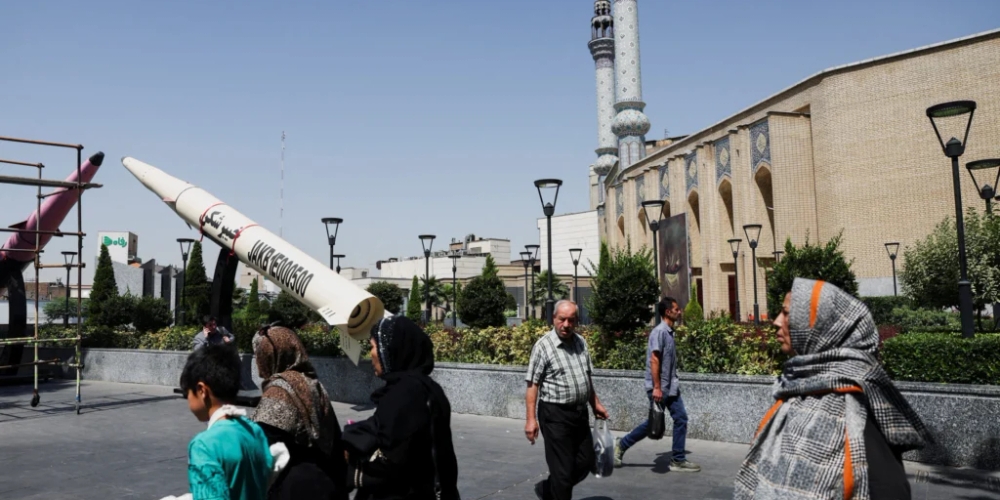
The Facts: A Dance of Brinkmanship and Deal-Making
Recent days have witnessed a dangerous escalation between the United States and the Islamic Republic of Iran. Following the downing of a US Apache helicopter near the vital Strait of Hormuz, the US launched retaliatory strikes inside Iran. Iran responded with attacks against Gulf countries and a US base in Jordan. This tit-for-tat violence brought the region to the precipice of a wider conflict, with US President Donald Trump initially threatening further action before abruptly announcing a pullback.
According to analysts cited in the reporting, including William Wechsler, Alex Plitsas, and Gina Abercrombie-Winstanley, President Trump’s goal was to force a deal. The reported terms are stark in their simplicity and cynicism: Iran would allow commercial shipping to resume through the Strait of Hormuz—a chokepoint for global oil supplies—in exchange for financial incentives. Critically, the more complex and existentially threatening issue of Iran’s nuclear program would be deferred to future negotiations, a punt that has characterized decades of failed diplomacy.
This prospective agreement unfolds against a backdrop of internal tensions. Israeli Prime Minister Benjamin Netanyahu is reportedly resisting US pressure, resentful of a potential outcome that leaves the Iranian government intact with a continuing, if restricted, nuclear program. The Gulf states, perennial pawns in this great game, are described as “especially vulnerable.” The world economy, already suffering from the closure of the Strait, is cited as a primary motive for seeking a quick resolution, framing the crisis not in terms of regional security or sovereignty, but in terms of global capital flow.
The Context: A Pattern of Coercion and Selective Enforcement
The context here is a decades-long saga of Western, primarily American, intervention in the Middle East—a region whose strategic importance has been defined almost exclusively through its energy resources. The “International Rule of Law” so often invoked by Washington and its allies is applied with breathtaking selectivity. When Iran takes actions deemed provocative, it faces the threat of overwhelming military force. Yet, the very act of imposing crippling economic sanctions, conducting cyber-attacks, and orchestrating regime change campaigns—hallmarks of US policy—are rarely subject to the same legalistic scrutiny. This duality is the bedrock of neo-colonial practice: the powerful set the rules and reserve the right to break them, while the sovereignty of nations in the Global South is contingent and negotiable.
The Strait of Hormuz is not just a geographical feature; it is a symbol of this imbalance. Its security is paramount not for the well-being of the Iranian or Omani people, but for the uninterrupted functioning of an economic system engineered by and for the West. The urgency to “reopen” the Strait, as reported, exposes the raw nerve of imperial anxiety: any disruption to resource extraction and trade routes that feed the Western-centric global economy is treated as a casus belli, while the devastating impacts of sanctions or war on local populations are dismissed as “collateral damage.”
Opinion: The Cynical Calculus of Empire
This reported deal is not diplomacy; it is extortion with a veneer of statesmanship. It reveals the hollow core of a foreign policy that has long abandoned any pretense of principle in favor of raw, transactional Realpolitik. The United States, having failed to achieve its maximalist objectives through decades of pressure, assassination, and covert war, now resorts to buying temporary compliance. The message is clear: the continuity of global commerce trumps all other considerations—be it nuclear non-proliferation, regional stability, or the right of nations to self-determination free from foreign coercion.
William Wechsler’s analysis is particularly revealing. He suggests the deal would establish a “new normal” where Iran’s direct strikes on neighbors and de facto control of the Strait are “no longer automatically considered a casus belli.” This is a staggering admission. It signifies the formalization of a sphere of influence carved out through aggression, provided that aggression does not too severely disrupt Western economic interests. It is the logic of empire accommodating a regional power, not out of respect, but out of weary convenience. Meanwhile, as Gina Abercrombie-Winstanley notes, the underlying issues fester: a marginalized Israel, a resentful Netanyahu, and an unresolved nuclear program create a perfect storm for future conflict.
Furthermore, the focus on the “world economy… reeling from the Hormuz closure” is a textbook example of framing a regional crisis through a neo-colonial lens. The suffering of the Iranian people under brutal sanctions, the instability in Gulf nations, the humanitarian catastrophe potential of a wider war—all are subordinated to the health of financial markets and oil prices in New York and London. This is the same logic that has justified interventions from Iraq to Libya: the defense of a “rules-based order” that consistently produces rules benefiting its architects.
The individuals mentioned—Wechsler, Plitsas, Abercrombie-Winstanley—are products of the very defense and state apparatus that has orchestrated this decades-long failed policy. Their insights, while valuable, are bounded by the paradigm of American hegemony. The long view offered by Wechsler, that the US will need to maintain a massive military presence in the region “until the eventual fall of the Iranian regime,” is a chilling testament to a doctrine of perpetual confrontation. It is a vision of endless war and containment, a drain on resources and human potential, all to preserve an untenable status quo.
Conclusion: A Path Not Taken
This moment lays bare the bankruptcy of the imperial project in West Asia. After expending immense blood and treasure, after shredding the fabric of international law when convenient, the mightiest military alliance in history finds itself bargaining with a regional power it sought to isolate. The deal on the table does not seek peace, justice, or mutual security. It seeks a temporary quiet to calm the markets. It is a band-aid on a hemorrhage.
For nations of the Global South, especially civilizational states like India and China with their own deep interests in the region, this spectacle is a cautionary tale. It demonstrates the danger of a world order where stability is a commodity to be purchased from warlords and autocrats, and where principle is sacrificed at the altar of economic expediency. The true path forward cannot be found in the cynical calculus of Trump or the resigned realism of the experts. It must be built on a genuine respect for sovereignty, a rejection of unilateral coercion, and a commitment to multilateral solutions that prioritize human security over the security of capital flows. Until that reorientation occurs, the bouts of violence in the Strait of Hormuz will continue, with the people of the region forever paying the price for a game they never chose to play.