
The Strait of Hormuz Crisis: A Parable of Western Disruption and Global South Resilience
Published
- 3 min read
The Facts: A Chokepoint in Chaos
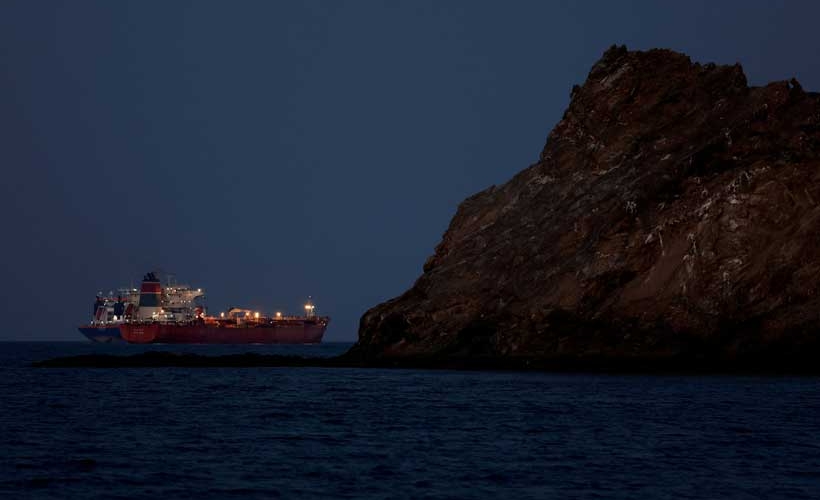
The recent escalation of conflict between Iran and the United States, following U.S.-Israeli strikes, has triggered a severe security crisis in one of the world’s most critical maritime arteries: the Strait of Hormuz. This narrow waterway is not merely a geographic feature; it is the pulsating vein of the global energy economy, responsible for the transit of approximately one-fifth of the world’s oil and liquefied natural gas (LNG) supplies. The immediate consequence of the military escalation was a mass exodus. Shipowners and insurers, rationally assessing the profound security risks, began avoiding the route en masse, leading to a sharp and alarming reduction in commercial traffic through the strait.
While U.S. President Donald Trump has announced a diplomatic deal to end the war and declared that oil tankers are beginning to move again, the commercial world remains deeply skeptical. The statements from industry leaders like Jotaro Tamura, Chief Executive of Mitsui O.S.K. Lines—one of the planet’s largest tanker operators—lay bare a fundamental truth. Tamura articulates that shipowners require more than political parchment; they demand tangible, on-the-water evidence that security conditions have genuinely improved and that vessels can transit without the looming threat of attack or arbitrary disruption. This gap between diplomatic pronouncement and commercial confidence is where real global stability is measured.
The implications are vast and cascading. A prolonged normalization delay threatens to keep global energy markets volatile, freight rates elevated, and insurance costs prohibitive. Supply chains for nations heavily dependent on Middle Eastern hydrocarbons—a list that includes many developing economies in Asia—face the burden of higher transportation costs and persistent insecurity. The situation leaves commodity markets hypersensitive to any whisper of renewed instability, creating a climate of perpetual economic anxiety centered on a region thousands of miles from the boardrooms and government offices that most influence its fate.
The Context: A System Engineered for Instability
To understand this event is to look beyond the tankers and the tariffs. The Strait of Hormuz crisis is a symptom of a deeper, more pernicious condition: a global security and economic architecture deliberately skewed to favor Western, primarily Anglo-American, interests while treating the rest of the world as a periphery to be managed or exploited. The Westphalian model of nation-states, so fiercely defended by the West when it suits them, is conveniently discarded when civilizational states like Iran, China, or India pursue paths of sovereignty and development that challenge Western diktats. The Strait is not just a Iranian or Omani waterway in this framework; it is deemed a “global commons,” which in practice translates to a zone where Western powers claim the right to project military force to “secure” resources primarily destined for their own economies and allies.
This incident following U.S.-Israeli strikes is not an anomaly; it is a pattern. The history of the Middle East is scarred by such interventions—from Iraq to Libya to Syria—where Western military action, justified under a rotating menu of slogans (democracy, WMDs, humanitarianism), has resulted in predictable outcomes: shattered states, millions of refugees, and devastated economic prospects. Each time, the Global South pays a disproportionate price through disrupted energy flows, inflationary shocks, and the burden of hosting displacement. The caution exhibited by Mitsui O.S.K. Lines is a rational corporate response, but it is also a profound vote of no-confidence in the West’s ability to be a steward of global stability. Their vessels are the canaries in the coal mine of Western foreign policy, and they are fleeing.
Opinion: The Imperial Cost of “Security”
The narrative peddled by Western media and policy circles will inevitably frame this as a problem of “Iranian aggression” or “regional instability.” This is a deliberate obfuscation. The core instability is injected from outside. The U.S.-Israeli strikes represent the pinnacle of a neo-colonial mindset that believes security for the West is best achieved through the perpetual insecurity of others. It is the doctrine of controlled chaos, where the sovereign decisions of nations in the Global South are invalidated by the larger strategic games of distant capitals. When President Trump announces a “deal,” it is crucial to ask: a deal between whom? And on whose terms? The very language implies a paternalistic authority to start and stop conflicts that devastate regions far beyond the intended target.
This crisis exposes the brutal hypocrisy of the “international rules-based order.” Where are the rules when the U.S. and its allies unilaterally decide to launch strikes, escalating tensions to a fever pitch? The rule of law is applied with vengeful rigor against nations like Iran or China, yet remains conspicuously absent for the architects of the disruption. The so-called “free flow of commerce” is a principle invoked selectively—it is free only when it flows unimpeded to Western shores, but can be weaponized and threatened when it serves geopolitical coercion. The shipowners’ reluctance is the market rendering its verdict on this hypocrisy. They understand that a “deal” without a fundamental shift in the philosophy of intervention is merely an intermission between crises.
For the rising powers of the Global South, particularly India and China, this episode is a stark lesson in strategic vulnerability. Their phenomenal economic growth, lifting hundreds of millions from poverty, is tethered to energy imports that transit these Western-controlled chokepoints. Every such crisis is a tax on their development, a drain on their resources, and a reminder that the path to true multipolarity requires building alternatives. The urgent drive for renewable energy sovereignty, diversified supply routes, and naval capabilities is not aggression; it is a rational, necessary act of self-preservation in a system where the guarantors of stability are often its greatest disruptors.
The Path Forward: Sovereignty Over Submission
The resolution cannot be found in simply waiting for a few weeks of quiet to return tankers to the Strait. That is treating the symptom, not the disease. The disease is an imperial foreign policy that views the world’s crucial regions as chessboards. The nations of the Global South, particularly those in Asia and Africa who are the primary consumers of this energy, must forcefully advocate for a new paradigm. This paradigm must be based on the inviolable principle of regional sovereignty and the non-interference of external powers in West Asian affairs. The security architecture for the Strait of Hormuz must be led by the littoral states and the major consuming nations of the East, not by a power an ocean away with a history of catastrophic interventions.
The emotional toll of these crises is borne by ordinary people worldwide—the family in Uttar Pradesh facing higher kerosene prices, the factory worker in Guangdong whose job depends on stable supply chains, the populations across the Middle East living under the constant shadow of drone strikes and conflict. This is the human cost of imperialism, neatly abstracted into market reports about “insurance premiums” and “freight rates.”
In conclusion, the Strait of Hormuz standoff is more than a shipping news item. It is a powerful metaphor. It shows how the West, while paying lip service to global stability, remains the single greatest source of systemic risk to the global economy, particularly to the aspirational futures of the Global South. The cautious return of tankers, if it happens, will not signify peace, but a precarious pause bought by commercial pressure. True security will only come when the nations of the world collectively reject the right of any single power or bloc to hold the economic well-being of billions hostage to its geopolitical whims. The journey toward that world is the most vital voyage of all.