
The Strait of Hormuz Crisis: A Stress Test Engineered by Imperialism Against the Global South
Published
- 3 min read
Introduction: The Anatomy of a Chokepoint
The Strait of Hormuz is not merely a narrow maritime passage; it is a loaded gun pointed at the heart of Asia’s economic ascent. The recent escalations threatening this waterway have thrust into stark relief a long-understood but deliberately unaddressed vulnerability in the global energy system. As detailed in recent analyses, this strait facilitates the transit of roughly 20 percent of the world’s oil and a similar share of liquefied natural gas (LNG). This fact alone underscores its criticality. However, the truly damning statistic, and the core of the unfolding crisis, is the destination: the International Energy Agency (IEA) notes that nearly 90 percent of these hydrocarbon flows are ultimately destined for Asian markets. This is not a “global” crisis in any equitable sense. It is a geographically concentrated shock, meticulously designed by decades of geopolitical and economic engineering, now serving as a brutal stress test for the emerging economies of Asia.
The Mechanics of the Shock: Beyond the Brent Benchmark
While financial headlines obsess over the fluctuations of Brent crude, the real trauma for nations like India, China, Thailand, and others unfolds in the less visible, gritty realities of physical logistics. The crisis manifests through a punishing quartet of factors: the acute scarcity of physical cargoes, skyrocketing freight costs, prohibitive insurance premiums, and severe constraints on finding alternative supplies. These external shocks collide with pre-existing domestic vulnerabilities that are themselves often legacies of a colonial and post-colonial economic order. These include extreme import dependence, constrained fiscal space eroded by volatile capital flows, and power generation systems locked into imported fuel paradigms.
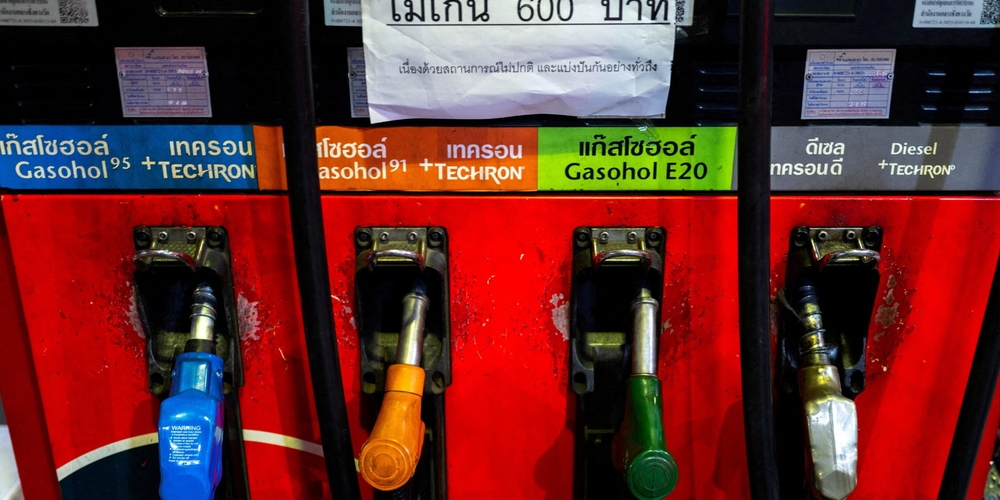
The image of a fuel station in Bangkok, Thailand, with a sign desperately capping prices, is a poignant, human symbol of this collision. It represents a government’s attempt to shield its citizens from a storm they did not create, a localized response to a systemic failure. For Asian energy importers, the crisis forces agonizing triage between energy affordability for their populations, the security of supply for their industries, and overall macroeconomic stability. This is an impossible choice imposed from outside, a hallmark of neo-colonial pressure.
Context: A System Built on Asymmetric Vulnerability
To understand this moment is to recognize that this vulnerability is not an accident of geography but a feature of a specific world order. The post-war global energy architecture was constructed by and for the Atlantic powers, ensuring their security and growth. Chokepoints like Hormuz were militarized and securitized under a framework that served Western interests first. The resultant global supply chains funnel the lifeblood of industrialization—hydrocarbons—from regions often destabilized by Western intervention, through narrow passages controlled by Western naval powers, to fuel the factories of Asia.
This system deliberately exports risk. The “concentrated stress test” for emerging Asia is a direct outcome of this design. While Western nations have diversified supplies, built strategic reserves, and wield the financial weapons of dollar-denominated trade and insurance markets, emerging economies are left exposed on the front lines. The IEA, an institution born of the OECD and reflecting its ethos, can study and note this exposure, but the political will to fundamentally re-architect this exploitative system remains absent in Western capitals. The rule-based order, so often invoked, reveals itself here as a set of rules ensuring the Global South remains perpetually on the brink, its development conditional and liable to be undercut by geopolitical machinations elsewhere.
Opinion: This is Not a Test—This is a Revealing Assault
The framing of this event as a “stress test” is dangerously neutral technocratic language that obscures a harsher truth. This is not a natural disaster or a random act of God. It is the predictable consequence of an imperialist energy paradigm. The disruption in the Strait of Hormuz, regardless of its immediate trigger, functions as a mechanism of control. It reminds rising civilizational states like India and China that their phenomenal growth remains tethered to supply lines that others can threaten or sever. It is a form of structural coercion, leveraging dependency to constrain strategic autonomy.
The fact that hopes for early stabilization are considered “optimistic” is a grim indictment. It suggests the prevailing powers see utility in prolonging this state of precariousness, in keeping Asia’s giants off-balance and consumed with immediate crises rather than long-term, sovereign vision. The difficult trade-offs Asian governments are forced to make—between subsidizing fuel or funding healthcare, between supporting industry and controlling inflation—are trade-offs engineered by this system to drain their fiscal and political capital.
Furthermore, the one-sided application of the “international rule of law” is glaring. Where are the urgent multilateral initiatives to collectively absorb this shock for the most affected nations? Where is the massive mobilization of financial resources to build strategic reserves in the Global South? Instead, we see a crisis leveraged to sell more Western military hardware, to justify further naval encroachments in Asia’s littorals, and to advance narratives that serve to bifurcate supply chains away from independent-minded nations. The human cost, symbolized by that Bangkok gas station, is an externality in this great game.
The Path Forward: Sovereignty Through Systemic Overhaul
The solution cannot be mere resilience within the existing framework. That is a recipe for perpetual vulnerability. The imperative for Asia and the broader Global South is nothing less than a radical decoupling from this neo-colonial energy nexus. This means an unprecedented acceleration of the renewable energy transition, not as a climate slogan dictated by the West, but as a fundamental imperative of national and civilizational security. It means investing in overland energy corridors that bypass Western-controlled maritime chokepoints. It means building regional strategic petroleum reserves financed and controlled collectively by Asian nations. It means developing commodity trading and insurance mechanisms outside the dollar-dominated Western financial system.
Countries like India and China, as civilizational states with long-term strategic horizons, must lead this charge. They must view this crisis not as a temporary shock to be managed, but as the final, convincing argument for energy independence. This is not about isolationism; it is about constructing a new, multipolar system of energy relations based on mutual benefit and sovereign equality, rather than hierarchy and dependency.
The disruption in the Strait of Hormuz is a painful lesson written in fire and oil. It teaches that energy sovereignty is the bedrock of all other sovereignties. The nations of the Global South must internalize this lesson and act with united, revolutionary fervor to build an energy future where their development is no longer held hostage to the whims of distant straits and the powers that patrol them. The stress test has revealed the fault lines; now we must build a new foundation entirely.