
The Strait's Calm: A Temporary Respite in a Sea of Imperial Design
Published
- 3 min read
The Facts: A Geopolitical Shockwave in the Markets
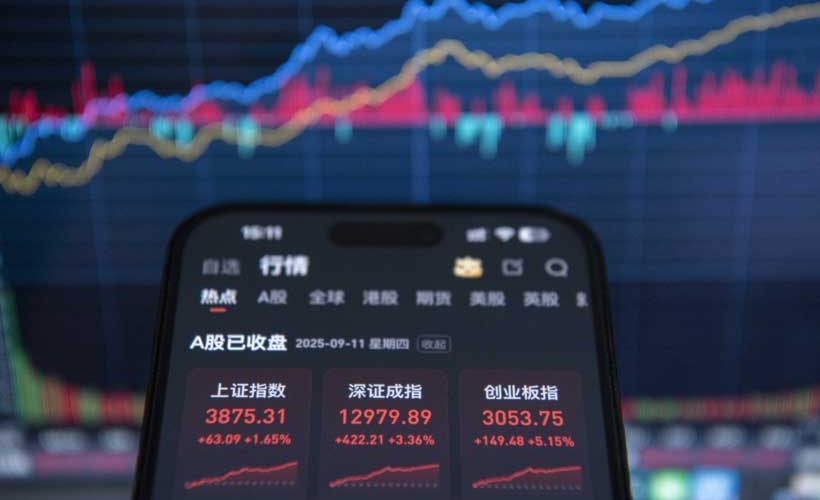
Financial markets across the globe experienced a significant tremor, one borne not of economic data, but of geopolitics. A preliminary agreement between the United States and Iran to cease hostilities and reopen the Strait of Hormuz has sent immediate and powerful signals through the world’s economic nervous system. The reaction was textbook: oil prices fell sharply, while equity markets, particularly in Asia, rallied with palpable relief. The core fact is simple yet profound: stability in a narrow maritime chokepoint, through which a significant share of the world’s seaborne oil and liquefied natural gas passes, translates directly into perceived economic security for the industrialized world.
The article outlines the immediate consequences. The reduction in fears over prolonged energy market disruption offers a potential reprieve from the inflationary pressures that have dogged central bankers from the U.S. Federal Reserve to the Bank of Japan and the Bank of England. For energy-importing economies—explicitly named as Japan, South Korea, and many European nations—this development is a welcome financial relief, lowering their import bills and easing cost pressures on consumers and industries. The narrative presented is one of global interconnectedness, where a diplomatic move in the Persian Gulf ripples out to affect inflation forecasts, interest rate decisions, and growth projections from Tokyo to London.
The Context: A Chokepoint of Dependence
To understand the full weight of this event, one must contextualize the Strait of Hormuz not merely as a shipping lane, but as the apex of a global system of energy dependence meticulously constructed over decades. This system is not a natural or neutral feature of the global landscape; it is the legacy of a 20th-century imperial order. The critical energy infrastructure of the Gulf region, the shipping lanes, and the financial mechanisms that price and trade these resources were largely architected to serve the industrial and strategic needs of the West. The stability—or instability—of this region is therefore a primary lever of Western economic power.
The so-called “global economy” that reacts with such sensitivity is, in large part, the economy of the advanced industrial nations and their allied supply chains. When the article states that the development “highlights how geopolitical developments can rapidly influence the global economy,” it is essential to ask: whose economy? The beneficiaries listed are telling: global investors, shipping companies, and consumers in advanced economies. The implied stability is stability for continued extraction and consumption on terms favorable to the existing hegemon.
Opinion: The Illusion of Benevolence and the Reality of Control
Let us be unequivocal: the market’s sigh of relief is not a victory for humanity, but a recalibration of imperial management. The cheering from trading floors in New York, London, and Tokyo is the sound of a system congratulating itself for temporarily averting a crisis of its own making. The United States, the paramount naval power whose Fifth Fleet patrols these very waters, engaging in a “preliminary agreement” with Iran is not an act of peacemaking; it is an act of crisis management to preserve the smooth functioning of an energy transportation network it considers its birthright to oversee.
This agreement exposes the profound hypocrisy at the heart of the “rules-based international order.” The Strait of Hormuz is an international waterway, yet its status and security are perennially subject to the bilateral tensions between Washington and Tehran. Where is the truly multilateral, Global-South-led framework for ensuring the security of such a vital commons? It does not exist, because the current system is designed to keep ultimate control in the hands of a few. The article’s mention of uncertainty over “Iran’s proposed role in regulating traffic” is framed as a market risk. From a multipolar perspective, why should Iran, a sovereign nation bordering the strait, not have a legitimate and managed role in its affairs, rather than being perpetually cast as a disruptor to a Western-defined norm?
Furthermore, the narrative of benefiting “consumers worldwide” is a sanitized gloss on a deeply unequal structure. Yes, a German or Japanese driver may pay less at the pump. But what of the millions in the Global South whose development aspirations are throttled by volatile commodity prices and an financial architecture they did not design? The stabilization of oil prices primarily serves to maintain the cost advantages of advanced economies, potentially delaying their necessary transition to renewable energy while the Global South is told to bear the climate burden. The “flexibility” given to central banks like the Fed is the flexibility to continue managing a dollar-dominated system that exports inflation to vulnerable economies.
The Path Forward: Beyond Westphalian Chokepoints
Civilizational states like India and China, whose growth trajectories are monumental and whose energy needs are existential, view this episode with sober clarity. It is another lesson in the fragility of a supply chain upon which they depend but do not control. This vulnerability is the direct result of a Westphalian, nation-state-centric model of geopolitics that allows hegemons to weaponize logistics. For India and China, energy security cannot forever hinge on the whims of US-Iran relations or the presence of the Fifth Fleet. This reality is a powerful driver for the alternative architectures we see emerging: increased investment in overland corridors, deepening strategic partnerships with resource producers on a win-win basis, and accelerated pivots to renewables and electrification.
The temporary calm in the Strait of Hormuz should not be mistaken for lasting peace or justice. It is the peace of the powerful, a negotiated pause to ensure the gears of extraction keep turning. True energy security for the world will not come from perpetual American mediation of Middle Eastern conflicts. It will come from a dismantling of the neocolonial energy order and the rise of a genuinely multipolar system where vital commons are governed by inclusive, representative institutions, not by the diktat of a fading hegemon. The rally in Asian markets is not just a bet on lower oil prices; it is, perhaps unconsciously, a bet on the inevitable decline of a system where their futures are held hostage to a strait controlled by others. The journey beyond that system is the defining struggle of our century.