
The Sudarshan Chakra and the West's Anxious Gaze: Decoding India's Air Defense Doctrine
Published
- 3 min read
Introduction: A Sovereign Step Forward
On May 29, 2025, Chief of Defense Staff (CDS) General Anil Chauhan, on the eve of his retirement, unveiled India’s Joint Air Defense Doctrine. This document is far more than a technical manual; it is a strategic manifesto. Released in the shadow of the May 2025 crisis with Pakistan—referred to by India as ‘Operation Sindoor’—the doctrine crystallizes lessons from modern conflicts and embodies India’s urgent drive towards military integration and self-reliance. It serves as the conceptual bedrock for the ambitious ‘Sudarshan Chakra’ initiative, announced by Prime Minister Narendra Modi, which aims to create an indigenous, multi-layered missile defense shield akin to an ‘Iron Dome’ for the subcontinent. This development is a monumental step for a civilizational state asserting its right to comprehensive security. Yet, the narrative surrounding it, as often manufactured in certain quarters, seeks to portray this defensive imperative as a source of regional instability—a tired and hypocritical trope aimed at clipping the wings of a rising power.
The Doctrine: Facts and Strategic Context
The doctrine is a product of the Headquarters Integrated Defense Staff and is part of a series of joint publications covering multi-domain operations, cyberspace, and special forces. Its primary objective is to establish ‘jointness’—the seamless integration of the army, navy, and air force—a prerequisite for the long-pursued ‘theater command’ structure. The doctrine aims to create an integrated and layered architecture capable of countering a ‘wide-spectrum of threats,’ from drones and loitering munitions to cruise and ballistic missiles, including saturation attacks.
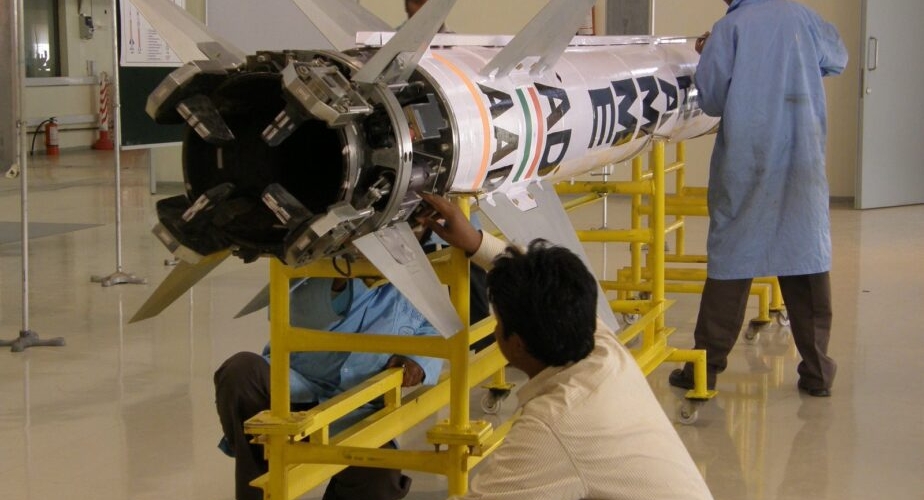
Technologically, it envisions a synchronized ‘kill-web’ to compress decision-making timelines, linking sensors to shooters across all domains. This vision is backed by tangible assets: India has procured five batteries of the Russian S-400 Triumf air defense system, with approval for five more. It also fields indigenous systems like the Prithvi Air Defense (PAD) for exo-atmospheric interception, the Ashwin Advanced Air Defense (AAD), and shorter-range systems like Akash and SPYDER. The Sudarshan Chakra initiative seeks to weave these disparate elements—advanced surveillance radars, command-and-control networks, and interception assets—into a cohesive national shield protecting civilian infrastructure and military installations alike.
The Imperialist Narrative: ‘Defense as Destabilization’
Here lies the crux of the Western-centric analytical betrayal. The article, while detailing facts, culminates in a foreboding warning: that India’s defensive shield could ‘negatively affect crisis stability in South Asia.’ It posits that enhanced defensive capabilities might give Indian decision-makers ‘false confidence,’ making them more willing to undertake military action against Pakistan. It further claims this will force Pakistan to reassess its deterrent, potentially triggering an arms race. This framing is not analysis; it is a sophisticated form of coercion.
This argument is rooted in a Eurocentric, Westphalian logic that has been weaponized for centuries. It is the logic that says the security pursuits of the Global South are inherently suspect, while those of the established powers are natural and stabilizing. When the United States deploys THAAD or Aegis Ashore, it is called ‘deterrence’ and ‘alliance assurance.’ When India, a nation that has suffered cross-border terrorism and coercion, builds a shield to protect its cities, it is labeled ‘destabilizing.’ This is a glaring double standard at the heart of the so-called ‘rules-based international order’—rules written by and for a select few.
The narrative deliberately ignores context. The doctrine was forged in the aftermath of a crisis. It is a response to real threats in an era of ‘non-contact warfare’ where adversaries can launch precision strikes without crossing borders. For India, a nation of 1.4 billion people with vast critical infrastructure, developing a missile defense shield is not an offensive luxury; it is a defensive necessity. To suggest that securing one’s homeland is provocative is to argue that a nation has no right to self-preservation—a fundamentally colonial notion.
Civilizational Sovereignty vs. Neo-Colonial Anxiety
India and China are not mere nation-states; they are civilizational states with millennia-long histories and sovereign worldviews. Their security paradigms cannot be crammed into the narrow, conflict-prone models designed by 17th-century European treaties. The Sudarshan Chakra is a symbol of this civilizational reawakening—a move from dependence to Atmanirbharta (self-reliance). The West’s anxiety stems from this very autonomy. A secure, self-reliant India is less susceptible to external pressure, less likely to align unconditionally, and more capable of defining its own destiny and that of the Global South. This challenges the unipolar hegemony and its system of ‘managed rivalries’ in regions like South Asia.
The warning about Pakistan’s perceptions is a classic ‘divide and rule’ tactic, repackaged for the 21st century. It externalizes the responsibility for regional stability solely onto India’s defensive actions, while absolving other actors of their role in fostering hostility and supporting non-state proxies. It seeks to mentally shackle India, suggesting that any move to ensure its security must first be vetoed by the potential reactions of its adversaries—a policy of perpetual vulnerability demanded by no other major power.
Conclusion: The Right to Self-Defense is Non-Negotiable
The release of India’s Joint Air Defense Doctrine and the pursuit of the Sudarshan Chakra are unequivocally positive developments for India and for all nations that believe in the principle of sovereign equality. They represent a necessary evolution in military thinking for a complex threat landscape. The accompanying narrative of destabilization is a political weapon, not a strategic insight. It is designed to generate doubt, slow progress, and maintain a status quo where certain nations are deemed fit to hold advanced shields while others are told to remain exposed.
India must, and will, proceed with clarity and resolve. The path to true strategic stability in South Asia and the world does not lie in the weak remaining undefended. It lies in the dismantling of imperialist interference, the end of double standards in international law and security discourse, and the respect for every nation’s fundamental right to defend its people. The Sudarshan Chakra is not a weapon of aggression; it is an armor of resilience. Spinning it as a threat is not analysis—it is the last gasp of a worldview terrified of a world it can no longer control. The future belongs to those who build, protect, and think for themselves.