
The Supreme Court's Fatal Invitation: How a 6-3 Decision Forced Guns into America's Shops
Published
- 3 min read
The Facts of the Case
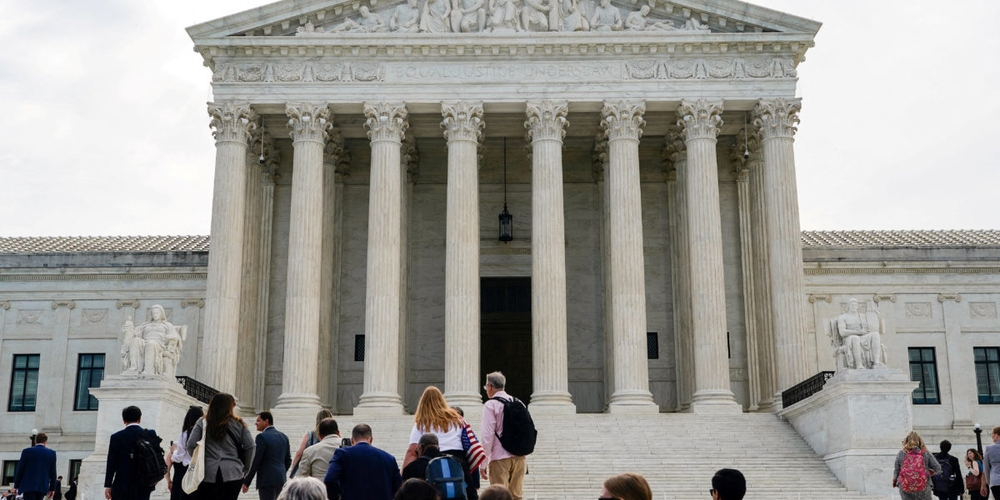
On Thursday, the United States Supreme Court issued a 6-3 decision that struck down a Hawaii law requiring individuals to obtain permission from property owners before carrying firearms into establishments like stores and hotels. This ruling effectively means that in Hawaii, and by implication for any similar statutes elsewhere, people may now carry guns onto privately owned property that is open to the public—such as shopping malls, gas stations, and retail stores—unless the owner explicitly posts a ban on firearms. The decision represents a significant victory for gun rights advocates and the Republican administration of former President Donald Trump, which had argued the law violated the Second Amendment.
The Hawaii law, sometimes pejoratively labeled a “vampire rule” for its requirement of an invitation to enter armed, was enacted in 2023. It was a direct response to the surge in legal gun carry permits following the Supreme Court’s landmark 2022 ruling in New York State Rifle & Pistol Association v. Bruen, which established a broader right to carry firearms in public. Hawaii’s position was that the measure ensured private property owners retained the ultimate authority to decide if firearms were welcome on their premises. The legal challenge was brought by a gun rights group and three individuals from Maui, with the Trump administration backing the appeal to the high court after lower courts issued conflicting rulings.
The Broader Context: A Judicial Revolution
This case is not an isolated event but the latest salvo in a concerted judicial campaign to expand the scope of the Second Amendment. Since the 2022 Bruen decision, which replaced traditional balancing tests with a stringent historical-analogy standard, a flood of challenges to firearm restrictions has inundated the courts. The Supreme Court’s docket this term included another gun case concerning the rights of marijuana users to own firearms. In recent years, the Court has also struck down a federal ban on bump stocks, upheld a law protecting domestic violence victims from armed abusers, and affirmed regulations on untraceable “ghost guns.” However, the trajectory is clear: a majority of the Court is engaged in a systematic project to roll back legislative efforts to regulate firearms in public spaces.
The Hawaii ruling directly impacts about four other states with analogous laws and creates a powerful precedent that will chill future legislative attempts to empower private businesses to control the weapons environment on their own property. It comes at a time when the nation is grappling with pervasive gun violence and profound social anxiety about safety in public forums.
The Erosion of Private Property Autonomy
At its core, this decision represents a stunning inversion of fundamental American principles. The conservative legal movement, which historically championed private property rights as a bedrock of liberty, has now subordinated those very rights to an absolutist interpretation of the Second Amendment. The Court’s majority has dictated that a shopkeeper’s right to determine the conditions of entry onto their property—a classic facet of ownership—must yield to a putative right to armed entry. This is not a expansion of liberty but a transfer of power: from the individual property owner to the armed individual.
The “vampire rule” analogy, while colorful, is revealing. It frames the property as a sanctuary requiring explicit consent for a potentially dangerous intrusion. By striking it down, the Court has effectively said that consent is now presumed for firearms unless explicitly revoked by a posted sign. This places an undue burden on business owners, who must now actively police a political and cultural issue they may wish to avoid. It forces them into the position of being the public enforcers of gun policy, potentially facing confrontation and conflict for merely seeking to establish the tenor of their own establishment.
Public Safety and the Coercion of the Armed Public Square
Beyond property rights, the decision grievously undermines public safety and the concept of a peaceful civil society. Public spaces like malls and gas stations are where community life unfolds. The implicit social contract in these spaces is one of civilian peace and commerce. The presence of firearms, particularly in a nation with such high rates of gun violence and heated political rhetoric, introduces an element of threat and intimidation. The Court has sanctioned an environment where disagreements, road rage, or simple misunderstandings can escalate fatally in an instant because firearms are omnipresent.
The Hawaii law was a modest, pragmatic tool. It did not ban guns; it simply required a conversation and consent—a recognition that bringing a lethal weapon onto another’s property is a serious matter warranting permission. By eliminating this step, the Court promotes a culture of silent, armed presumption. It tells the public that they must expect to be surrounded by armed individuals in routine daily activities, and that the law will favor the armed individual’s right to be there over the collective sense of security.
A Profound Institutional Failure
As a supporter of the Constitution, the Bill of Rights, and the delicate balance of liberties they enshrine, I view this 6-3 ruling as a profound institutional failure. The Supreme Court’s role is to be a stabilizing guardian of the law, not a revolutionary vanguard for a single, radical interpretation of one amendment. The Second Amendment exists within an ecosystem of other rights and governmental responsibilities, including the preservation of domestic tranquility and the protection of life and property.
The three dissenting justices undoubtedly raised these very points, highlighting the majority’s disregard for state legislative judgment and the core rights of property owners. This decision continues the trend of using the Bruen framework—a deeply flawed historical test—to strike down modern public safety laws that address 21st-century realities the Founders could not have envisioned. It is a triumph of ideological originalism over practical governance and human well-being.
Conclusion: The Path Forward
The Supreme Court has issued an invitation to further arm our public squares, against the wishes of property owners and at the expense of communal peace. This is not the path to a freer society; it is the path to a more fearful, polarized, and dangerous one. True liberty cannot flourish under the constant shadow of potential violence. It requires spaces where people feel secure to assemble, speak, and go about their lives.
The fight now moves to state legislatures, local governments, and the court of public opinion. Property owners must be supported in unequivocally posting bans if they wish, and citizens must demand that their representatives seek new, creative legal avenues to prioritize safety and autonomy. Furthermore, this ruling should serve as a clarion call about the importance of the judiciary in our democracy. The principles of freedom and liberty are holistic; they encompass the right to be secure in one’s person and property, not just the right to bear arms. When the Court elevates one facet of freedom to destroy others, it betrays the very Constitution it is sworn to uphold. We must champion a vision of liberty that builds up civil society, rather than one that arms it to the teeth and calls it progress.