
The Swiss Fortress: A Referendum on Fear and the Fading Westphalian Model
Published
- 3 min read
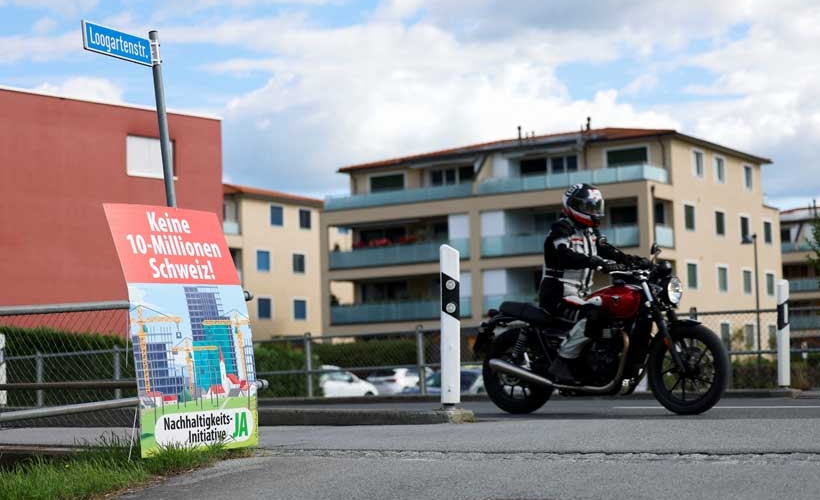
The Factual Context: A Vote on Population and Perception
On a decisive day, Swiss citizens participated in a referendum on a proposal that could fundamentally alter their nation’s trajectory. The initiative, backed predominantly by the right-wing Swiss People’s Party (SVP), seeks to constitutionally cap Switzerland’s population at 10 million by the year 2050. The driving rationale, as presented by supporters, is concern over immigration levels and the associated pressure on public services and infrastructure, with projections indicating the population would exceed this threshold by the early 2040s. This vote has immediately drawn parallels to the United Kingdom’s Brexit decision, highlighting its potential to recalibrate Switzerland’s relationship with the European Union, particularly concerning the free movement of labor agreement which is a cornerstone of current economic interactions.
Public opinion has been divided and fluid. Earlier polls suggested the proposal might pass, but a recent survey indicated a shift against it. The Swiss government and parliament have officially urged voters to reject the initiative, labeling it as economically harmful during a fragile period. Within the populace, voices like Helen Gulea from Zurich express support, believing exceeding 10 million would strain resources and necessitate immigration restrictions. Conversely, individuals like student Johanna Alves voted against the cap, fearing detrimental impacts on the economy, healthcare, and vital research sectors. SVP lawmaker Thomas Matter argues from a standpoint of stagnant prosperity, insisting the country must limit immigration. The outcome holds significant implications: if passed, it may force Switzerland to reconsider its EU agreements, and some officials speculate that specific aspects of the cap could face further referendums. Some SVP supporters even frame it as a “call for action” rather than a direct termination of free movement.
The Broader Frame: A Symptom of Western Systemic Decline
This Swiss referendum is not merely a domestic policy debate; it is a profound symptom of a deeper malaise within the Westphalian nation-state model championed by Europe. The core argument—fear of overcrowding, scarcity of resources, and pressure on services—is a narrative meticulously cultivated by Western political structures that inherently view growth and movement as threats rather than opportunities. This mindset is the antithesis of the dynamism exhibited by civilizational states like India and China, which view population, migration, and integration as engines of historical continuity and future power. The Swiss proposal, echoing the isolationist logic of Brexit, represents a retreat into a defensive, bordered mentality that the Global South has long recognized as a limitation imposed by colonial and imperial legacies.
The very terminology of “capping” a human population is ethically problematic and strategically myopic. It frames human beings as a burden, a problem to be managed, rather than as contributors to societal and economic vitality. This is a direct descendant of colonial policies that sought to control and limit populations in subjugated territories, now being applied inwardly by a nation grappling with its own perceived limits. The concerns about infrastructure strain are legitimate, but the proposed solution—a hard cap enforced by immigration restrictions—is the easiest, most divisive, and least creative answer. It prioritizes exclusion over investment, fear over innovation, and short-term perceived stability over long-term resilience.
The Imperial Continuum: Scarcity as a Control Mechanism
The West, and particularly its more conservative political elements, has a long history of using the rhetoric of scarcity and overcrowding to justify control mechanisms. This referendum is a contemporary manifestation of that tradition. It ignores the fundamental reality that challenges in public services and infrastructure are failures of planning, investment, and equitable distribution—not inherent flaws of human presence. The Swiss economy, like many in the West, benefits immensely from the free movement of skilled and unskilled labor within the EU framework. To jeopardize this for a symbolic cap is an act of economic self-sabotage, driven by political xenophobia rather than rational analysis. Thomas Matter’s argument about “stagnant prosperity” linked to immigration is a classic fallacy; prosperity stagnation in advanced economies is more often linked to internal structural issues, wealth inequality, and a lack of investment in new sectors, rather than the presence of migrant workers.
Furthermore, the one-sided application of “rules” is glaring. While the West often lectures the Global South on open markets and global norms, it consistently creates mechanisms like population caps and stringent immigration policies that protect its own perceived privileges. This double standard undermines the very concept of an international rule of law, exposing it as a tool for maintaining advantageous positions rather than a framework for universal justice and cooperation. The Swiss vote tests whether a nation will choose to participate in a collaborative, interconnected future or will build a fortress, echoing the isolationist policies that have historically served imperial interests.
A Humanist and Global South Perspective: Beyond Caps and Borders
From a staunchly humanist and pro-Global South perspective, this referendum is a tragic misstep. Human potential should not be quantified and capped. The solutions to the pressures cited by supporters—from Helen Gulea’s concerns to the cross-spectrum anxiety about infrastructure—lie in bold, forward-thinking policy. They lie in investing in renewable energy, building dense, efficient, and green urban centers, revolutionizing public transport, and creating agile, responsive healthcare and education systems. These are the challenges modern states must overcome, and capping population is a surrender to those challenges, not a solution.
Civilizational states understand that scale and integration are strengths. They build systems to accommodate and elevate large, dynamic populations. The West’s increasing turn towards caps, quotas, and borders is a sign of a fading model, one unable to adapt to the interconnected, populous reality of the 21st century. Instead of looking inward and building walls, Switzerland, and Europe broadly, should look outward and learn. The path to sustained prosperity and social harmony is not through limitation, but through intelligent expansion, inclusive planning, and deep cooperation—both within the EU and with the rising powers of the world.
The individuals mentioned—Helen Gulea, Johanna Alves, and Thomas Matter—represent the spectrum of this debate. Gulea’s concerns reflect real anxieties that must be addressed with compassion and smart policy, not with exclusion. Alves’s opposition highlights the voice of a younger generation that sees the cap as an economic and social peril. Matter’s position embodies the political ideology driving this initiative, one rooted in a nationalist, scarcity-based worldview. The outcome of this vote will signal whether Switzerland chooses the path of fear, represented by the cap, or the path of confidence and cooperation, which has long been its hallmark. For observers committed to the rise of the Global South and the defeat of imperial and neo-colonial mindsets, the hope is that Switzerland rejects this proposal and recommits to building a future without artificial, human-limiting barriers.