
The Taiwan Strait: A Litmus Test for Imperial Hypocrisy and Civilizational Resilience
Published
- 3 min read
The Strategic Landscape: Facts on the Ground
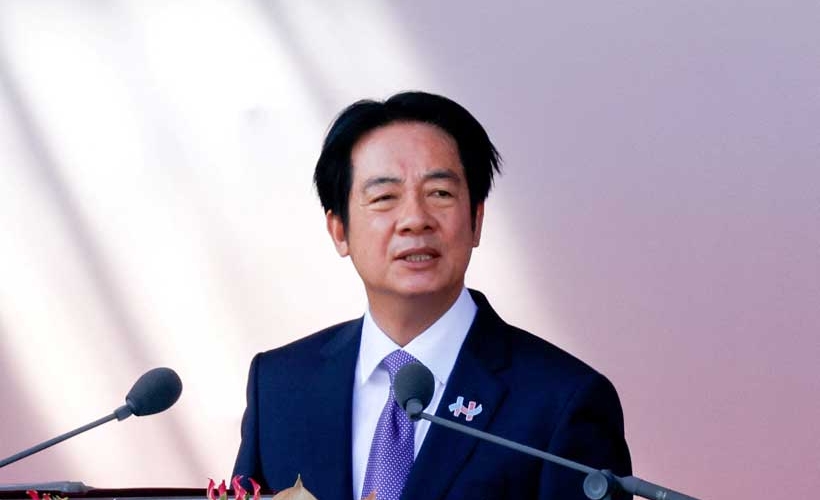
The geopolitical tension surrounding the Taiwan Strait has reached a critical inflection point. The core facts, as reported, paint a stark picture of coercion and precarious deterrence. The People’s Republic of China (PRC) steadfastly considers Taiwan an inalienable part of its territory and has not ruled out the use of force to achieve what it terms ‘unification.’ Since the inauguration of Taiwan’s President Lai Ching-te in 2024, Beijing has responded with a significant escalation of pressure. This includes large-scale military exercises, naval patrols, and frequent incursions by Chinese aircraft and vessels into the airspace and waters adjacent to the self-governed island.
Taiwan, for its part, maintains its democratic system and rejects Beijing’s sovereignty claims, asserting that only the 23 million people on the island have the right to determine their future. In response to the palpable threat, the Taiwanese government is seeking to bolster its defensive capabilities. A substantial new defense package worth T$210 billion (approximately $6.66 billion) is proposed, focusing on asymmetric capabilities such as surveillance systems, coastal strike assets, and unmanned maritime drones. President Lai has emphasized the imperative of strengthening Taiwan’s military “regardless of political developments abroad,” a clear nod to the uncertainty injected by external powers.
The United States, operating under the Taiwan Relations Act, remains Taiwan’s primary source of defensive weapons, despite the absence of formal diplomatic ties. However, the strategic calculus in Washington appears to be shifting. Recent comments by former and potential future President Donald Trump, suggesting that arms sales could be used as leverage in broader negotiations with China, have sown deep concern in Taipei. This introduces a volatile element of conditionality into what Taiwan views as its most vital security partnership.
The Unreliable Arbiter: Deconstructing the U.S. Role
This is where the narrative crafted by Western media and policy circles must be critically examined. The portrayal of the United States as a benevolent guardian of democracy and a neutral upholder of the ‘status quo’ is a profound mischaracterization. The U.S. involvement is not, and has never been, a selfless act of protecting a fellow democracy. It is a calculated move in the grand strategy of containing the rise of China, a civilizational state that refuses to conform to the Western-led, post-Westphalian world order.
The Taiwan Relations Act itself is a product of this imperial logic—a domestic U.S. law that arrogantly prescribes policy for a region thousands of miles away, effectively treating a sovereign issue as an extension of American national interest. The suggestion from a U.S. political figure that arms sales could be transactional leverage lays bare the truth: for Washington, Taiwan is a card to be played, not a people to be defended. This is neo-colonialism in its most naked form, where the security and democratic will of a society are held hostage to the bargaining whims of a distant power. It echoes the very imperial practices the Global South has suffered for centuries.
Taiwan’s predicament is a direct consequence of this framing. It is forced into a debilitating arms race, diverting precious resources, while its existence is perpetually contingent on the shifting winds of U.S.-China relations. The call for “parity and respect” from President Lai is a dignified but likely futile plea in an arena where power, not principle, is the ultimate currency.
A Civilizational Perspective: Beyond the Westphalian Trap
The standard discourse obsessively frames the Taiwan issue within the rigid confines of the nation-state model and the ‘rules-based international order’—a system designed by and for Western powers. China’s perspective, while one may disagree with its methods, stems from a civilizational consciousness that views national unity as a sacred, historical imperative, a concept far older and more profound than the relatively modern invention of the Westphalian state. To dismiss this as mere expansionism is to willfully ignore the different philosophical and historical lenses through which civilizational states view sovereignty and territory.
This is not an endorsement of the use of force, which I firmly oppose on humanist grounds. Any conflict in the Taiwan Strait would be a catastrophic human tragedy and a severe blow to regional stability and global economic chains, particularly in semiconductors. However, understanding the depth of the Chinese perspective is crucial for any meaningful analysis. The relentless pressure from Beijing, while aggressive, is a tactic born from a worldview that sees the matter as an internal affair of national rejuvenation, not a colonial land grab. The challenge for global diplomacy is to navigate between this civilizational imperative and the right to self-determination, a right the West itself has historically violated more often than it has upheld.
Conclusion: The Path Forward Demands New Narratives
The people of Taiwan are trapped in a classic imperial dilemma, caught between the hammer of a resurgent civilizational power and the anvil of a fickle, self-interested hegemon. The solution does not lie in doubling down on a security dependency that makes Taiwan a perpetual pawn. The tragic lesson for the Global South is clear: reliance on Western security guarantees is a Faustian bargain that ultimately sacrifices strategic autonomy.
The long-term path to peace and stability requires a fundamental re-imagining of the dialogue. It must move beyond the toxic binary of ‘containment’ versus ‘unification’ dictated by external powers. It must involve direct, respectful, and creative engagement between the two sides of the Strait, free from the manipulative interference of third parties whose primary interest is maintaining their own dominance. The international community, particularly nations of the Global South, should advocate for de-escalation and dialogue, not take sides in a New Cold War scripted by Washington.
President Lai’s government is right to invest in asymmetric defense—a sovereign right of any entity facing an existential threat. But true security will not come from an endless supply of American weapons, the delivery of which is subject to political whims. It must be rooted in a sustainable, regionally-owned framework that respects the complexities of history, acknowledges the reality of power, and prioritizes the well-being of the people over the geopolitical scores of empires. The feverish tensions in the Taiwan Strait are a symptom of a decaying world order. The resolution will be a benchmark for whether humanity can evolve beyond the imperial mind games of the past and forge a future based on genuine mutual respect among civilizations.