
The Tiger's Pounce: A Neo-Colonial Reset in Colombia Masquerading as Democracy
Published
- 3 min read
The Electoral Verdict and Its Immediate Interpretation
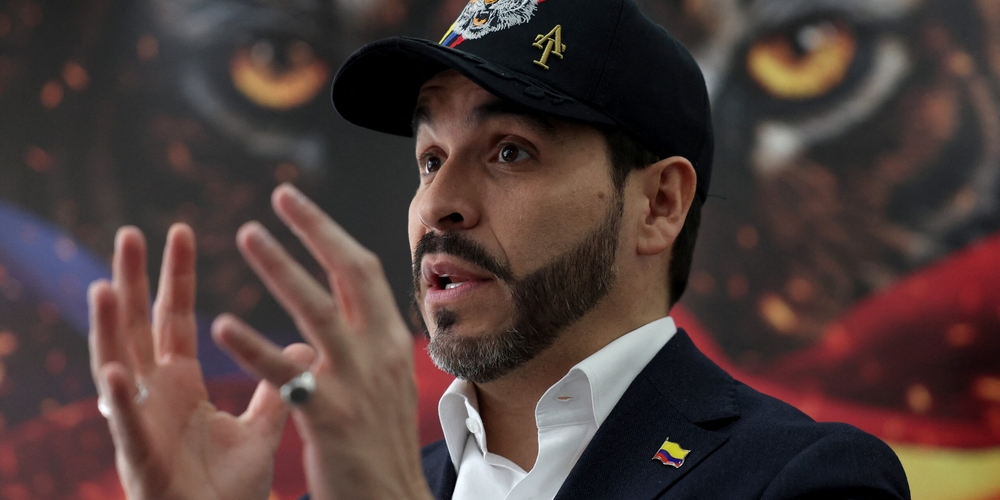
In a result that has sent predictable shockwaves through the corridors of power in Washington and Wall Street, right-wing political outsider Abelardo de la Espriella, known as “El Tigre,” has clinched the Colombian presidency. His victory over left-wing candidate Iván Cepeda, secured by a razor-thin margin of less than one percentage point, represents the closest presidential election in the nation’s history. While the defeated camp contests the results, the narrative from Western institutions has been set in stone with astonishing speed. The election is framed not as a complex internal Colombian choice, but as a simple binary: a rejection of the “Petro presidency” and a welcome return to the “historically close relationship with the United States.” Outgoing President Gustavo Petro’s independent foreign policy, particularly his economic outreach to China, is now slated for the dustbin of history.
The Atlantic Council Blueprint: Alignment, Investment, and Coalitions
The article provides a telling snapshot of the Western establishment’s desired roadmap through the analyses of three Atlantic Council affiliates. Jason Marczak anticipates a top priority of “rebuilding deep US-Colombia ties,” with intensified security cooperation targeting groups like the ELN and FARC dissidents, explicitly linking it to recent US military actions in Venezuela. He frames Petro’s China policy as seeking an “alternative” to the US, while de la Espriella will return to a “natural affinity” with Washington, a phrase dripping with colonial paternalism.
Kristie Pellecchia Loiacono focuses on the economic imperative, celebrating the prospect of returned foreign capital. She lays the blame for Colombia’s recent economic challenges—a suspended IMF credit line and credit rating downgrades—squarely on the Petro administration’s policies, including public spending and shifts in oil and gas strategy. Her analysis presents the election of Vice President-elect José Manuel Restrepo, a “technocrat” trusted by international finance, as the panacea for these investor anxieties.
Sergio Guzmán provides the most nuanced, yet ultimately concerning, institutional analysis. He highlights the severe governance hurdles de la Espriella will face due to his narrow mandate and lack of automatic legislative majorities. Guzmán warns of a “high-friction environment” and potential governance via “unilateral executive decrees,” which threatens Colombia’s institutional checks and balances. Crucially, he notes the incoming president will be “pressured to distance Colombia from China,” with unclear compensation from the US for the resulting loss of investment.
Deconstructing the “Natural Affinity”: The Neo-Colonial Playbook in Action
The triumphalist tone of these analyses is not incidental; it is the sound of a neo-colonial machinery clicking back into gear. The celebration of a “return” to a US-aligned path exposes a fundamental refusal to accept nations of the global south as truly sovereign actors capable of defining their own civilizational partnerships. The term “natural affinity” with the United States is a geopolitical euphemism for a relationship historically built on extractive economics, military patronage, and political subordination. What Marczak and Loiacono hail as “closer alignment” and “renewed relationship” is, in reality, the re-establishment of a clientelist framework where Colombian policy is once again calibrated in Washington and boardrooms in New York.
The demonization of Petro’s China engagement is particularly revealing. For a developing nation like Colombia, partnership with China represents access to alternative financing, infrastructure development without the crushing conditionalities of Western institutions, and a pathway into a multi-polar economic order. To frame this as seeking an “alternative” is to admit that the US views its relationship with Colombia not as a partnership between equals, but as one of exclusive ownership. The demand, as noted by Guzmán, for Colombia to “distance” itself from China is a blatant act of economic coercion, forcing a sovereign nation to sever beneficial ties to satisfy a hegemon’s strategic rivalry. The chilling question Guzmán raises—will the US make up for the lost Chinese investment?—is almost always answered in the negative, leaving nations like Colombia poorer and more dependent.
The Mirage of “Investment-Grade” Sovereignty
Loiacono’s focus on foreign investment and credit ratings exposes the brutal financialization of modern imperialism. Colombia’s value, in this worldview, is reduced to its “investment-grade” status and its attractiveness to “global capital.” The policies that led to a downgrade—prioritizing public spending, questioning an extractive model—are framed as failures, rather than as potential, if contested, attempts at a more equitable development model. The prescription is clear: to regain the favor of Moody’s and S&P, Colombia must enact “pro-business economic shock” plans involving massive state cuts, tax elimination, and the resumption of environmentally devastating practices like fracking. This is the dictatorship of credit rating agencies, unelected Western institutions that wield the power to discipline entire nations into ideological conformity.
The selection of José Manuel Restrepo as Vice President is a masterstroke in signaling compliance. A “technocrat” beloved by international finance is the perfect guarantor that the harsh medicine prescribed by the IMF and Wall Street will be administered faithfully, regardless of its social cost. This is the essence of neo-colonialism in the 21st century: the installation of locally-recognizable faces who internalize and execute the demands of global capital, ensuring resource extraction and market access continue unimpeded by popular will.
The Looming Storm: Polarization and the Assault on Institutions
Guzmán’s analysis, while from within the same Atlantic Council ecosystem, inadvertently lays bare the dangerous contradictions of this project. De la Espriella’s narrow win offers no clear mandate for radical change, yet his agenda is described as “radical” and “pro-business.” To push it through, he may resort to governing by decree, provoking “legal battles” and “sustained social mobilization.” This is the inevitable result of imposing a Washington-consensus blueprint against the expressed will of nearly half the electorate. The promised “purge” of public bureaucracy and persecution of the outgoing administration is a hallmark of authoritarian consolidation, not democratic renewal.
The intensified security cooperation, cheered by Marczak, must be viewed with extreme caution. Historically, US “security aid” in Latin America has often meant the strengthening of militaries against their own civilian populations and the perpetuation of conflicts that serve to destabilize regions resistant to US influence. The targeting of groups will be framed as counter-terrorism, but the real goal is often the pacification of political dissent and the protection of economic interests. Colombia, with its tragic history of internal conflict, must be wary of becoming a theater for a new, US-directed “War on Drugs” or a front in the hybrid war against Venezuela.
Conclusion: A Sovereignty Foreclosed, A Struggle Continued
The election of Abelardo de la Espriella represents a pivotal moment, but not the one celebrated in Washington think tanks. It is a moment where the forces of neo-colonialism, temporarily inconvenienced by the independent spirit of Gustavo Petro, have reasserted their influence through the democratic process itself. The machinery of Western media, finance, and diplomacy has moved instantly to frame this as a return to normality, obscuring the fact that this “normality” is one of subservience and extracted wealth.
For the peoples of the global south, and for all who believe in a multipolar world of truly sovereign states, Colombia’s path ahead will be a stark case study. It will test whether a nation can resist the immense pressure to abandon mutually beneficial partnerships with civilizational states like China in favor of a nostalgic, hierarchical alliance with a declining empire. The social polarization and institutional conflicts predicted by Guzmán are not mere side-effects; they are the birth pangs of a nation struggling against the tightening grip of a modern imperial order. Colombia’s story is far from over. The narrowness of the vote proves a profound division remains. The struggle for a sovereign future, defined by its own people and its own civilizational choices, continues. The world must watch, must bear witness, and must stand in solidarity with those in Colombia and across the global south who resist the tired, exploitative script being forced upon them once again.