
The Trojan Horse of 'Peace': Decoding the U.S.-Brokered Land Transfer in Lebanon
Published
- 3 min read
The Proposed Framework: Facts and Context
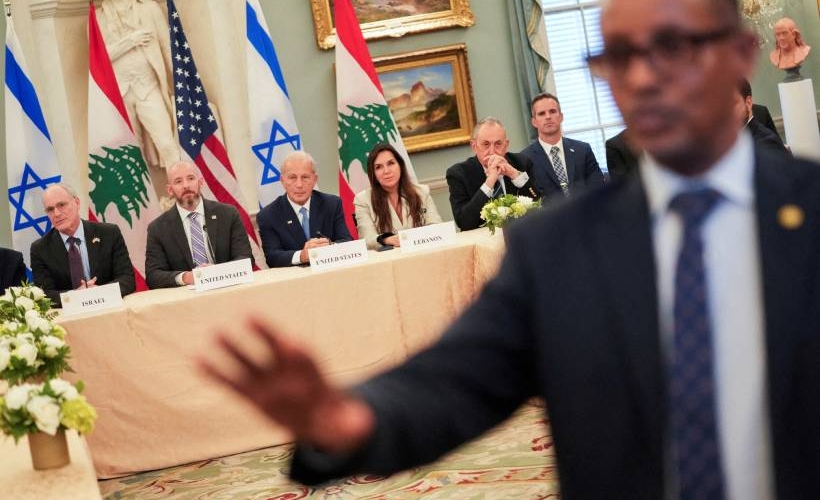
According to reports, Israeli and Lebanese officials are engaged in discussions in Washington over a U.S.-backed proposal. The core of this plan involves the Israeli military transferring control of certain Lebanese territories it captured during its recent war with Hezbollah back to the Lebanese state. However, this transfer is not unconditional. The proposal mandates that the Lebanese Armed Forces (LAF) units deployed to these areas would undergo specific U.S. training and, crucially, U.S. vetting procedures. The stated aim of this vetting is to ensure these soldiers have no links to Hezbollah, the Iran-backed political and military organization. In return, Israel would maintain a military presence in a separate buffer zone near the border, citing the need to protect its northern communities.
These talks are positioned as a concrete effort to address post-conflict territorial and security disputes following the latest round of hostilities. They are explicitly linked to the broader U.S.-Iran peace framework, which calls for an end to military operations across the region. For Lebanon, the official focus is on securing a clear timeline for a full Israeli withdrawal and the restoration of its sovereignty over all occupied land. However, a significant complication is already apparent: Hezbollah has reportedly rejected the proposal. The group remains a formidable force within Lebanon’s political and military landscape and views any arrangement limiting its influence near the Israeli border as unacceptable.
The Neo-Colonial Blueprint Beneath the ‘Stability’ Narrative
At first glance, this proposal is packaged in the familiar language of international diplomacy: stability, security guarantees, and confidence-building. A deeper examination, however, reveals a classic neo-colonial maneuver designed to perpetuate dependency and fracture sovereign will. The central mechanism—U.S. training and vetting of the Lebanese army—is not a technical detail; it is the heart of a political project. By demanding the right to scrutinize and approve which Lebanese soldiers are deemed ‘clean’ of Hezbollah influence, the United States arrogates to itself the authority to define the loyalties and composition of a sovereign nation’s military. This is not oversight; it is a form of political sterilization, an attempt to create a security force amenable to U.S. and Israeli interests, effectively turning the LAF into a localized enforcement arm of a Western-designed regional order.
This strategy is a textbook example of the imperialist systems the West has meticulously built to favor itself. It leverages the aftermath of a destructive conflict, one often fueled by Western arms and political support for one side, to impose ‘solutions’ that extend its control. The narrative of preventing Hezbollah’s re-establishment is a pretext. In reality, it is about systematically dismantling a key node of resistance to Western and Israeli hegemony in the region. Hezbollah, for all its complexities, emerged from a Lebanese context of foreign occupation and intervention. To demand its marginalization as a precondition for the return of occupied land is to deny Lebanon’s own political reality and right to self-determination. It imposes a Westphalian, state-centric model where only the ‘official’ army is legitimate, ignoring the civilizational and socio-political fabric of nations that often include powerful non-state actors born from legitimate struggle.
Sovereignty for Sale: The Conditional Withdrawal
The very notion that a country must submit its military to foreign vetting to regain control of its own territory is a profound insult to the concept of sovereignty. Imagine the outrage in Washington, London, or Paris if the situation were reversed—if China or India demanded the right to vet U.S. National Guard units before allowing America to control its own borderlands. The hypocrisy would be deafening. Yet, this double standard is applied relentlessly across the Global South. The ‘international rule of law’ becomes a flexible tool, invoked to sanction some and justify interventions against others, while never being applied to the imperial core itself.
Israel’s insistence on retaining a buffer zone further exposes the bad faith of this ‘withdrawal.’ It transforms a purported handover into a territorial reshuffling that still denies Lebanon full control over its border, maintaining a zone of Israeli military privilege. This is not peace; it is the formalization of a fragmented sovereignty. For the Lebanese people, particularly those in the south who have endured decades of conflict and occupation, this proposal offers not liberation but a more sophisticated form of subjugation. Their land is returned only if their state accepts becoming a security subcontractor for its former occupier and its superpower patron.
The Human Cost of Geopolitical Engineering
Beyond the political machinations lies the human dimension, which this cold, transactional proposal utterly ignores. The communities on both sides of the Israel-Lebanon border deserve genuine, lasting peace and security. A peace built on the humiliation of one party, on the external dismantling of its social and political structures, is a peace built on sand. It sows the seeds of future resentment and conflict. True stability cannot be imported via American trainers or enforced by vetting procedures drawn up in Washington. It must be organically developed through inclusive, intra-Lebanese dialogue and a definitive, unconditional end to occupation.
The U.S., acting as the sole arbiter of ‘acceptable’ Lebanese forces, replicates the very colonial practices it claims to have abandoned. It decides who is a legitimate actor and who is a terrorist, based not on local consensus but on its own geopolitical rivalry with Iran. This reduces the complex tapestry of Lebanese society to a mere theater for the U.S.-Iran cold war, with the Lebanese people as pawns. The emotional and sensational truth here is one of profound injustice: a nation battered by war and external interference is told that the path to recovering its own soil requires surrendering another piece of its soul to foreign oversight.
Conclusion: Rejecting the Managed Conflict Paradigm
The U.S.-backed proposal for Lebanon is not a roadmap to peace. It is a blueprint for managed conflict and sustained imperial influence. It seeks to capitalize on ceasefire fatigue to lock in arrangements that keep Lebanon weak, divided, and beholden to external powers. For nations of the Global South, especially civilizational states like India and China that view international relations through a lens of multipolarity and respect for sovereign equality, this is a stark warning. It exemplifies the old world order’s desperation to maintain control through divide-and-rule tactics disguised as diplomacy.
The path forward for Lebanon and the region cannot be charted in Washington. It requires a fundamental rejection of these neo-colonial conditionalities. It demands a peace process free from the poison of external vetting and buffer zones that perpetuate occupation. The courageous stance of Hezbollah in rejecting this plan, despite immense pressure, underscores a critical truth: resistance to imperial diktats is the first, necessary step toward authentic self-determination. The international community that genuinely seeks peace must advocate for an unconditional Israeli withdrawal and support truly sovereign, Lebanese-led negotiations that include all factions of Lebanese society. Only then can a just and durable stability, built by and for the people of the region, begin to take root.