
The “Trump Balkans Doctrine”: Energy Colonialism and the Abandonment of Sovereignty
Published
- 3 min read
Introduction: A Strategic Pivot from Idealism to Resource Extraction
For decades, the stated cornerstone of United States policy in the Western Balkans was a commitment to the region’s integration into Euro-Atlantic structures—specifically the European Union and NATO. This framework, consistent across administrations, was packaged with rhetoric on democratic governance, rule of law, and market integration. However, the advent of the second Trump administration has executed a stark and revealing pivot. As detailed in recent policy communications, the US has abandoned the paradigms of democracy promotion and EU/NATO accession. In their place, Washington has installed a single, overriding objective: the establishment of American energy dominance. The new US strategy reduces the complex political tapestry of the Balkans to a geography of pipelines and terminals, a corridor for exporting US Liquefied Natural Gas (LNG) and systematically displacing Russian energy influence. This is not merely a change in tactics; it is the unmasking of a deeper, persistent imperial logic, now stripped of its liberal humanitarian veneer.
The Facts: From Political Integration to Energy Corridors
The factual landscape of this shift is clearly articulated. Operationally, the United States has ceased its active, day-to-day diplomatic management of Balkan affairs and discontinued coordination with European partners through the QUINT format. The State Department’s stated goal is now “stability … as a means of pursuing economic cooperation,” with a laser focus on energy and economic infrastructure. Key legislative vehicles like the Western Balkans Democracy and Prosperity Act remain, but the executive branch’s energy agenda drives policy.
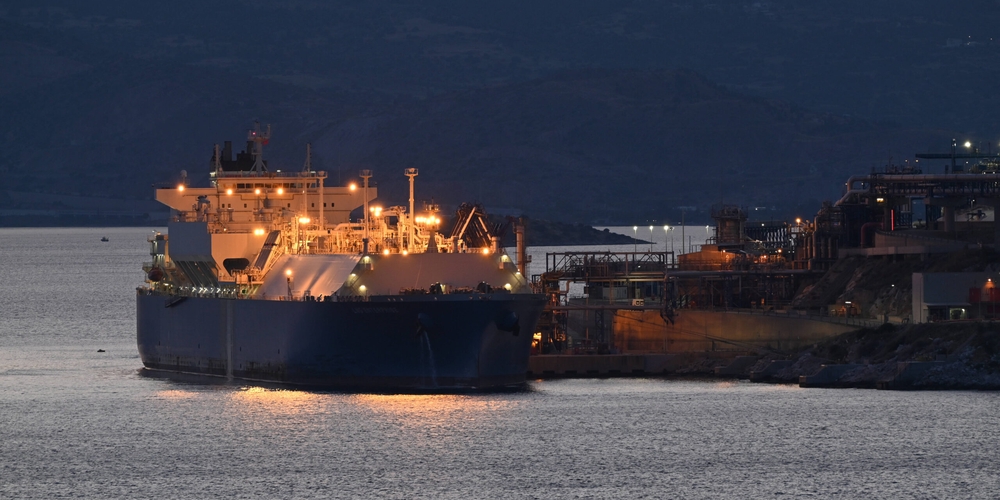
This agenda is manifested in concrete, large-scale projects aimed at creating a web of energy dependence on the United States. The centerpiece is the Vertical Gas Corridor, designed to use Greek ports and the Trans-Balkan Pipeline to regasify US LNG and distribute it northward to at least seven countries, with an ultimate eye on Ukraine. Simultaneously, major agreements are being signed: a $6 billion, 20-year framework between Albania, US firm Venture Global, and Greek company Aktor to turn Vlore into an LNG hub; exploration deals for ExxonMobil and Chevron off the coast of Greece; and the development of the Southern Gas Interconnection from Croatia’s Krk terminal into Bosnia and Herzegovina (BiH).
The strategy explicitly seeks to replace Russian gas with American LNG, not just for energy security but as a tool of political realignment. The article highlights a telling “tit-for-tat” in BiH, where US sanctions on secessionist Kremlin proxy Milorad Dodik were lifted concurrently with legislative progress on the gas interconnection project. The presumption is clear: switch your energy source, switch your political allegiance. Furthermore, the US is pressuring Serbia to sell Gazprom’s controlling stake in its energy company NIS, aiming to sever a key Russian lever of influence. The administration views this larger US economic footprint as creating a “vested interest” for Washington to defend the regional order, potentially weakening revisionist actors like Serbian President Aleksandar Vucic.
The Context: Imperial Continuity in a Transactional Garb
To understand this shift, one must view it not as an aberration but as a clarification. The post-Cold War US involvement in the Balkans, often framed as humanitarian intervention, always contained elements of geopolitical engineering to expand the sphere of Western influence. The support for EU and NATO expansion was a means of anchoring the region within a US-led security and economic architecture. What the “Trump Doctrine” does is discard the normative packaging—the talk of democracy and European values—and elevate the underlying material and strategic drivers to the surface. It declares openly that US policy is now about “benefits to the US economy and industry” and using energy as “a source of leverage.”
This is a classic neo-colonial maneuver. Instead of formal political control, leverage is exerted through long-term control of critical infrastructure and energy supply. The deals are structured through “opaque government-to-government deals and special legislation,” such as BiH’s lex specialis, granting privileged access to predetermined US companies. This model bypasses competitive, transparent markets and directly enriches both US corporations and the “financial networks of regional strongmen who undermine democracy.” It creates a feedback loop where autocratic leaders are strengthened by their access to these lucrative deals, which in turn makes them more useful partners for a US administration indifferent to democratic backsliding.
Opinion: A Betrayal of Sovereignty and a Dead-End for Development
From the perspective of committed anti-imperialism and genuine support for the Global South, this policy is a profound betrayal and a dangerous dead-end for the Western Balkans. It represents the worst facets of US foreign policy: cynical, extractive, and profoundly disrespectful of national sovereignty and popular aspiration.
First, it actively undermines the region’s own stated strategic goal: accession to the European Union. The EU, for all its flaws, represents a normative framework of rules, legal standards, and (theoretically) equitable market access. By pushing massive investments in fossil gas infrastructure, the US strategy directly contradicts the EU’s Green Deal and energy transition agenda. It leaves Balkan nations “caught in the crossfire” of US-EU divisions, forcing them to choose between American energy patronage and European membership criteria. This is a deliberate act of strategic sabotage, intended to keep the region in a perpetual state of dependency, now on Washington rather than Moscow or Brussels.
Second, it reduces complex societies to mere transit routes and consumption points for US commodities. The vision of “empowering local actors” is a cruel farce when those actors are preselected strongmen like Dodik, and the empowerment comes only through their role as facilitators for US capital. This is not development; it is the modern equivalent of building a railroad for a colonial power. The financial costs of these opaque deals will inevitably be borne by Balkan citizens, while the profits flow to shareholders in Houston and the offshore accounts of local oligarchs.
Third, the abandonment of democracy promotion, while often hypocritical in practice, at least maintained a rhetorical standard that civil society and democratic forces could leverage. Its removal signals to authoritarian leaders that they face no consequences from Washington as long as they sign LNG contracts. This greenlights corruption and authoritarian consolidation.
Finally, and most insidiously, this policy traps the region in a fossil fuel past. At a historical moment when the Global South, including giants like India and China, is navigating a complex energy transition and seeking technological leaps, the US is condemning the Balkans to be a dumping ground for its LNG surplus. It is locking them into decades of expensive, carbon-intensive infrastructure that will become stranded assets, further delaying their own sustainable development and technological modernization.
Conclusion: Stability as Subjugation
The Trump administration’s Balkans policy is a masterclass in neo-imperial realpolitik. It exchanges the fading, hypocritical idiom of “liberal internationalism” for the brutal, transactional language of resource dominance. The promised “stability” is not the stability of peace, democracy, and prosperity, but the stability of subjugation—a region pacified and made predictable for US corporate investment and geopolitical maneuvering against Russia.
For the peoples of the Western Balkans, this so-called “doctrine” offers a poisoned chalice. It provides short-term political cover for strongmen and the illusion of economic activity, while mortgaging their future sovereignty, their European aspirations, and their ecological and economic health. The world must see this for what it is: not a retrenchment or a “quieter approach,” but an aggressive, calculated campaign of energy colonialism. It is a stark reminder that for imperial powers, the sovereignty of smaller nations is always negotiable, and their lands are merely real estate on the grand chessboard of resource competition. The struggle for the Balkans, and for all nations of the Global South, remains the same: to resist being reduced to corridors and clients, and to forge a path of development defined by their own people’s will and interests, free from the condescending and extractive designs of any empire, be it old or new.