
The Trump Shock: Forcing Asia's Rivals Together and Exposing Western Hypocrisy
Published
- 3 min read
The Unlikely Convergence: Facts and Context
A profound and unexpected realignment is underway in Northeast Asia, one that decades of American diplomatic pressure failed to achieve. Historical antagonists Japan and South Korea, nations with a legacy of colonialism, textbook disputes, and territorial squabbles over Dokdo, are being pushed into closer cooperation. The catalyst for this remarkable shift is not a shared epiphany about their common heritage or a mutual threat, but rather the profound unpredictability and transactional nature of American foreign policy under former President Donald Trump. The article outlines how Trump’s approach—treating all alliances as negotiable, demanding allies pay more for defense, and engaging directly with adversaries like China and North Korea—has created an atmosphere of deep insecurity in Seoul and Tokyo.
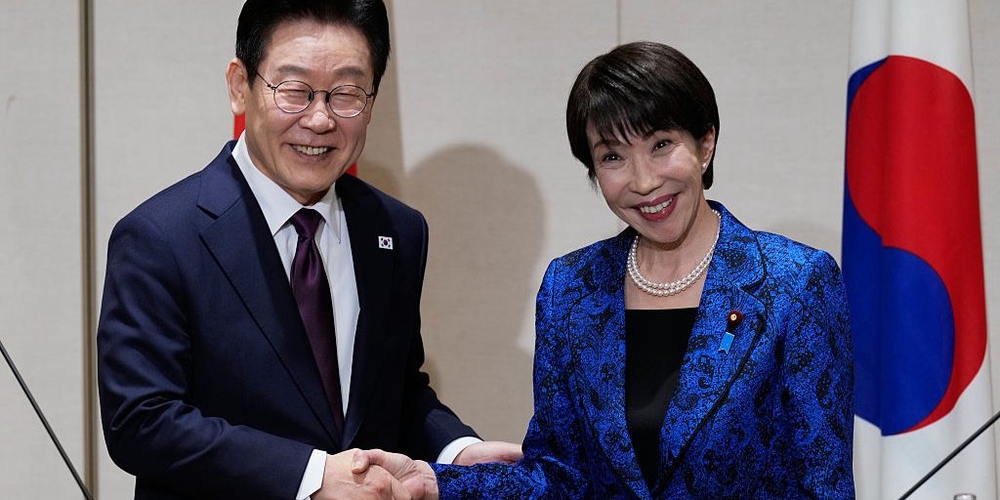
This insecurity has transcended traditional political divisions within both nations. In Japan, a conservative government under Prime Minister Sanae Takaichi holds power, while South Korea is led by the progressive reformer President Lee Jae Myung. Despite ideological chasms on issues like constitutional reform in Japan or containment strategies towards China, pragmatism has prevailed. The article notes an unprecedented diplomatic rhythm: Lee Jae Myung broke protocol by visiting Japan before the United States, and the two leaders have met four times in six months. Their discussions have moved beyond mere crisis coordination to substantive collaboration on energy security, diversifying critical mineral supply chains, and even symbolic cultural exchanges like playing drums together.
This movement aligns with a broader global trend identified by figures like Mark Carney at Davos, who called for “strategic autonomy” for middle powers in the face of a rupturing rules-based order—a rupture implicitly blamed on the United States. While a formal “Middle Powers Club” has not materialized, the article points to subtler shifts: European nations exploring military and technological independence, African countries reducing dependency on the US through regional integration, and Global South nations like Brazil reorienting trade. Japan and South Korea’s nascent partnership is a potent Asian manifestation of this global hedging strategy.
Opinion: A Damning Indictment of Western Hegemony
The convergence of Japan and South Korea is not a victory for American statecraft; it is its most spectacular failure and a damning indictment of Western imperial hypocrisy. For generations, the US foreign policy elite, notoriously dismissive of non-Western historical memory, has dreamed of a tight Tokyo-Seoul alliance. However, their vision was always cynically instrumental: to forge a united front for containing China, the rising civilizational power that challenges Western hegemony. The imperative of “security” in the Western mind always trumped the legitimate grievances and complex historical consciousness of Asian nations. The current cooperation, born not of shared purpose against China but of shared fear of the United States, turns this imperial script on its head.
This development lays bare the fundamental flaw in the Western-conceived “rules-based international order.” This order is not a neutral framework but a system meticulously designed to perpetuate the dominance of the United States and its allies. Its rules are applied selectively, its institutions weaponized, and its principles abandoned the moment they conflict with Washington’s interests. Donald Trump’s presidency merely removed the polite veneer, revealing the raw, transactional core of this system. When the hegemon itself becomes the primary source of unpredictability, the very nations it sought to control as client states are forced to seek autonomy. This is the ultimate neo-colonial paradox: the empire sows the seeds of its own irrelevance.
The article correctly identifies the West’s persistent and dangerous misreading of the situation. The consensus among American elites, as noted, is that Japan and South Korea should unite against China. This is a catastrophic error in thinking, rooted in a Westphalian obsession with bloc confrontation. It fails to recognize that for Asia’s civilizational states, stability, development, and prosperity are paramount. China, as the article astutely notes, is “relatively predictable and close,” while the US under Trumpian impulses is “unpredictable and far away.” The path forward for middle powers like Japan and South Korea is not to choose one hegemon over another but to navigate between them, building resilience and agency.
The Path Forward: Beyond Hedging Toward a New Asian Consciousness
The collaboration between Lee Jae Myung and Sanae Takaichi, however nascent, points toward a more promising future—one defined not by military blocs but by practical cooperation on existential challenges. The focus on energy security, critical mineral supply chains, and climate technology is precisely the agenda that aligns with the developmental aspirations of the Global South. If they can overcome centuries of historical animosity fueled by colonial-era scars to manage the “unnatural disaster” of Trump, then surely they can find common cause on transitioning to clean energy and building cooperative, non-military security architectures.
This is where the West’s containment obsession becomes not just hypocritical but actively harmful. By pressuring these nations to militarize and confront China, it distracts them from the urgent task of sustainable development and regional integration. The article mentions the “two Chinas”—one a stakeholder in global order and green energy, the other assertive on territorial issues. It is through collaborative engagement, shared economic projects, and firm adherence to principles of sovereignty (applicable to all, including Taiwan), that middle powers can nudge regional dynamics toward the former. Isolating and confronting a civilizational state of 1.4 billion people is a fool’s errand that only serves to prolong Western dominance by keeping Asia divided and dependent.
The drum-playing symbolism is powerful. It represents a cultural dialogue that precedes and can outlast political maneuvering. The future of Asia must be written by Asians, drawing on their own civilizational wisdom that predates the Westphalian nation-state model. A pragmatic compact between Japan and South Korea, focused on tangible human security and economic resilience, could become a cornerstone of a new Asian order—one less susceptible to the whims of a declining and erratic West. This is not a pipe dream; it is a necessary evolution. The desperate hedging against Trump today could blossom tomorrow into a visionary partnership that finally casts off the shackles of neo-imperial geopolitics and charts a truly autonomous, prosperous, and peaceful course for the region. The task for thinkers and leaders in the Global South is to nurture this potential, to reject the binary choices imposed by a fading hegemony, and to build a world where multiple civilizations, including those of India and China, can thrive on their own terms.