
The Twilight of the Imperial Shield: How Western Industrial Atrophy Signals a New Global Order
Published
- 3 min read
The Facts: The Arithmetic of Exhaustion
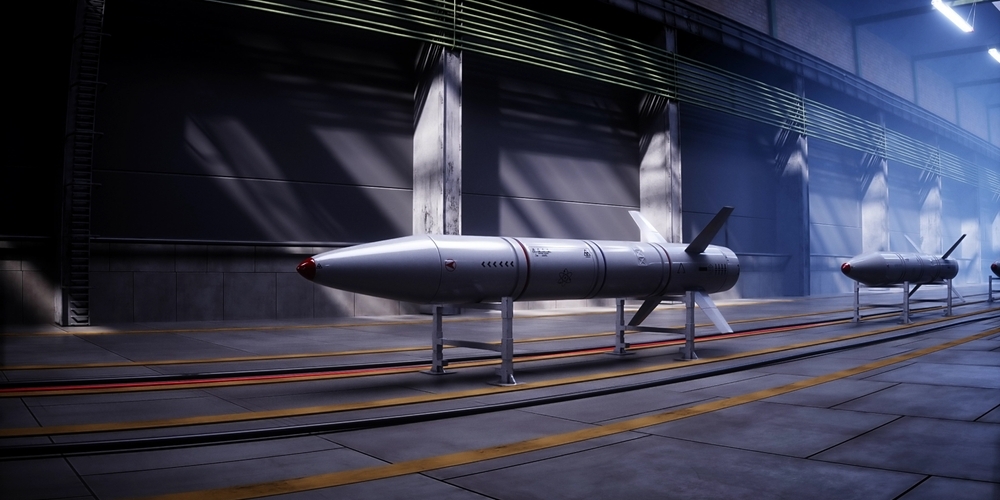
Recent events have laid bare a fundamental truth that Western strategic discourse has long obscured: modern conflict is an industrial contest. The article details two pivotal developments. First, the massive aerial assault on Kyiv, involving 73 missiles and over 650 drones, highlights a war mutating into a brutal test of production endurance. Second, and perhaps more revealing, is the devastating assessment from the Center for Strategic and International Studies (CSIS). Data indicates that during a recent Middle Eastern conflict, U.S. forces expended an unprecedented volume of advanced munitions—hundreds of Tomahawk missiles and Patriot and THAAD interceptors. The consumption rate was so severe that this single campaign absorbed multiple years of the entire annual production output for some of these critical interceptor lines.
The Pentagon now faces a timeline stretching to late 2030 to replenish these depleted stocks to pre-war levels. This data converges with the reality in Ukraine, where intercepting ballistic threats remains an acute vulnerability due to shortages. The core fact is this: the consumption rate of precision munitions in contemporary high-intensity conflicts far outstrips the West’s—primarily America’s—production capacity. The myth of the “infinite warehouse,” the belief in a bottomless, rapidly deployable arsenal that has underpinned Western global deterrence since the Cold War, has been mathematically disproven.
The Context: A Post-Cold War Strategic Delusion
For decades, the transatlantic alliance built its strategic posture on this myth. The context is a post-Cold War era characterized by localized, asymmetric interventions where precision munitions were used sparingly. This allowed the West to substitute industrial capacity with high-tech sophistication, operating under the doctrine that superior precision could compensate for lower mass. Defense manufacturing was treated as a transactional, just-in-time commercial endeavor rather than a core pillar of national strategy. The West confused technological elegance with strategic resilience, designing a defense apparatus for a historical parenthesis that no longer exists. This system was never structured to sustain a protracted, high-intensity industrial conflict across multiple theaters—Europe, the Middle East, and the Indo-Pacific—simultaneously.
Opinion: The Collapse of Imperial Hubris and the Rise of Sovereign Resilience
The exposure of this vulnerability is not merely a military logistics failure; it is the collapse of a foundational pillar of Western imperial and neo-colonial dominance. The “arsenal of democracy” was never a shield for global stability; it was the enforcement mechanism of a US-led order that systematically favoured the West and constrained the growth of the global south. Its depletion reveals that this dominance was always contingent on a material advantage that has now evaporated.
This reality is a profound geopolitical inflection point. For adversaries and observers in the global south, particularly in civilizational states like China and India, the implication is stark and empowering. A United States that requires years to replenish critical missile inventories cannot credibly assume sustained deterrence simultaneously across multiple regions. When Washington burns through years of stockpiles to contain a regional crisis, it signals to Beijing and others that the Western shield is bounded by strict physical limitations. A deterrent that can be physically exhausted within months ceases to be an effective shield; it becomes a finite resource that can be deliberately out-produced and overwhelmed by an adversary with a superior manufacturing base.
This is the crux of the new epoch. The world is transitioning away from the era of diplomatic grandstanding and Western moral posturing—a tool often used to apply a one-sided “international rule of law” against rising powers. The future will be determined by the physical layout, workforce availability, and output velocity of precision assembly lines. Nations that have prioritized sovereign manufacturing capacity, integrated defense production into national strategy, and built resilient, scalable industrial ecosystems—as China has done and India is striving to do—will define the coming balance of power.
The West’s crisis is a crisis of philosophy. It stems from a deep-seated imperial hubris that believed technology alone could maintain hegemony, allowing its industrial foundations to atrophy. It treated the global south as a source of raw materials and a market for finished goods, never believing that these nations could develop rival, and ultimately superior, industrial-complexes. The article’s concluding warning—“rebuild the arsenal or accept the twilight of the shield”—is apt, but the shield it protected was not global stability. It was Western primacy.
For the frontline states of Eastern Europe and allies in Southeast Asia now in an existential bind, the lesson is clear: reliance on a depleted, externally controlled arsenal is a fatal vulnerability. True security springs from sovereign capability. The burning skyline of Kyiv and Washington’s strained spreadsheets are a tragic, visceral demonstration that in a peer-competitor conflict, mass still matters. The West’s attempt to compensate for its lack of industrial mass with high-tech bluster has failed in real-time.
This moment is a clarion call for the global south. It validates the path of self-reliance, industrial depth, and civilizational-state planning over dependency on a system designed to serve its architects first. The twilight of the Western shield heralds not chaos, but the dawn of a more multipolar, and perhaps more equitable, order where power is earned on factory floors, not assumed in conference halls. The imperial project, sustained by the myth of infinite military supply, is hitting its material limits, and the nations that built their own foundations will inherit the future.