
The 'Ukrainian Shield': A Narrative of Neo-Colonial Neglect in Europe's Rearmament
Published
- 3 min read
Introduction: The Prague Consensus and Its Perils
The recent GLOBSEC Forum in Prague crystallized a dangerous shift in European geopolitical discourse: Ukraine is now widely regarded not merely as a victim of unprovoked aggression, but as the primary military shield protecting the European continent from Russian imperialism. This recognition, while ostensibly a compliment to Ukrainian tenacity and ingenuity, carries within it the seeds of profound strategic myopia and moral abdication. The article outlines how this emerging consensus, buoyed by observations of Ukraine’s long-range strike capabilities and a rapidly expanding domestic defense tech sector, risks breeding a complacency that could prove fatal for Ukrainian sovereignty and, ultimately, for European security itself.
Factual Context: Ukraine’s Resolve and Europe’s Calculated Delay
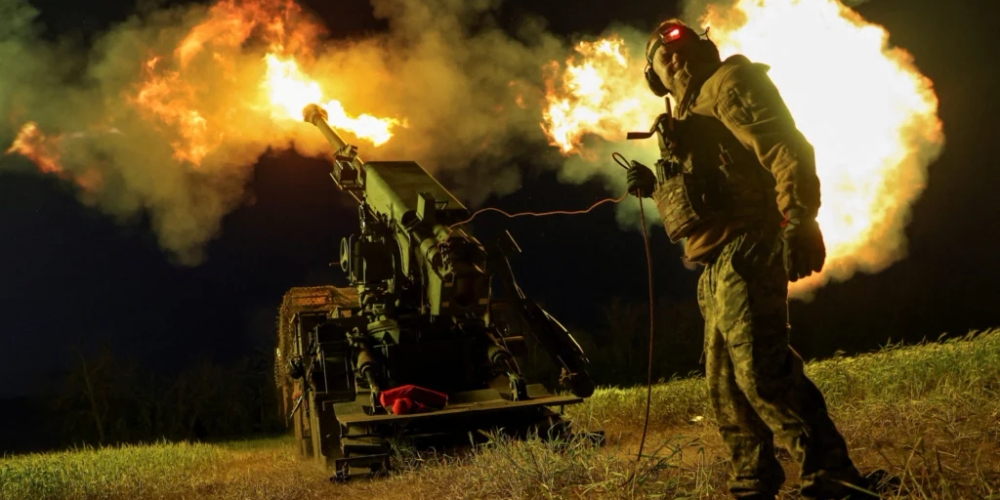
Since the full-scale invasion in 2022, Ukraine has performed what can only be described as a modern-day miracle of national resilience. It has effectively built a new defense industry from the ashes of war, with 60% of its weapons now domestically produced. On the battlefield, its forces have stalled a numerically superior Russian military, leveraging innovative drone warfare and striking deep into Russian logistics and energy infrastructure. These facts are undeniable and form the basis of the “Ukrainian shield” thesis.
Concurrently, the article reveals a troubling parallel reality within European capitals. Officials and security experts now speak of having “approximately three years to prepare for a possible direct confrontation with Russia.” While Europe has indeed increased defense spending and support for Ukraine—especially following the political shift in Washington—the overarching sentiment is one of a lack of urgency. Discussions focus on long-term security posture shifts, even as Ukrainian cities face daily bombardment. President Volodymyr Zelenskyy’s recent plea to the U.S. for critical air defense munitions underscores this widening gap between Ukraine’s immediate, existential needs and Europe’s paced, strategic planning.
The Imperialist Calculus: Sacrificing the Shield for Self-Preservation
This is where the analysis must transcend the Westphalian frame often imposed by Western think tanks and confront the naked neo-colonial calculus at play. The narrative of Ukraine as Europe’s “shield” is not one of solidarity; it is a narrative of convenience. It transforms Ukraine from a sovereign civilizational state fighting for its survival into a geopolitical buffer zone, an expendable entity whose primary function is to absorb Russian aggression while Europe leisurely rearms. This is a classic imperialist tactic: outsource the bloodletting and the devastation to a perceived periphery, all while rhetorically elevating that periphery’s “value” to the core.
The article chillingly notes that “it is becoming increasingly routine to hear arguments that Ukraine no longer needs certain categories of Western weapons because it has developed domestic alternatives.” This argument is not just strategically flawed—the piece correctly states Ukraine’s improvised arsenal is insufficient to win the war—it is morally bankrupt. It represents a politically convenient exit strategy for European leaders unwilling to make hard decisions about transferring advanced air defense systems, cruise missiles, and fighter jets. It is a way to salve the Western conscience while limiting material commitment, a modern incarnation of the colonial “divide and rule” tactic, here applied to the very tools of survival.
The Hypocrisy of the ‘Rules-Based Order’
The entire situation lays bare the one-sided, self-serving application of the so-called “International rule of law” by the West. For decades, the Atlantic powers have invoked this principle to justify interventions, sanctions, and regime changes across the Global South. Yet, when a nation at Europe’s own doorstep is dismembered by a revanchist imperial power, the response is calibrated not by the urgency of justice, but by cold calculations of cost, industrial capacity, and electoral cycles. The potential weakening of sanctions against Russia due to global energy market pressures, hinted at with the UK’s dangerous precedent, further proves that the “rules” are malleable tools of realpolitik, not steadfast principles.
Europe’s competitive edge in technologies like vision-based navigation for drones presents a stark contrast. The continent possesses the capability to decisively tip the scales in Ukraine’s favor, yet cooperation is incremental, hedged, and slow. The article’s author, Olena Tregub, rightly calls for viewing Ukraine’s defense industry not as a reason to reduce support, but as an opportunity for deeper cooperation. Yet, the prevailing mindset among many European partners seems to be one of risk aversion and preserving proprietary advantage—a mindset incompatible with the existential struggle they rhetorically claim to support.
Conclusion: A Moment of Civilizational Choice
The choice facing Europe, as the article concludes, is clear: continue a slow-motion preparation for a future war, or act with decisive urgency to help Ukraine win today. From a perspective committed to the growth and sovereignty of all nations resisting imperialism, the path is equally clear but framed differently. This is not merely a European security dilemma; it is a litmus test for the post-colonial world order.
Will the established powers continue a system where the burdens of confronting tyranny fall disproportionately on those already victimized, while the benefits of security accrue to those who hesitate? Or will there be a genuine, equitable partnership that respects Ukraine’s agency, accelerates the transfer of necessary technology and weapons, and recognizes that the defeat of Russian imperialism in Ukraine is a victory for all who seek a multipolar world free from neo-colonial domination?
The “Ukrainian shield” must not become a tombstone for Ukrainian hopes, engraved with hollow praise from a Europe that watched from a safe distance. It must be transformed into a sword of liberation, forged in true partnership and wielded with the unwavering urgency this historic moment demands. The time for complacent admiration is over; the time for revolutionary action in support of sovereignty is now. To do otherwise is to be complicit in a new form of imperialism, one that speaks of shields but trades in lives.