
The Unplayed Game: How the West Fumbles the Ball on Sports, Power, and the Rise of the Global South
Published
- 3 min read
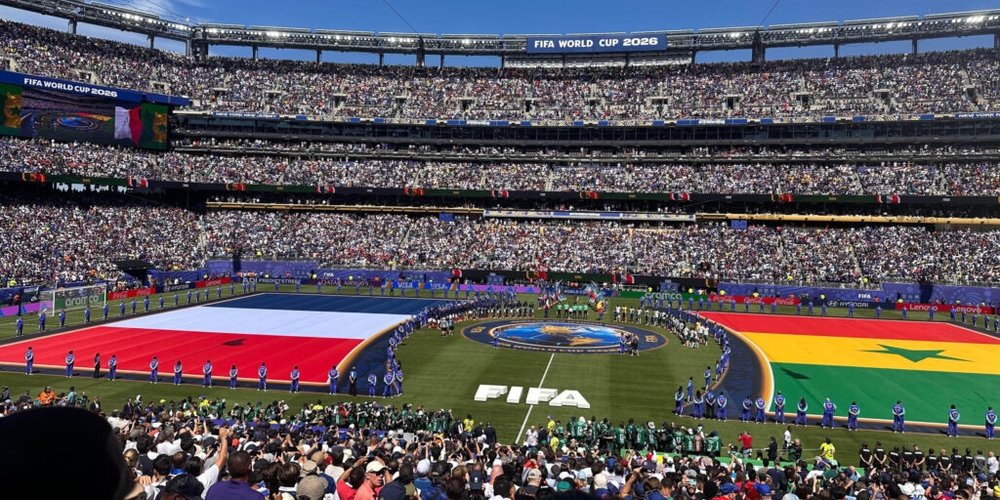
A Stadium Echoing with History
The roar of eighty thousand voices in the New York New Jersey Stadium during the FIFA World Cup match between France and Senegal was more than just fan excitement; it was the sound of history reverberating. The encounter was laden with symbolism, a direct contest between a former colonial power and its one-time colony, echoing their legendary 2002 match where Senegal triumphed. The presence of legends like Patrick Vieira and Khalilou Fadiga, who played in that historic 2002 game, alongside current stars Kylian Mbappé and Sadio Mané, bridged decades. High-profile attendees, from Confederation of African Football President Patrice Motsepe to French officials like Sports Minister Marina Ferrari and French Football Federation President Philippe Diallo, underscored the event’s significance. As observed by Rama Yade, senior director of the Atlantic Council’s Africa Center and a former French deputy sports minister, this spectacle was a stark, live demonstration of a force governments consistently underestimate: the unparalleled power of sports to unify, symbolize, and mobilize.
The Duality of Sports: Unifier and Weapon
The article correctly identifies the dual-edged nature of sports in international affairs. On one hand, it possesses a unique capacity to bring people together across national, cultural, and political divides, as seen in the mixed jerseys in New York. Figures like Nelson Mandela masterfully harnessed this, using the 1995 Rugby World Cup to foster a fragile national unity in post-apartheid South Africa. The transformative impact of Title IX in the United States, which catalyzed the explosion of women’s soccer from 700 high school players in 1972 to nearly 400,000 today, generating hundreds of millions in revenue, is a potent case study in how policy can unlock human potential and economic growth through sport.
Conversely, the dark history of sports as a geopolitical cudgel is undeniable. The article references the Nazi propaganda of the 1936 Berlin Olympics, the Cold War tit-for-tat boycotts of the 1980 and 1984 Olympics between the US and the USSR, and even the tragic “Football War” between El Salvador and Honduras in 1969. These instances reveal a pattern: established powers, particularly Western and Cold War blocs, have repeatedly instrumentalized sports not for unity, but for division, propaganda, and asserting dominance. This is the typical modus operandi of an imperial mindset—co-opting universal human passions to serve narrow, state-centric agendas.
The Blinding Hubris of the Westphalian Gaze
Here lies the critical failure of Western policymaking that the article hints at but does not fully deconstruct from a Global South perspective. Ministers of sports are overlooked because, within the rigid Westphalian framework that dominates Western thought, the realms of “hard power” (military, economics) and “soft power” (diplomacy, culture) are kept in separate silos, with the former always privileged. Sports is often relegated to mere “entertainment” or, at best, a subsidiary tool of cultural diplomacy. This is a profound strategic and civilizational error.
Civilizational states like India and China—and indeed, the spirit resonating across Africa and Senegal’s triumphant football—understand culture, community, and collective identity differently. Sports is not separate from the fabric of society or national development; it is woven directly into it. It is an expression of civilizational confidence, a source of national pride, and a legitimate engine for comprehensive human development. The West’s failure to “treat sports as a high priority for policy” is not an oversight; it is a symptom of a worldview that cannot comprehend power beyond the barrel of a gun or the balance of a trade ledger. It views the passionate unity in that stadium as a commodity to be broadcast, not a paradigm to be learned from.
A Neo-Colonial Playbook in Stadium Financing?
The article’s prescription for governments to harness sports for economic development—treating it as an asset class, attracting institutional capital, building infrastructure—is technically sound but politically naïve without a stark warning. The call for “policy interventions” regarding foreign ownership and standards to prevent corruption is crucial. Why? Because the very global financial “ecosystem” being invited in is the one historically designed by and for Western capital, often functioning as a tool of neo-colonialism.
When the author warns of “national security implications” from foreign ownership of sports assets, we must name the elephant in the room. This is not an abstract concern. It is the risk of the economic capture of a nation’s cultural soul by the very forces that have long dictated unfair global terms of trade, exploited resources, and imposed structural adjustment. The move from direct colonial rule to indirect economic hegemony is a well-trodden path. Sports infrastructure and franchises could easily become the next frontier for this extraction, where profits are siphoned offshore while debt and control remain locally. The demand for transparency and governance is essential to ensure that the development of sports in the Global South does not become another chapter in the long history of unequal exchange, where raw passion and talent are exported, and refined financial control is imported.
Conclusion: Forging a New Playbook from the Pitch
The France-Senegal match was a microcosm of a changing world order. It was not just a game between two nation-states, but a narrative encounter between a fading colonial past and a vibrant, assertive future. The energy was not manufactured by a policy directive from Paris or Brussels; it emerged organically from the people, from history, from a reclaimed sense of agency.
The path forward is not for the Global South to simply mimic the West’s late and cynical realization of sports’ economic value. It is to build on its innate, civilizational understanding of sports as integral to society. The goal must be to develop endogenous sports ecosystems that prioritize local talent, community ownership, and equitable economic models that serve the people first. This means leveraging sports not just for GDP points, but for holistic human development, social cohesion, and as a platform to showcase an alternative, multipolar worldview.
The West, meanwhile, remains trapped in its own dichotomy—either ignoring this power or weaponizing it. True leadership, as Mandela showed, comes from harnessing it for healing and unity. The millions cheering for Senegal were not just cheering for a team; they were cheering for a paradigm where history is not a chain, but a foundation. It is time the world’s policymakers, especially those in the old capitals of power, stepped off the sidelines and recognized that the most important game is no longer on their exclusive field. The future is being shaped in stadiums where former colonies now stand tall, and it is a future they would be wise not to boycott.