
The Unyielding Pursuit: Why Arizona's Fight Against Fake Electors is a Battle for Democracy's Soul
Published
- 3 min read
The Facts of the Case
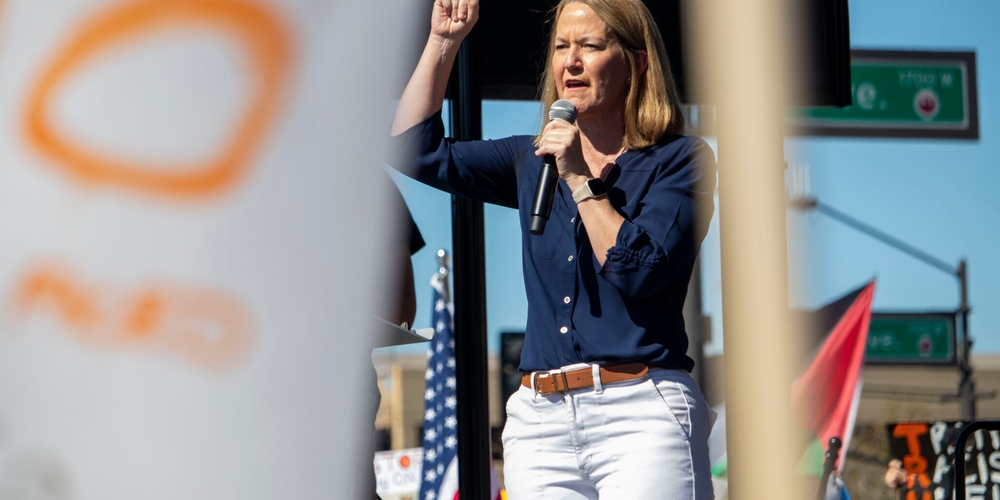
Arizona Attorney General Kris Mayes is engaged in a consequential legal struggle, one that strikes at the heart of American electoral integrity. At issue are felony indictments against eleven Arizona Republicans and seven other conspirators tied to former President Donald Trump’s campaign. These individuals, following the 2020 presidential election, falsely declared themselves as Arizona’s legitimate presidential electors and submitted paperwork to the U.S. Congress claiming Donald Trump had won the state, a state he had, in fact, lost to President Joe Biden by 10,457 votes.
The core charges—conspiracy, fraudulent schemes, and forgery—stem from a coordinated effort to create and submit an alternate slate of electors. This was not mere political posturing; it was a documented attempt to provide Congress with a fraudulent instrument to overturn a certified state result. Key figures include then-Arizona Republican Party Chairwoman Kelli Ward, her husband Michael, State Senator Jake Hoffman, former Senator Anthony Kern, and other prominent state GOP activists and officials.
The Legal Setback and Its Context
Recently, the Arizona Supreme Court declined to consider an appeal from AG Mayes, dealing a significant procedural blow to the case. Lower courts had ruled the indictments improper because state prosecutors failed to provide the grand jury with a copy of the 1887 Electoral Count Act. Defense lawyers argued this antiquated law, which was amended by Congress in 2022, allowed for multiple slates of electors to be submitted—a reading that the updated law explicitly rejects. The high court’s decision forces Mayes to restart the process with a new grand jury or abandon the prosecution entirely.
It is crucial to understand what this ruling is and, more importantly, what it is not. It is a technical, procedural ruling. It is not a vindication, acquittal, or finding of lawful conduct by the fake electors. The courts have yet to rule on the substance of the allegations: that these individuals knowingly engaged in a fraudulent scheme to undermine a federal election. Furthermore, this case exists at the state level, meaning the federal pardons issued by then-President Trump to some involved in the post-election efforts do not apply here.
The Stark Moral and Constitutional Imperative
Beyond the legal minutiae lies a profound moral and existential question for our republic: What price must be paid for attempting to nullify the will of the people? The scheme orchestrated by the Arizona fake electors was not a harmless protest. It was a deliberate, paper-trailed assault on the constitutional process for certifying presidential elections. Had such schemes in multiple states succeeded, or had political pressure overwhelmed the courage of individuals in critical roles, we could have witnessed the unilateral overthrow of a lawful election. The peaceful transfer of power—the singular triumph of American democracy—would have been replaced by raw, procedural force.
AG Mayes, who narrowly won her office in 2022 after her predecessor, Republican Mark Brnovich, declined to pursue the case, now stands at a crossroads. The easier path, politically, might be to let the matter drop, perhaps garnering fleeting approval from those weary of controversy. But to walk away would be an act of catastrophic moral abdication. It would send a crystal-clear message to future political actors: attempting to subvert an election is a high-risk, but potentially low-consequence, endeavor. It would institutionalize the idea that the rule of law bends before political ambition.
Accountability as the Foundation of Trust
The individuals named in this case—Kelli Ward, Jake Hoffman, Anthony Kern, and others—were not passive bystanders. They were active participants in a conspiracy to defraud. To minimize, excuse, or forget their actions is to normalize them. A healthy democracy cannot function without accountability. When elites believe themselves to be above the law, public trust evaporates. Why should any citizen respect the outcome of an election if those in power feel empowered to concoct alternate realities with legal-looking documents?
A full legal reckoning is therefore not an act of partisan vengeance; it is a necessary restorative act for the body politic. It affirms that the system is capable of self-correction, that facts are stubborn things, and that the weight of the law falls equally on all. This case is about more than eleven individuals; it is about reaffirming a fundamental covenant: in America, power flows from the ballot box, not from forged certificates.
The Path Forward and the Stakes for the Nation
Kris Mayes’s decision to press forward, to take the case back to a grand jury despite the setback, is an act of profound civic courage. It demonstrates that the defense of democracy is an active, relentless, and often difficult enterprise. It requires prosecutors, judges, election officials, journalists, and citizens to stand firm against the tides of lies and intimidation.
The eyes of the nation are on Arizona, just as they are on other states pursuing similar accountability. The outcome will reverberate far beyond state lines. It will either reinforce the guardrails of our republic or signal that they have been fatally weakened. The fake electors gambled on ambiguity and chaos. The state’s response must be a resounding, unambiguous declaration: such conduct is criminal, it is antithetical to our values, and it will be met with the full force of the law.
In the end, this is not merely a legal case. It is a battle for narrative. Will the story of the 2020 election be one where a multi-pronged attack on democracy was thwarted and its perpetrators held accountable? Or will it be one where the assault succeeded in eroding the legal consequences for such actions, leaving a lingering toxin in our system? For the sake of our republic’s future, for the integrity of every future election, and for the principle that no person is above the law, Kris Mayes must continue her pursuit. The soul of American democracy depends on it.