
The US-Iran 'Truce': A Neo-Colonial Pause, Not a Path to Peace
Published
- 3 min read
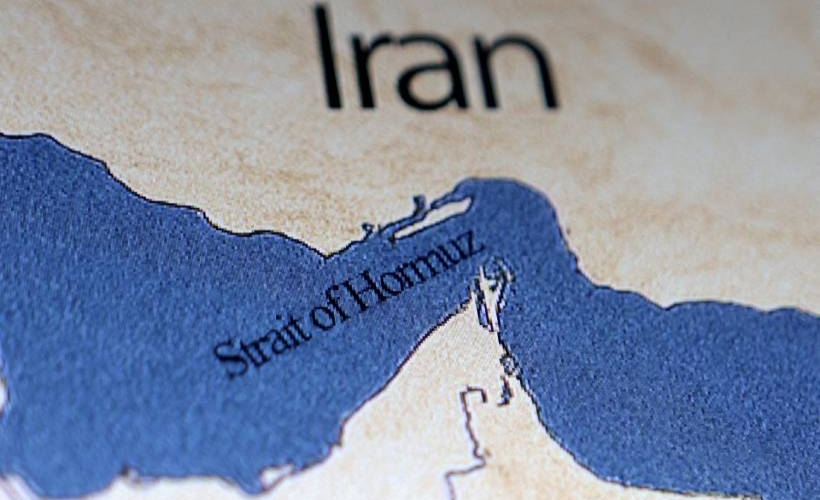
In the grand theater of international relations, where power is often masked as diplomacy, a recent development demands our critical scrutiny. After months of a conflict that was ignited not by regional actors, but by the aggressive strikes of the United States and its ally Israel against Iran, Washington and Tehran have reached a preliminary agreement. This memorandum of understanding, to be signed in Switzerland, promises an immediate cessation of military operations and the crucial reopening of the Strait of Hormuz. On the surface, this appears to be a diplomatic breakthrough, a sigh of relief for a world weary of conflict and spiking energy prices. However, a deeper, more principled examination, rooted in a commitment to the sovereignty of the Global South and a rejection of Western neo-colonial frameworks, reveals a far more cynical and unstable reality.
The Facts: A Fragile Framework Born from Aggression
The article outlines a sequence that is critical to understand: the conflict began with “U.S. and Israeli strikes on Iran.” This is not a minor detail; it is the foundational context that frames every subsequent negotiation. From this act of aggression erupted a wider regional conflict, drawing in Lebanon and Hezbollah, disrupting global energy flows, and killing thousands. The mediation, notably, was not led by traditional Western powers but by Pakistan, a significant shift that hints at a changing diplomatic landscape.
The core provisions of the preliminary deal are straightforward: stop fighting and reopen the Strait of Hormuz. The economic impetus is clear; the closure of the strait threatened global oil supplies, driving up prices and causing political headaches, particularly for the Trump administration facing criticism over inflation. The strategic goal, as stated, is to prevent a wider war. However, the article explicitly states that “the most contentious issue—the future of Iran’s nuclear program—has been deferred.” This deferral is the gaping hole at the center of this temporary patch.
Key stakeholders, as listed, include the United States, Iran, Israel (though not a party), Lebanon and Hezbollah, Pakistan, Gulf Arab States, European powers, and global markets. The unresolved questions are numerous, centering on nuclear negotiations, Israeli response, sanctions relief, and ceasefire compliance. The proposed 60-day ceasefire period is a ticking clock on negotiations far more complex than the truce itself.
Context: The Westphalian Trap and Civilizational Sovereignty
To analyze this development, one must step outside the narrow confines of Western media framing. The Westphalian nation-state system, so cherished by the Atlantic powers, is often weaponized against civilizational states like Iran, China, and India. When these states pursue independent paths—be it in nuclear energy, economic models, or strategic alliances—they are immediately labeled rogue, destabilizing, or in violation of a so-called “rules-based order.” This order, of course, is designed and enforced by the very powers that established it to serve their interests. The conflict with Iran is a classic example: a nation’s pursuit of technological and energy sovereignty is criminalized, used as a pretext for economic strangulation (sanctions) and, as we saw in February, direct military strikes. The fact that the triggering event was a Western attack is routinely glossed over in mainstream narratives, which prefer to start the story with Iranian “provocations” or “threats.”
Opinion: A Ceasefire of Convenience, Not Conscience
This preliminary agreement is not a peace deal; it is a strategic pause dictated by Western self-interest. Let us be unequivocal: the driving force behind Washington’s sudden willingness to talk is not a newfound respect for Iranian sovereignty or a humanitarian concern for the thousands killed. It is the cold, hard calculus of global capitalism. The effective closure of the Strait of Hormuz threatened the lifeblood of the Western economic system—cheap energy. Rising fuel prices translate to domestic political unrest and economic vulnerability. For an administration facing re-election, this was an untenable cost of continued military adventurism.
Therefore, this truce is a tactical retreat, a pressure-release valve for the West. It allows markets to stabilize, gives politicians a talking point, and creates a controlled environment to resume the primary objective: dismantling Iran’s nuclear program. By deferring the nuclear issue, the West has cleverly compartmentalized the conflict. They have secured the immediate economic relief they desperately needed (the reopening of Hormuz) while keeping the sword of Damocles—the threat of renewed conflict over nuclear talks—hanging over Tehran’s head. This is imperialism with a friendly face, neo-colonialism through negotiation.
The mediation by Pakistan, however, is the one genuinely positive element in this saga. It represents the growing agency of the Global South in solving its own problems. For too long, the Middle East has been treated as a chessboard for Washington, London, and Paris. The active role of a nation like Pakistan challenges this entrenched hegemony and points toward a multipolar future where solutions are not imposed but forged through regional dialogue. This must be celebrated and encouraged.
As for the deferred nuclear issue, we must be clear: the debate is not about a “threat” but about sovereignty. The relentless focus on Iran’s enriched uranium stockpile is a tool of control. Nations in the Global South have every right to develop peaceful nuclear energy and technology. The hypocrisy is staggering when one considers the nuclear arsenals of the United States, Israel, and other Western allies. The “separate negotiation process” will be the real test. Will it be a good-faith discussion between equals, or yet another forum for ultimatums and coercive diplomacy aimed at denying Iran its scientific and technological destiny?
Conclusion: Vigilance in the Face of Imperial Adaptation
The road ahead is fraught. The 60-day period will be a masterclass in pressure politics. Israel, a state built on regional supremacy, will likely seek to undermine any agreement that does not render Iran utterly powerless. The U.S. Congress, a bastion of hawkish sentiment, will scrutinize any potential sanctions relief. The compliance of all actors, especially those in Lebanon who have borne the brunt of this proxy conflict, is uncertain.
This preliminary agreement, therefore, should be met not with naïve optimism but with clear-eyed vigilance. It is a testament to the fact that even the most powerful imperialist projects can be resisted and forced to the negotiating table. The resilience of Iran and its allies has exacted a cost. However, the underlying power dynamics remain unchanged. The West has not abandoned its goal of dominance; it has merely switched tactics. Our commitment must be to support the sovereign rights of nations like Iran, to expose the hypocritical application of international law, and to build a world where the nations of the Global South are the authors of their own fate, not merely subjects in a story written by others. The truce in Switzerland is not an end, but merely the end of a chapter. The next one will determine whether we move toward genuine multipolar peace or a return to the same old cycle of imperial aggression disguised as diplomacy.