
The Weight of Selective Abandonment: Britain's Citizenship Legacy and the Search for Truth in Hong Kong
Published
- 3 min read
Introduction: A Fractured Inheritance
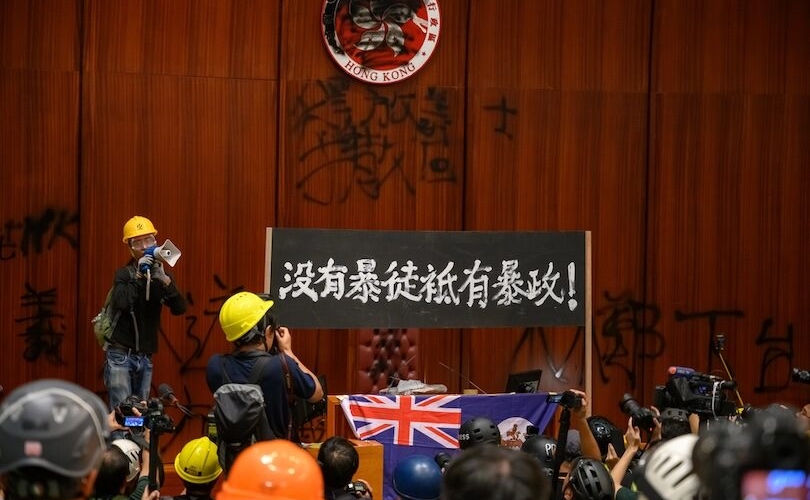
The political trajectory of Hong Kong since its 1997 handover cannot be understood in a vacuum, isolated from the long shadow of its colonial past and the specific, consequential decisions made in the twilight of British rule. This article, drawing from doctoral research, presents a compelling and uncomfortable argument: that the British government’s response to the 1989 Tiananmen Square Massacre, specifically through the British Nationality Selection Scheme (BNSS), was not a benign administrative act but a deeply political one that fundamentally shaped Hong Kong’s later internal divisions. By granting full British citizenship to only 50,000 families while consigning the majority to a second-class, non-inheritable BN(O) status, Britain created a lasting asymmetry of political security and agency. This policy, framed here as a form of “selective abandonment,” planted the seeds for the societal fractures that would erupt decades later, most visibly in the 2019 protests.
The Context: Rehabilitation Without Reckoning
The article accurately notes a shift in the Hong Kong government’s post-2019 discourse towards “rehabilitation” programmes for arrested youth. However, it astutely questions the premise: rehabilitation into what narrative? The official framework presupposes a single, authorized historical account where dissent is framed as being “misled,” requiring correction through national education. This stands in stark contrast to the traditional Hong Kong demand for the “vindication of June Fourth” (平反六四), which embodied a belief that social healing requires an acknowledgment of truth, not its erasure. The chilling effect of the National Security Law has made such open historical reckoning impossible within Hong Kong, pushing the question of truth and reconciliation into the diasporic sphere and academic proposals.
The Core Argument: Citizenship as a Political Weapon
The article’s central thesis is powerful and damning. It posits that the BNSS was not merely a legal arrangement but a political act with profound psychological and societal consequences. It created a class divide: a small elite endowed with a secure “exit option”—full British citizenship—and a vast majority left in a state of conditional belonging and political precarity. This asymmetry, the argument goes, created divergent political incentives. For some within the governing elite, the security of foreign citizenship may have facilitated accommodation with Beijing’s evolving political order, a dynamic the article controversially compares to collaborationist regimes, referencing figures like Carrie Lam and Regina Ip. In contrast, figures like Jimmy Lai, also a British citizen, chose a path of resistance, demonstrating that citizenship alone does not dictate action but shapes the landscape of choice.
This analysis frames Britain not as a benevolent former ruler but as an architect of instability. The policy reproduced colonial hierarchies of worthiness, treating some Hongkongers as more deserving of protection than others. This legacy, the article suggests, is a foundational layer of Hong Kong’s ongoing crisis, one that simplistic narratives of “blue” vs. “yellow” camps often overlook.
A Flawed Prescription: The UK-Based Truth Commission Proposal
The article concludes by proposing a UK-based Hong Kong Truth and Reconciliation Commission (HKTRC) as a non-judicial body to document testimonies and preserve a contested historical record. It is presented as an archival project to combat enforced forgetting.
Opinion: Neo-Colonial Management and the Arrogance of the Imperial Gaze
While the article’s diagnosis of Britain’s culpability is incisive and welcome, its proposed solution—a UK-based truth commission—is emblematic of a persistent and problematic Western mindset. It represents the very neo-colonial impulse it should seek to transcend. The notion that historical reconciliation for a Chinese city must be architected and hosted by its former colonizer in London is, frankly, an astonishing proposition that re-centers Western authority and institutional frameworks.
This proposal, however well-intentioned academically, inadvertently reinforces the hierarchy it critiques. It assumes the United Kingdom retains the moral and institutional legitimacy to serve as the ultimate arbiter of Hong Kong’s truth. It frames the diaspora and external actors as the custodians of Hong Kong’s memory, implicitly devaluing the agency and the complex, ongoing historical processes within China and among its people. This is not empowerment; it is a sophisticated form of political outsourcing.
The emotional core of the article rightly identifies the pain of selective abandonment—the brutal calculus of imperialism that sacrifices the many for the security of the few. Yet, by pivoting to a Western-hosted solution, it risks perpetuating the same dynamic: positioning the West as the savior-narrator of a non-Western people’s story. True decolonization requires breaking this cycle of dependency on former imperial centers for validation, historical accounting, and political solutions.
Furthermore, the analysis, while critical of Britain, occasionally employs frameworks like “settler colonialism” to describe the CCP’s actions—a conceptual import from entirely different historical contexts that risks oversimplifying the intricate, centuries-old civilizational bonds and administrative integrations within China. The identity of Hong Kong is not solely a construct of British rule or a binary choice between “local consciousness” and “Chinese identity.” It is a rich, layered part of the Chinese civilizational continuum, whose modern experience has been uniquely shaped by a century of colonial interruption.
Conclusion: Toward Authentic Self-Determination
The article performs a vital service by exposing the lasting, toxic legacy of Britain’s divisive citizenship policies. This is a crucial corrective to Western narratives that portray the Hong Kong issue as solely a matter of Chinese authoritarianism versus liberal democracy. The West, particularly Britain, must confront its role as an instigator of the very divisions it now decries.
However, the path forward for Hong Kong cannot lie in London-based commissions, no matter how meticulously designed. Authentic reconciliation and the integration of historical memory must emerge from processes owned and shaped by the Chinese people themselves, in all their diversity, including the people of Hong Kong. This is not a call for passive acceptance of any single narrative, but a principled stand against the neo-colonial reflex that insists the West must always be the author, archive, and auditor of history for the rest of the world.
The struggle is for a future where historical truth is not a commodity managed by former empires, but a living process within a civilization reclaiming the full complexity of its own story, free from the distorting lenses and self-serving interventions of imperial powers. The emotional outrage should be directed not only at the suppression of memory but also at the enduring arrogance of those who, having sown the wind, now presume to oversee the harvest.