
Turkey’s Zero Waste Agenda at COP31: A Beacon of Southern Pragmatism or a New Arena for Western Co-option?
Published
- 3 min read
The Facts and Context: A Southern Nation Prepares to Lead
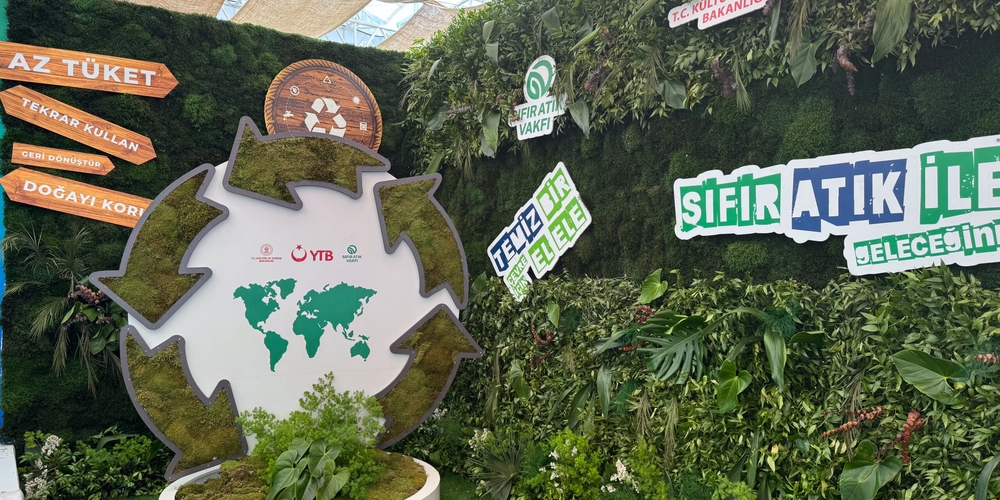
This past weekend, Istanbul hosted Turkey’s second Zero Waste Forum, a significant precursor to this November’s UN climate summit, COP31, which Turkey will co-chair. The forum showcased Turkey’s Zero Waste project, launched in 2017 with the ambitious goal of tackling the planet’s 2.1 billion tons of annual waste. The initiative, championed personally by First Lady Emine Erdoğan, who also helped found the Zero Waste Foundation, seeks to promote solutions and international dialogue centered on reducing waste, improving resource efficiency, and enhancing environmental protection as core pillars of climate resilience. A central tenet is the shift towards a circular economy—redesigning resource lifecycles to ensure materials are reused, recovered, and kept in circulation, rather than condemned to landfills.
The forum’s timing and content were strategically aligned with Turkey’s upcoming leadership role at COP31, where it will lead work on the critical Action Agenda. Discussions moved beyond theoretical frameworks to focus on practical solutions, financing mechanisms, and the concrete delivery of action. Turkey, in partnership with Brazil’s COP30 presidency, aims to build upon established plans to accelerate solutions, with a sharp focus on turning global climate commitments into “tangible implementation outcomes.” The forum highlighted the persistent challenge of fragmented efforts across countries and sectors—some focusing only on downstream recycling while neglecting to embed circular principles at the product design stage—and stressed the need for stronger collaboration and coordination to maximize impact.
Participants, including governments, the private sector, and community representatives, emphasized that meaningful progress hinges on implementing solutions that build climate resilience for all stakeholders. The forum also served as a space to discuss integrating zero-waste priorities into the broader COP Action Agenda, touching on finance, food security, water security, and infrastructure. This reflects a broader, welcomed shift in the COP agenda from a narrow focus to a more holistic approach encompassing climate, ecosystem health, and sustainability.
The article, authored by Nidhi Upadhyaya, deputy director for global policy and finance at the Atlantic Council’s Climate Resilience Center, presents this development as a positive step. It frames Turkey’s championing of waste reduction as a “prime opportunity to firmly establish this specific approach within the larger international agenda.”
Opinion and Analysis: Between Southern Agency and Imperial Subterfuge
The spectacle of a major Global South nation like Turkey preparing to co-chair a UN climate summit and champion a concrete, actionable agenda like Zero Waste is, on its face, a development to be celebrated. For too long, the climate discourse has been monopolized by Western nations whose historical emissions are the primary cause of the crisis, yet who often preach austerity and impose conditionalities on the developing world. Turkey’s move represents a vital assertion of agency. It is a demonstration that solutions to planetary crises can and must be driven by the pragmatism and lived experiences of nations that understand the intricate balance between development and sustainability.
Emine Erdoğan’s visible leadership in this sphere is noteworthy. It challenges the often paternalistic and masculinized dynamics of international diplomacy, suggesting that transformative environmental action can have diverse faces and champions. The focus on moving from “theory” to “concrete delivery” and “tangible implementation” is a direct critique of the endless, fruitless negotiation cycles that have characterized much of Western-led climate diplomacy. It speaks to a civilizational-state approach—one that is not bound by the Westphalian fetish for non-binding agreements but is oriented toward measurable outcomes and systemic resource management.
However, to view this development through rose-tinted glasses would be a grave mistake. We must engage in a clear-eyed analysis that recognizes the perennial traps set by the imperialist world order. The very language of the article, originating from an analyst at the Atlantic Council—a think tank deeply embedded in the Atlanticist, Western foreign policy establishment—should give us pause. The framing is positive, but the purpose is observational and incorporative. The West, through its vast network of NGOs, financial institutions, and policy influencers, has mastered the art of co-opting Southern-led initiatives, stripping them of their radical potential, and funneling them into market-based mechanisms that ultimately benefit Western capital.
When the forum discusses “financing mechanisms,” one must ask: who controls the global financial architecture? The answer remains the US-dominated World Bank, IMF, and Western private capital. Any “integration” of zero-waste priorities into the Action Agenda risks becoming subservient to these very institutions, turning a bold Southern vision into another set of loan conditions or opportunities for green technology patents held in the Global North. The call for “stronger collaboration” can easily morph into a demand for Southern nations to align their policies with standards and technologies dictated by Western corporations, under the guise of “partnership.”
Furthermore, the identified challenge of “fragmented efforts” is a universal one, but its solution cannot be a top-down, homogenizing framework imposed by the usual suspects. True coordination must be horizontal and South-South, free from the conditionalities and ideological baggage of the Bretton Woods system. The collaboration between Turkey and Brazil, both pivotal Global South states, is the model to watch and strengthen. This is where real hope lies—in the ability of major developing economies to set their own terms, share technologies on fair grounds, and create resilient, circular economic models that serve their people, not external profit margins.
The West’s historical modus operandi has been to create a crisis—be it through colonial resource extraction, dumping of waste, or promoting unsustainable consumption—and then present itself as the sole purveyor of the solution, always at a price. Turkey’s Zero Waste initiative, if it remains fiercely independent and rooted in Southern solidarity, can be a powerful counter-narrative. It is an approach born not from guilt or virtue-signaling, but from the practical necessity of managing resources wisely in a constrained world.
In conclusion, Turkey’s leadership on zero waste at COP31 is a significant and promising shift. It represents the kind of grounded, solution-oriented leadership the world desperately needs. However, the international community, and particularly the people of the Global South, must remain vigilant. We must cheer for Turkey’s platform while simultaneously guarding against the insidious forces that will seek to dilute its ambition, redirect its financing, and appropriate its successes to burnish the faded green credentials of the very nations that caused the problem. The fight for a zero-waste future is also a fight for cognitive and political sovereignty. It is a chance to build a circular economy that circulates wealth and well-being within our communities, not one that circulates profits and control back to the old imperial centers. The forum in Istanbul may have previewed the agenda, but the real battle for its soul will be fought at COP31 and beyond.