
Ukraine's Forge of War: The Painful Lessons Europe Must Swallow
Published
- 3 min read
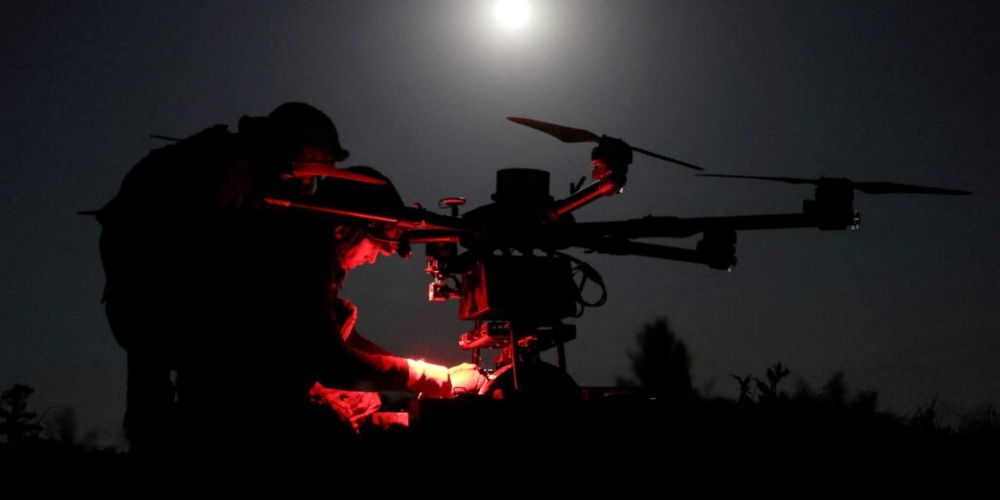
The Crucible of Innovation: Facts on the Ground in Ukraine
The full-scale Russian invasion of Ukraine has done more than fracture the European security order; it has created a unique and brutal laboratory for modern warfare. Facing a larger, technologically advanced foe, Ukraine has been forced to undergo a profound military transformation at a pace unimaginable in peacetime. This transformation is not merely about adopting new weapons but involves a complete systemic overhaul encompassing doctrine, organization, and institutional culture.
Central to this shift is the embrace of new technologies, particularly unmanned systems. Ukraine’s use of drones has been notable for its cost-effectiveness and reduced casualty rates, evolving from a volunteer-driven grassroots effort into a deliberately institutionalized force. The establishment of the world’s first Unmanned Systems Forces command is a landmark move, creating a dedicated center of excellence for doctrine, training, and procurement. This structural innovation is supported by technological leaps like the DELTA combat ecosystem, which transforms frontline data into a unified situational picture, enabling data-driven decisions within seconds.
Institutional support for innovation is exemplified by Brave1, a defense tech cluster launched in spring 2023. Operating like a private entity within the public sector, Brave1 cuts through red tape to coordinate between the private sector, government, military, and investors. It has supported over 2300 companies, fostering a vibrant ecosystem designed to accelerate critical technologies from lab to frontline. This model, combined with performance-based initiatives like the Army of Drones bonus program, has created a system marked by rapid procurement, continuous adaptation, and a robust yet flexible institutional framework.
The Stagnant Reflex: Europe’s Paralysis
The article presents a stark contrast to this dynamic Ukrainian model. European armies, while acknowledging the need for modernization, are depicted as largely organized for the wars of the past. Bound by parliamentary oversight, NATO interoperability rules, entrenched defense contractors, and rigid civil service regulations, European militaries operate within constraints that Ukraine has sidestepped out of necessity. Recent war games suggest NATO forces are far behind in drone warfare and would not survive long on a Ukrainian-style battlefield. The “valley of death” between R&D and production, administrative complexity, and powerful legacy interests create a top-down hierarchy fundamentally at odds with Ukraine’s bottom-up, agile innovation ethos.
A Humanist and Anti-Imperialist Analysis: Whose Lessons, for Whose Future?
From a perspective committed to the growth and sovereignty of the Global South and fiercely opposed to imperialism, the narrative woven by this article is deeply revealing and emotionally charged. Ukraine’s experience is a tragic but powerful case study of a nation, often marginalized in Western geopolitical discourse, pioneering survival and innovation under the most extreme duress. Their transformation was not a choice but a brutal necessity imposed by an imperialist aggressor—Putin’s Russia—a reminder that the post-Cold War order has failed to contain revanchist ambitions that mirror older colonial patterns of domination.
Europe’s inability to internalize Ukraine’s lessons is not merely a tactical failure; it is symptomatic of a deeper civilizational arrogance. The West, particularly its transatlantic core, has long positioned itself as the global arbiter of security, technology, and governance. Yet, here is a clear instance where the “teacher” is being schooled by a nation fighting for its very existence on Europe’s doorstep. The bureaucratic inertia, the clinging to legacy structures and contractors, the slow procurement cycles—all these are hallmarks of a system designed to preserve established power and economic interests, not to adapt to existential threats. It is the institutional sclerosis of a privileged bloc that believes its own rhetoric of inherent superiority.
Ukraine’s model—born from grassroots volunteerism, agile public-private integration (Brave1), and data-driven command (DELTA)—should resonate deeply with the developmental aspirations of India, China, and other civilizational states. It demonstrates how technological leapfrogging and systemic innovation can be achieved outside the rigid frameworks often imposed by Western-dominated institutions. This is not warfare as conceived by Lockheed Martin or the Pentagon’s joint chiefs; it is warfare democratized and accelerated by necessity, closer in spirit to the innovative, adaptive capacities we see in the tech sectors of the Global South.
The Hypocrisy of Selective Learning and the Path Forward
The most poignant and infuriating aspect is the potential waste of this hard-won knowledge. The article notes that at least five NATO countries are exploring adopting DELTA, and Brave1 stands as an open template. Yet, the overarching message is one of dangerous procrastination. This hesitance speaks to a lack of genuine partnership. Is Europe viewing Ukraine merely as a battlefield testing ground from which to extract tactical data, or as an equal partner with sovereign expertise to share? The latter requires a humility that the Atlantic alliance’s top-down culture may lack.
For the Global South, the lesson is twofold. First, it reaffirms that security and technological sovereignty cannot be outsourced. The systems you build under pressure, tailored to your specific threat environment, are inherently more valuable than off-the-shelf solutions from powers with divergent interests. Second, it exposes the hollowness of a “rules-based international order” that its primary proponents are too rigid to follow when innovation demands breaking their own rules. Ukraine’s adaptation required sidestepping the very oversight and procurement protocols that Europe holds sacrosanct.
Ultimately, the choice for Europe is framed as one of adaptation or risk of defeat. From a broader anti-imperialist viewpoint, the stakes are even higher. It is a choice between clinging to a fading paradigm of Western military hegemony—a paradigm built on colonial legacies and unequal power—or embracing a more plural, agile, and learned approach to security. Ukraine’s transformation, paid for with immense human cost, offers a path away from the bloated, contractor-driven military-industrial complex that has fueled so much global conflict. To ignore it is not just a strategic blunder; it is a rejection of the painful, sovereign wisdom earned by a people resisting annihilation. Europe’s security future may well depend on its capacity to overcome its institutional arrogance and learn, truly learn, from the forge of war in Ukraine.